



Vintage Vanity Perfume Spray
These vintage vanity perfume spray pieces are striking dressing table accessories from the Art Deco era, offering tactile glamour and period craftsmanship.
Vintage Vanity Perfume Spray
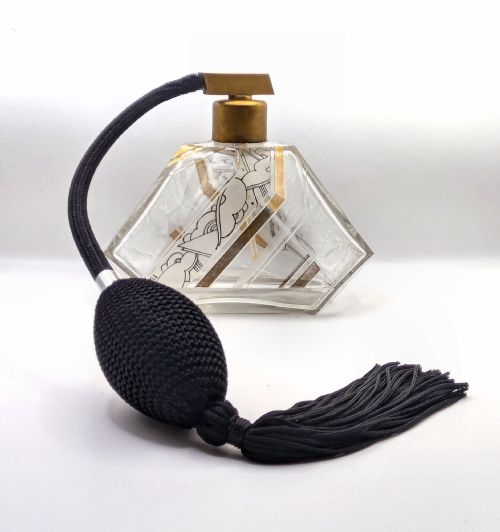
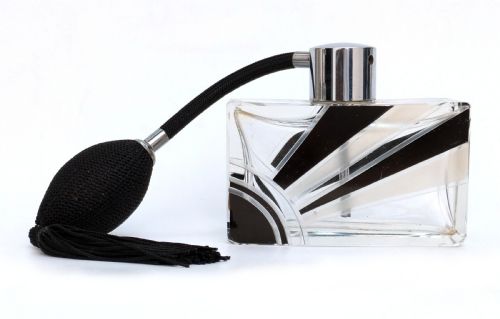
A vintage vanity perfume spray is a dressing table accessory designed to mist scent onto the skin through a bulb and metal mechanism. When you search for vintage vanity perfume spray, you find objects created predominantly during the 1920 and 1930 periods. These pieces take the form of perfume bottles, scent bottles, and atomisers.
The version you are most likely to meet on this page is an Art Deco design from Czechoslovakia or France. Makers produced these in substantial glass forms, frequently mounted on stands or finished with contrasting metal hardware. They served as both functional toiletries and decorative centrepieces for dressing tables.
How they were made
Glassmakers utilised mould-blowing and heavy cutting techniques to shape thick crystal and coloured glass bodies. Artisans incorporated enamelling and applied fabric elements to enrich the surface texture of the vessels. Metal components in chrome and brass formed the functional spray mounts and collars attached to the glass necks.
Makers such as Karl Palda, Rudolf Hlousek, Hermanova, and René Lalique applied distinct regional techniques, from Bohemian glass cutting to French mould-pressed detailing. The metal hardware was engineered to secure an airtight seal while supporting the squeeze bulb mechanism.
Czech glassmakers once blew bottles so heavy that owners practically needed weightlifting credentials just to freshen up.
What varies in quality
Quality rests in the weight and clarity of the glass, alongside the precision of the cut crystal facets. Heavy, substantial vessels demonstrate superior raw material use compared to lighter press-moulded alternatives. The presence of layered enamelling or intricate metal stands elevates the ambition of the piece.
Attribution to known designers or documented workshops distinguishes standard production items from masterworks. The sophistication of the geometric Art Deco moulding and the integration of metal mounts determine the overall standard of the object.
Karl Palda·Rudolf Hlousek·René Lalique·Hermanova
The Vintage Vanity Perfume Spray Glossary
- Atomiser
- A device fitted to a perfume bottle that turns liquid scent into a fine mist via air pressure. It typically relies on a flexible rubber bulb connected to a metal tube.
- Art Deco
- A design style spanning the 1920 and 1930 periods characterised by geometric shapes, streamlined forms, and bold symmetry. It influences the sharp lines and sunray patterns found on these glass bottles.
- Cut crystal
- Glass with a high lead content that has been mechanically or hand-cut with facets to increase refraction. This technique creates intense sparkle under dressing table lights.
- Bakelite
- An early synthetic plastic utilised for decorative caps and bases on mid-century vanity items. It offers a warm, durable finish distinct from metal and glass.
- Enamel
- Opaque glass paste fused to a metal or glass surface through firing to add colour and pattern. It provides rich surface decoration on select atomiser bodies.
Vintage Vanity Perfume Spray: Frequently Asked Questions
How do vintage atomisers work?
Squeezing a flexible bulb forces air across a narrow tube inside the neck of the bottle. This action draws the liquid up and disperses it as a fine mist through the nozzle.
Original rubber components often perish over time, meaning many surviving examples require replacement bulbs to function properly.
Where were these perfume bottles made?
Production centred primarily in France and Bohemia, which is now part of the Czech Republic. These regions housed master glassworks renowned for innovative pressing and cutting techniques.
French pieces frequently reflect high-end artistic design, while Bohemian workshops excelled in colourful glass and geometric cutting.
How do I identify Art Deco style?
Art Deco pieces display strict symmetry, sharp angles, stepped forms, and sunray motifs. The aesthetic rejects ornate Victorian curves in favour of modern industrial lines.
On vanity items, this translates to heavy faceted glass bottles paired with sleek chrome or brass hardware.
Can I still use these for perfume?
Many collectors use them as decorative display objects rather than functional toiletries. Alcohol in modern perfumes can degrade vintage mechanisms and residue can stain historical glass.
If you choose to use one, fill it with water or modern oil-free scents and handle the vintage metal hardware with care.