


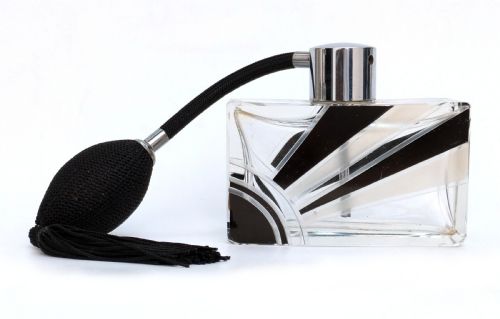

Chrome Vanity Perfume Bottle
A chrome vanity perfume bottle brings distinct Art Deco geometry and glamour to a dressing table.
Chrome Vanity Perfume Bottle
A chrome vanity perfume bottle is a dressing table accessory defined by the distinctive aesthetic of the 1930s. These pieces include atomisers on stands, matching globe sets and large glass vessels designed to hold scent.
Most examples originate from France, Bohemia and Czechoslovakia, reflecting the major European centres of glass and metal production during the Art Deco period. Buyers will frequently encounter atomisers featuring metal pumps alongside standard stoppered scent bottles.
The forms range from simple sunray cut glass bodies to large, heavy crystal vessels decorated with enamel or fabric accents. Each piece captures the architectural lines and modern industrial materials characteristic of the era.
Materials and construction
Makers combined polished chrome metalware with moulded, cut glass and crystal to create these dressing table items. The metal mounts and atomiser hardware were engineered to fit tightly against glass necks.
Glass bodies relied on heavy moulding, deep cutting and polishing techniques, often enhanced with applied enamel or contrasting fabric details. Bohemian and Czech workshops utilised complex glass-cutting methods to produce sharp geometric patterns like sunray motifs.
All listed chrome vanity perfume bottles date from the 1930s Art Deco period, incorporating chrome, crystal, glass, enamel and Bakelite materials.
Assessing quality
Quality rests upon the weight and clarity of the glass vessel, alongside the precision of the chrome hardware. Heavier crystal bodies and intricate cutting indicate superior production standards from prominent glasshouses.
Design complexity also separates standard items from exceptional pieces, such as matching multi-bottle sets on stands or works incorporating specialist enamel decoration. The integration between the metal collar and the glass body demonstrates the skill of the original maker.
Rudolf Hlousek·Karl Palda·Hermanova
The Chrome Vanity Perfume Bottle Glossary
- Atomiser
- A spray mechanism fitted to a perfume bottle, usually comprising a metal top connected to a bulb and tube for dispersing scent in a fine mist.
- Crystal
- A high-clarity form of glass containing mineral content that increases weight and brilliance, frequently utilised in 1930s dressing table wares.
- Sunray
- A geometric decorative motif featuring radiating lines, commonly found cut into the glass bodies of Art Deco vanity items.
- Bakelite
- An early synthetic plastic occasionally incorporated into the fittings or stoppers of period vanity bottles.
Chrome Vanity Perfume Bottle: Frequently Asked Questions
What is a chrome vanity perfume bottle?
A chrome vanity perfume bottle is a 1930s dressing table container that pairs polished metal mounts with glass or crystal bodies. These items often function as spray atomisers or stoppered scent bottles.
They reflect the Art Deco style through geometric cuts, sunray motifs and substantial glass forms produced in Europe.
How do I identify an Art Deco atomiser?
Art Deco atomisers typically feature 1930s design characteristics such as sharp linear cuts, chrome hardware and symmetrical glass shapes. Many originate from Czech or French glasshouses of the period.
Makers frequently applied contrasting enamel or metal stands to elevate the presentation on a dressing table.
Are these bottles made of crystal or glass?
The listings include both standard glass and heavy crystal vessels. Crystal variants offer greater weight and refractive clarity.
Cut crystal versions display sharper facet lines and more brilliant light reflection across the body.
Where were these perfume bottles manufactured?
Production was centered primarily in France and Czechoslovakia during the 1930s. Notable workshops and designers from Bohemia contributed significant quantities of glass and crystal pieces.
European factories exported these vanity items widely to meet the demand for modern dressing table accessories.