
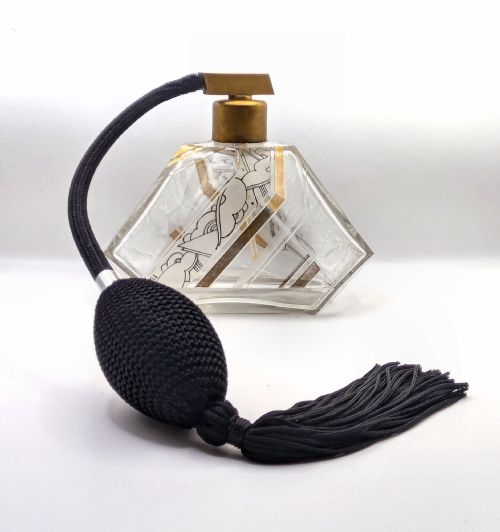


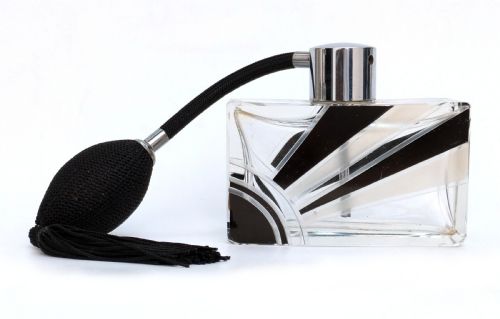
Glass Perfume Atomiser
A glass perfume atomiser brings the geometry and glamour of dressing table culture straight into a modern interior.
Glass Perfume Atomiser
A glass perfume atomiser is a dressing table container designed to spray scent through a bulb and metal mechanism. When you search for this phrase, you find pieces predominantly from the Art Deco period, dating across the 1920s and 1930s.
The objects listed on this page take the form of scent bottles and atomisers presented in clear, frosted, amber, and black glass. Many examples originate from France and Czechoslovakia, reflecting the major European centres of design during the interwar years.
You will encounter pieces mounted on stands or finished with geometric cutting, sunray motifs, and chrome hardware. These items represent the height of vanity table accessories from the early twentieth century.
How they were made
The body of each piece relies on glass manufacture, utilising techniques such as heavy moulding, pressing, and crystal cutting to achieve sharp geometric lines and deep colours. Makers combined this shaped glass with metal components in chrome and brass to build the spray mountings.
Additional materials include fabric and bakelite integrated into the pump mechanisms and collars. Frosted glass surfaces often contrast against polished clear panels, demonstrating the textural range employed by period artisans.
Listings feature glass, chrome, fabric, enamel, brass, crystal, bakelite, and frosted glass across the 1920 and 1930 periods.
What varies in quality
The distinction between standard production and top-tier examples lies in the weight of the glass and the complexity of the cutting. Pieces bearing the marks of known designers exhibit superior clarity in the material and more intricate moulding.
Hardware assembly also dictates overall standard, with solid chrome and brass fittings outlasting lighter plated alternatives. The presence of integrated stands or elaborate geometric patterns separates standard utilitarian bottles from masterworks of the period.
Karl Palda·Rudolf Hlousek·René Lalique·Hermanova·Marcel Franck·DeVilbiss
The Glass Perfume Atomiser Glossary
- Atomiser
- A device designed to turn liquid perfume into a fine mist using a squeeze bulb and a tube mechanism. This hardware sits atop the glass vessel.
- Art Deco
- A design style spanning the 1920s and 1930s characterised by geometric shapes, streamlined forms, and sunray motifs. It dominates the aesthetic of interwar vanity items.
- Frosted glass
- Glass treated to achieve a matte, opaque surface finish through acid etching or sandblasting. This technique creates textural contrast on decorative bottles.
- Bakelite
- An early synthetic thermosetting plastic utilised for caps, bases, and mechanism components. Its dark tone frequently complements coloured glass bodies.
Glass Perfume Atomiser: Frequently Asked Questions
How do I date a glass perfume atomiser?
Dating relies primarily on stylistic indicators such as Art Deco geometry, alongside material evidence like chrome hardware and bakelite components. Pieces commonly date to the 1920s and 1930s based on these manufacturing traits.
Maker signatures etched into the glass or stamped onto the metal mounts provide precise attribution when present.
Where were these atomisers made?
Production centred heavily in Europe during the interwar decades, with significant output originating from France and Czechoslovakia. Factories in these regions employed skilled glassmakers and metalworkers.
Design houses exported these luxury vanity items internationally to meet high demand for dressing table accessories.
Can I still use these atomisers for perfume?
While many retain their original metal pump mechanisms and fabric bulbs, historic atomisers function primarily as decorative objects today. The internal rubber tubes and seals often degrade over decades.
Collectors generally display them dry to preserve the delicate glass and chrome components.
What glass colours are typical for this period?
Interwar pieces frequently utilise clear crystal alongside striking monochromatic and saturated tones. Amber and black glass appear prominently in geometric designs.
Frosted finishes also provide a contrasting texture to transparent coloured bodies.