
Vintage Country Landscape
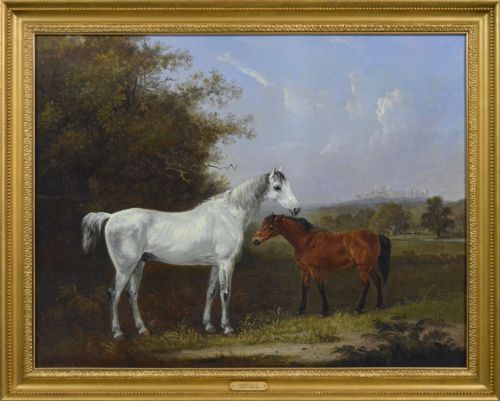
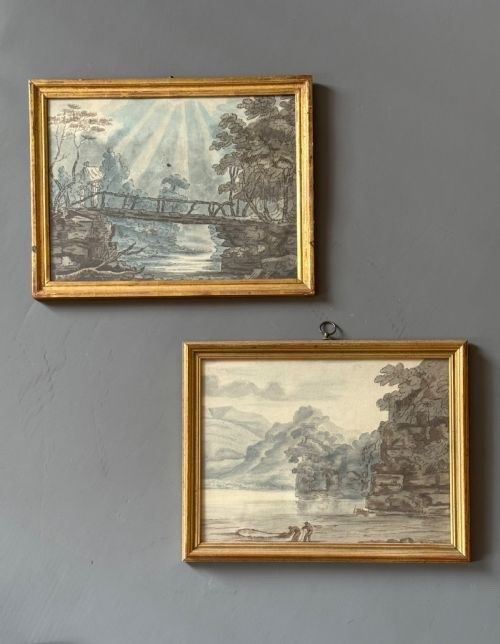
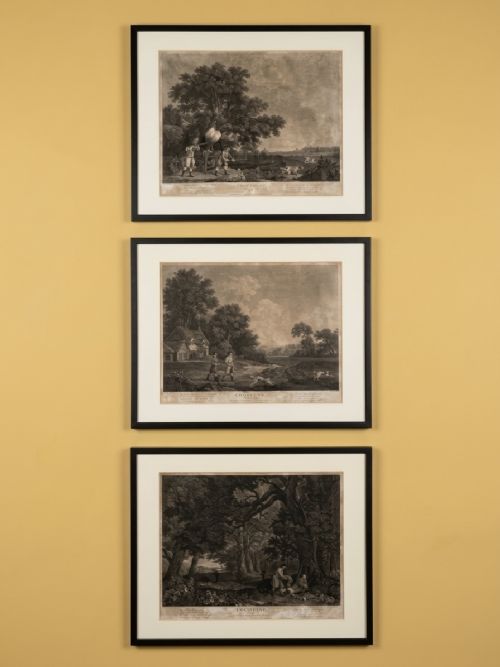
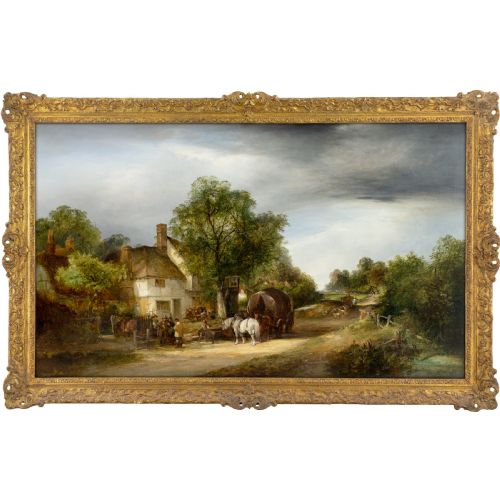
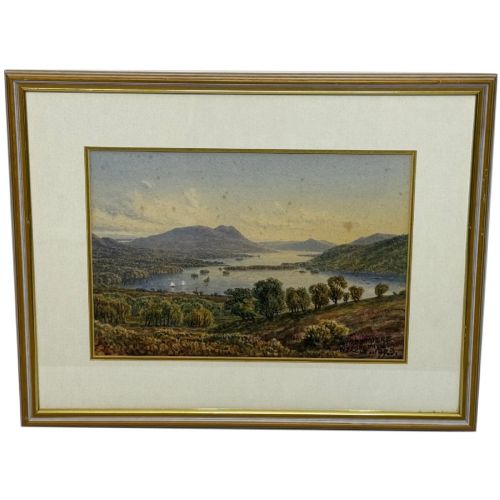
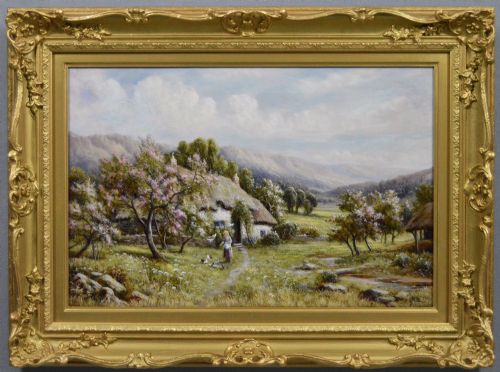
When you search for vintage country landscape, you encounter pastoral scenes rendered in oil and watercolour that capture rural life across past centuries.
Vintage Country Landscape
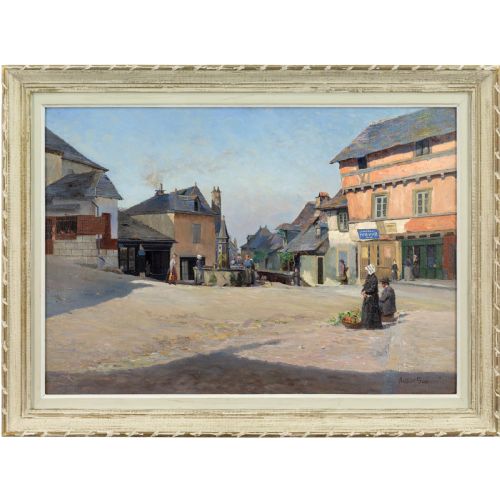
A vintage country landscape brings depictions of rural fields, farmsteads, and village life into an interior, reflecting traditions of British and European painting.
The selections available here span from the nineteenth century through the Edwardian period and into the mid-twentieth century, predominantly featuring framed works on canvas, board, and paper.
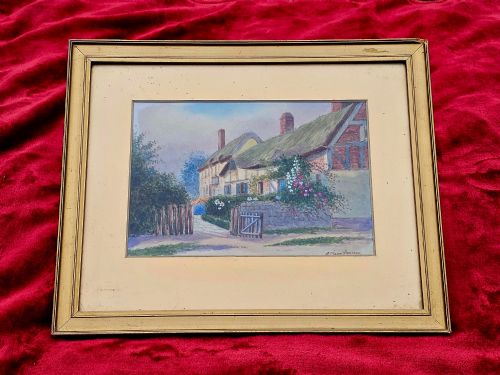
Buyers frequently encounter rural views depicting cottages, streams, and agricultural animals, often grouped within schools such as British Impressionism or the English School.
Materials and methods
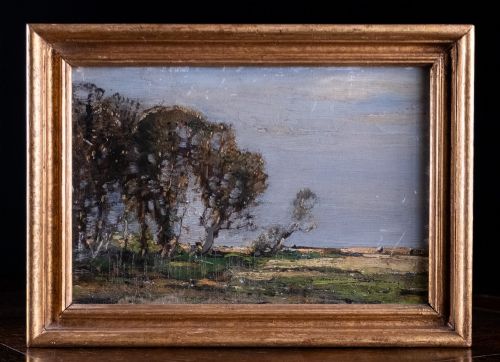
Artists painted primarily with oil on canvas, wooden board, or card, applying thick pigments that retain visible brushstrokes and rich texture.
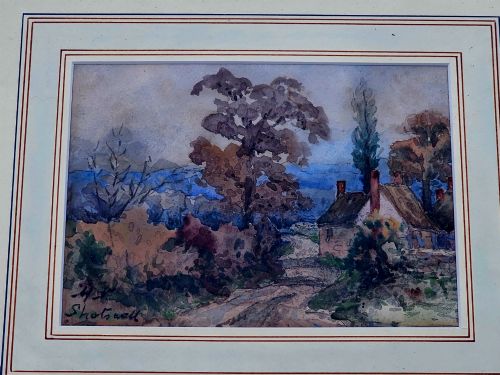
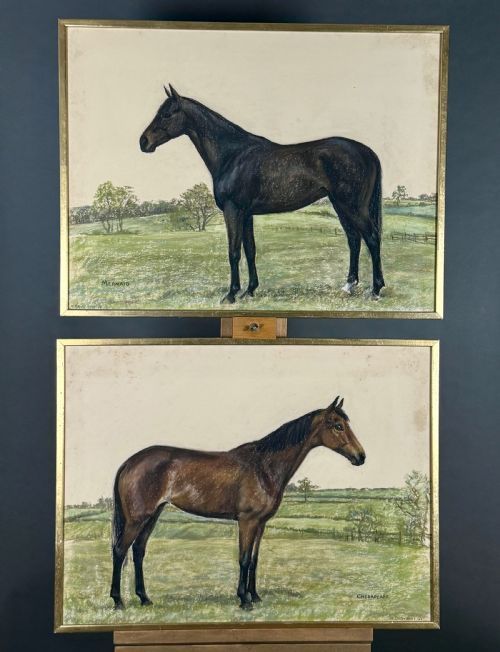
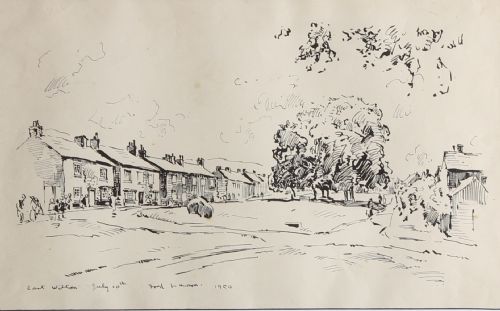
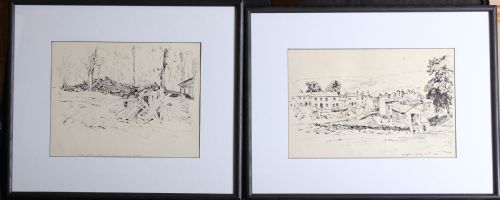
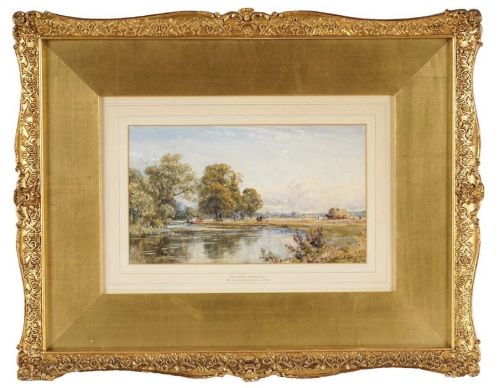
Watercolour and pastel works on paper or card capture lighter atmospheric conditions, often utilising ink for finer linear detail in rural studies.
Many works are housed in gesso and wood frames, occasionally accented with gold leaf to complement the painted composition.
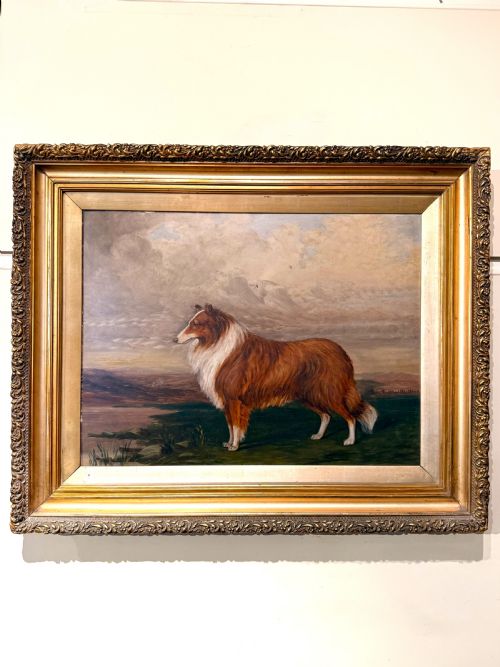
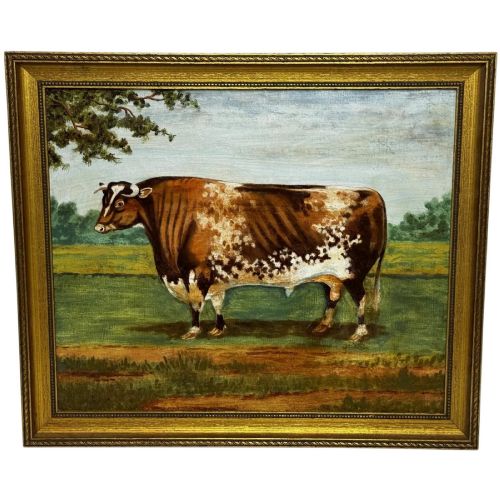
Several canvases record local livestock taking a quiet moment to contemplate British weather.
Evaluating the standard
Quality rests upon the artist's handling of light, atmosphere, and perspective, separating routine topographical records from deeply observed pastoral studies.
The assuredness of the brushwork and the harmony of the palette determine whether a landscape holds the viewer's attention across a room.
Condition of the underlying canvas, paper, and original framing elements also plays a significant role in preserving the integrity of the artwork.
Kershaw Schofield·Arthur Gué·Fred Lawson·Robert Thorne Waite·Herbert Royle·George Wright·Percy Lancaster·Sydney Yates Johnson
The Vintage Country Landscape Glossary
- British School
- A broad designation for artists working in Britain or trained within British artistic traditions across various centuries. It groups together painters who shared stylistic influences rather than a single academy.
- Impressionism
- An art movement characterised by relatively small, thin, yet visible brush strokes and an emphasis on accurate depiction of light. Painters often worked outdoors to capture fleeting natural effects.
- Gesso
- A plaster-like mixture applied to wood panels or canvases as a base for painting, or moulded into decorative patterns on antique frames. It provides a smooth, stable surface for subsequent layers of pigment or gold leaf.
- Pastel
- A dry painting medium in the form of a stick, consisting of pure powdered pigment and a binder. It produces rich, velvety colours that require careful framing under glass for protection.
Vintage Country Landscape: Frequently Asked Questions
How do I date a landscape painting?
Dating relies on stylistic clues, framing techniques, and the materials used by the artist, such as the weave of the canvas or the composition of the board. Signature styles and recorded exhibition dates of specific painters also help narrow down the period.
Examining the reverse of the work often reveals inscriptions, artist stamps, or old gallery labels that provide verifiable historical context for the piece.
Are watercolours as durable as oils?
Waterworks on paper require protection from direct sunlight and moisture to prevent fading and paper degradation over time. When properly framed behind glass in a stable environment, they survive centuries in excellent condition.
Oil paintings on canvas or board are generally more robust against environmental factors, though the underlying support still benefits from stable indoor humidity.
Where should I hang a country landscape?
These works suit traditional living spaces, studies, and hallways where natural light enhances the pastoral palette without causing damage. Pairing them with period interior elements helps integrate the artwork into the room.
Avoid placing paintings above active heat sources or in damp areas to protect both the artwork and its historical frame.
What is the difference between board and canvas?
Canvas is a flexible woven fabric stretched over a wooden frame, offering a slight spring under the brush and a textured surface for oil paint. Board provides a rigid, flat support that prevents cracking in the paint layer caused by canvas flexing.
Both supports were widely used across the nineteenth and twentieth centuries, depending on the artist's preference for portability and studio work.