



Historic Landscape Watercolour
A historic landscape watercolour records towns, rivers and coastal scenes across British and European locations from past centuries.
Historic Landscape Watercolour
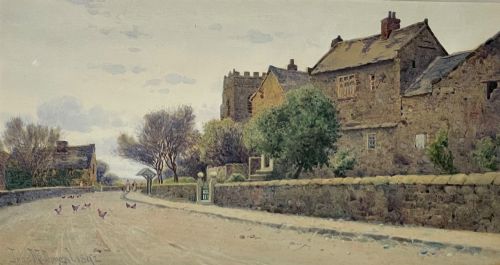
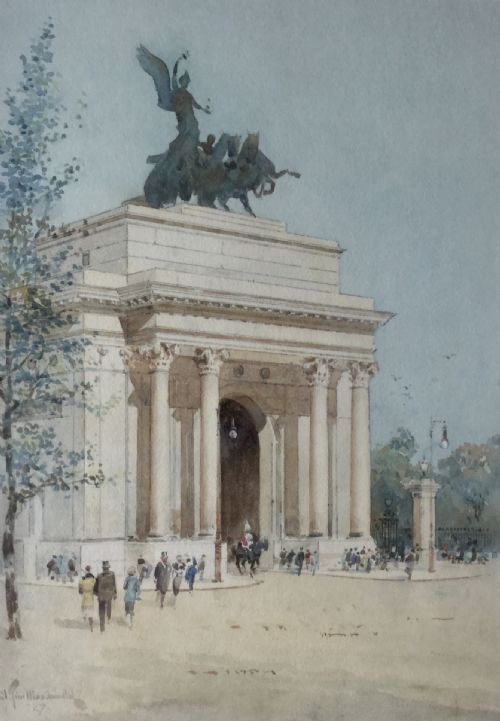
A historic landscape watercolour captures topographical views, city streets, and rural vistas created across the eighteenth, nineteenth, and early twentieth centuries. These paintings document specific places such as York, London, and European towns through the eyes of contemporary observers.
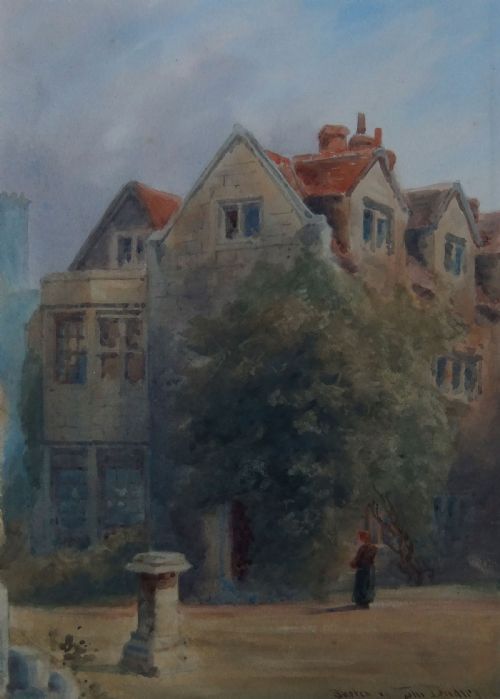
The works on this page range from broad river scenes and coastal fortifications to narrow alleyways and architectural studies. Artists recorded topographical accuracy alongside atmospheric changes, preserving past appearances of familiar towns and countryside.
Most examples originate from the Victorian and Edwardian eras, executed on paper and housed behind glass. Both signed compositions by known practitioners and anonymous school pieces appear within the selection.
How They Were Made
Pigments ground in water-soluble binders were applied to paper sheets using fine brushes to build transparent washes and opaque details. Artists frequently worked en plein air or developed studio watercolours from preliminary sketches.
Protective framing utilised timber mouldings, mounts, and glass to shield the fragile paper support from moisture and atmospheric damage over time.
Listings feature works executed on paper using watercolour pigment, housed in wood and gilt wood frames behind glass.
What Varies in Quality
Skill in handling pigment transparency and light distinguishes accomplished watercolours from simpler topographical records. The best compositions balance architectural precision with atmospheric depth, while lesser examples rely on rigid line work without tonal variation.
Condition strongly influences the integrity of each piece. Well-preserved works retain their original pigment vibrancy, whereas prolonged exposure to sunlight leads to fading and chemical alteration of the paper surface.
John McDougal·Ernest Arthur Rowe·Percy Robertson·Rowland Henry Hill·Henry Barlow Carter·David Small·Fred Stead·Noel Harry Leaver·Robert Anderson·Beatrice Parsons·Tom Dudley·John D Walker·John Thirtle·Paul Sandby Munn·John Syer
The Historic Landscape Watercolour Glossary
- Watercolour pigment
- Finely ground colour particles suspended in water-soluble binders, traditionally arabic gum, applied to paper to create transparent washes.
- Grisaille
- A monochrome painting executed entirely in shades of grey, often used for preparatory studies or finished topographical works.
- Wash
- A thin, semi-transparent layer of diluted watercolour pigment spread evenly across paper to represent skies or water.
Historic Landscape Watercolour: Frequently Asked Questions
How should I hang a watercolour?
Watercolours require placement away from direct sunlight to prevent the fugitive pigments from fading permanently. UV-filtering glass and archival mounting materials offer additional protection for older paper supports.
Humidity control is equally vital to prevent mould growth and foxing spots on the paper. Wall spaces on interior partition walls away from radiators provide stable environmental conditions.
What subjects appear in these paintings?
Subjects range from bustling city streets and architectural landmarks to quiet rural riversides and coastal fortifications. Many focus on historical townscapes documenting buildings that have since been altered or demolished.
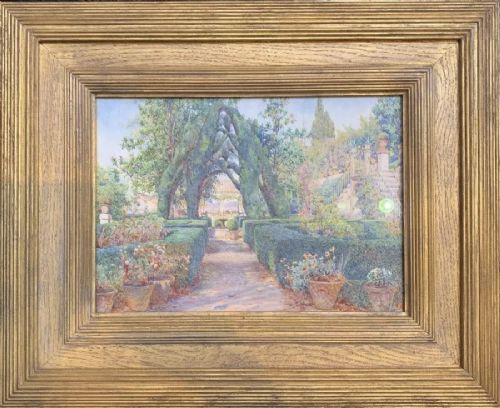
Artists also recorded foreign travels, capturing continental rivers, gardens, and urban plazas. Domestic village scenes and coastal shipping views complete the typical repertoire.
How do I date an antique watercolour?
Dating relies on stylistic evidence, artist signatures, costume details in figures, and architectural clues within the depicted scene. Many works bear contemporary inscriptions or artist signatures on the front or reverse.
Paper watermarks, frame construction, and backing boards offer further chronological markers. Comparative analysis with dated works by the same hand provides precise temporal brackets.
Are these works signed?
Signatures, initials, or monograms appear on many pieces, while others remain anonymous school works. Signatures may be written in pencil or ink directly onto the painted surface or mount.
Attributions often rest on archival research, stylistic comparison, and period inscriptions left on the reverse of the paper. Unsigned works frequently reflect the output of competent amateur or professional regional artists.