






Vintage Cottage Fine Art
These vintage cottage fine art pieces capture rural domestic life and landscapes across the nineteenth and twentieth centuries.
Vintage Cottage Fine Art
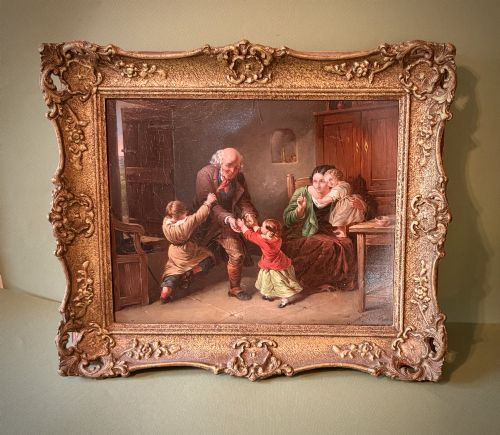
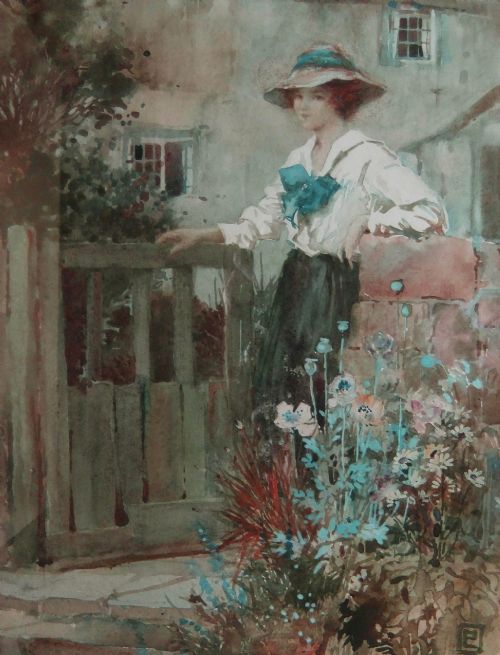
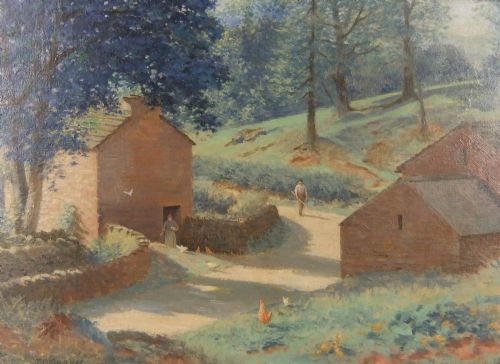
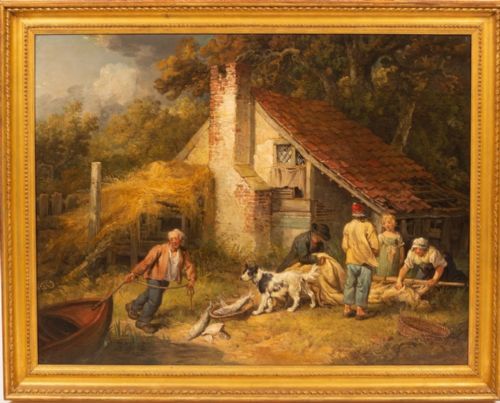
Vintage cottage fine art comprises paintings and watercolours depicting rural homes, gardens, and country landscapes from the nineteenth and twentieth centuries. These works frequently document domestic scenes, farming life, and coastal or river views created during the Victorian, Edwardian, and later periods.
Most examples encountered on this page date from the nineteenth century up to nineteen sixty, spanning British Impressionism, Victorian realism, and naturalism. Common subjects range from quiet cottage doorways and garden corners to broader Yorkshire and Welsh landscape views.
Makers and artists represented include named painters such as Percy Lancaster, Reginald Grange Brundrit, and Charles Vickers alongside regional artists. The selection encompasses oil paintings on canvas, panel, and board, alongside watercolours framed in wood and gilt wood.
How they were made
The works utilise traditional media including oil paint applied to canvas, wood panels, or paper boards, alongside watercolour on paper. Painters layered pigments to capture natural light and texture, particularly in depicting rural stonework, foliage, and skies.
Finished paintings are typically housed in period frames constructed from wood or gilt wood, which frequently feature moulded detailing and protective glass layers for watercolours and paper works.
Materials documented across the collection include canvas, paper, wood, oil paint, gilt wood, and glass.
What varies in quality
Quality in these works is determined by the artist's handling of light, brushwork precision, and compositional depth in rendering landscape and domestic subjects. Works by established or exhibited painters demonstrate greater technical skill in anatomical and architectural perspective.
The physical condition of the canvas, board, or paper, along with the preservation of the original paint layer and the integrity of the period wooden frame, distinguishes finer examples from simpler decorative pieces.
Percy Lancaster·Reginald Grange Brundrit·Charles Vickers·Ernest Higgins Rigg·Kershaw Schofield·Ralph Hedley·B. Kaufmann·Abraham Hulk Junior·John Falconar Slater·James Ward·Pauline Delacroix Garnier·Henry Bright
The Vintage Cottage Fine Art Glossary
- Oil painting
- A work executed with pigments bound in a drying oil medium, most commonly applied to canvas, wood panel, or board.
- Watercolour
- A painting method where fine pigment is suspended in a water-based, translucent solution applied to paper.
- Gilt wood
- Timber frames or decorative elements coated with a thin layer of gold leaf or metallic gold paint.
- Victorian realism
- An artistic style from the nineteenth century focusing on everyday scenes and rural life depicted with detailed accuracy.
- British Impressionism
- A painting style influenced by French techniques, focusing on light, loose brushwork, and atmospheric outdoor scenes.
Vintage Cottage Fine Art: Frequently Asked Questions
How do I date an oil painting?
Dating relies on stylistic evidence, artist signatures, and the materials used for the canvas, panel, or board. Frame construction and handwritten inscriptions on the reverse often provide additional chronological clues.
Comparing brushwork and subject matter with documented works from specific periods helps narrow down the decade of creation.
Where should I hang these paintings?
These works suit traditional living spaces, studies, or hallways where natural light enhances the painted textures and colours. Avoid placing them in areas with direct sunlight or high humidity to protect the paint and paper.
Pairing smaller watercolours with neutral wall backgrounds allows the detail of the rural scenes to stand out clearly.
How do I clean a painted canvas?
Dust accumulated on the surface should be removed very gently with a soft, dry brush without applying pressure to the paint layer. Avoid using water, household cleaners, or solvents on historic oil or watercolour surfaces.
Professional conservators should handle deeper cleaning or the removal of discoloured varnish from nineteenth-century oils.
What is the difference between oil and watercolour?
Oil paint utilises a slow-drying oil medium that permits thick impasto texture and rich, deep colour blending on canvas or wood panels. Watercolours use water-soluble pigments on paper, resulting in transparent, luminous washes that require glass protection.
Oils generally offer greater durability over time compared to works on paper.