
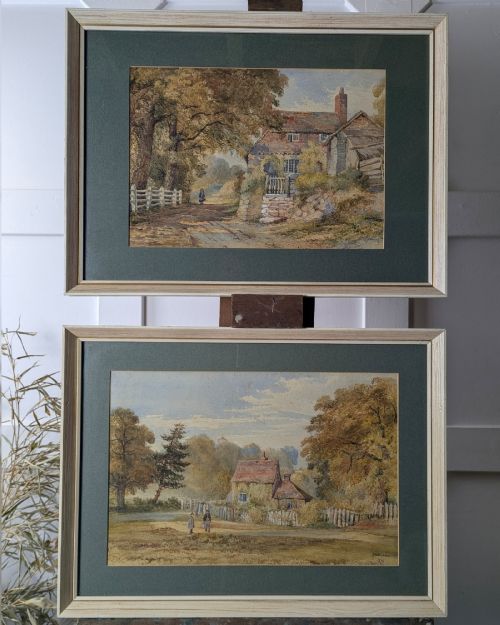
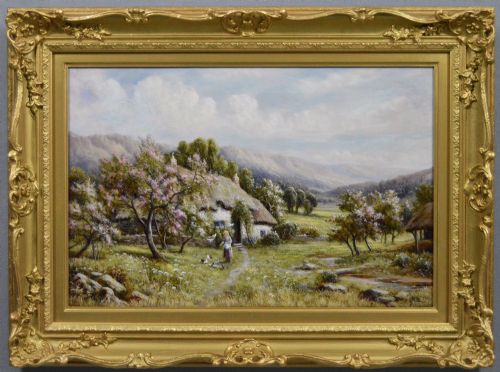
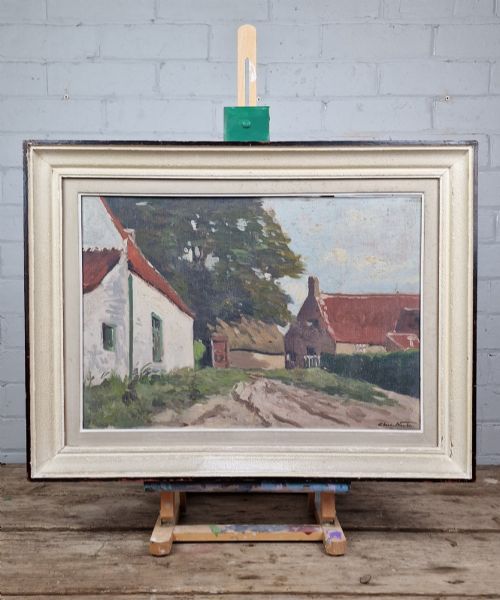
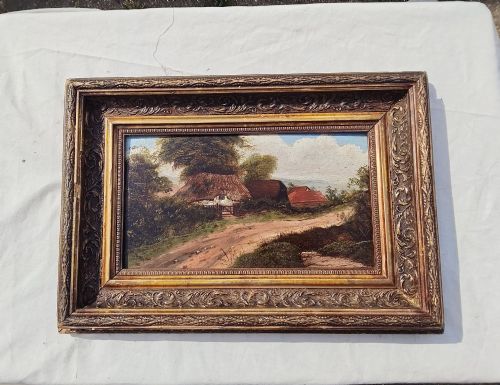


Rural Cottage Landscape Painting
A rural cottage landscape painting brings the quiet charm of the countryside and historic domestic life straight into your room.
Rural Cottage Landscape Painting
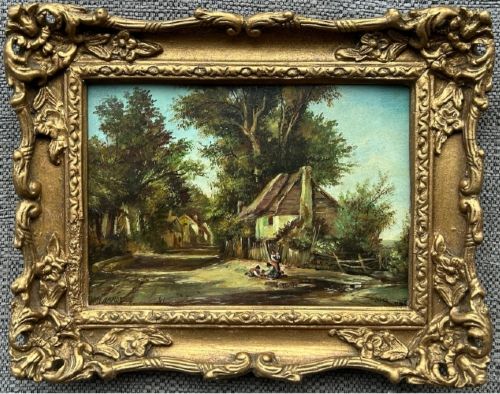
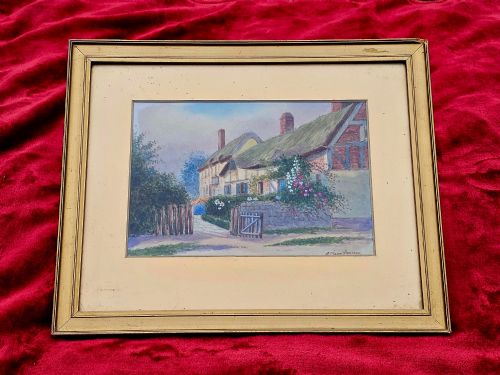
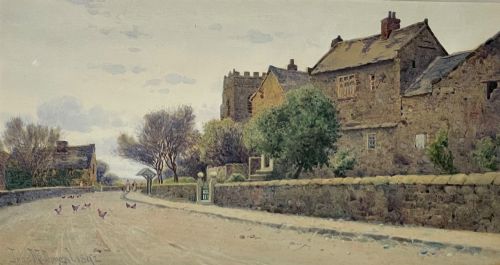
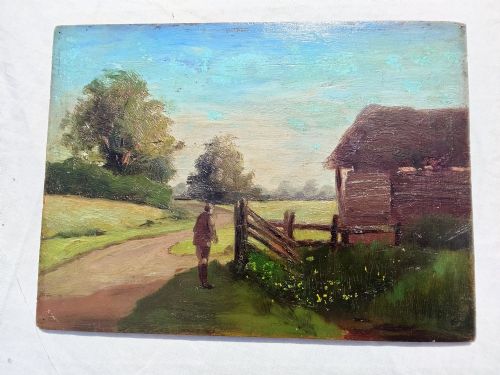
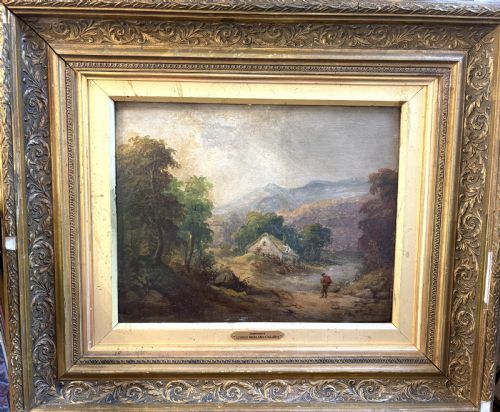
A rural cottage landscape painting captures pastoral scenes featuring traditional dwellings, farmsteads, and country figures set within open fields or beside rivers. These works largely date from the nineteenth and twentieth centuries, spanning periods from the Georgian era through to the mid-twentieth century.
The versions most commonly met on this page are framed watercolours and oil paintings on canvas, panel, or board. They frequently depict thatched cottages, rural streams, and agricultural daily life executed by British and European artists working in traditional styles.
Collectors encounter both signed works by known regional painters and pieces attributed to broader provincial schools. Their appeal lies in the straightforward documentation of historic rural architecture and pastoral scenery.
How They Were Made
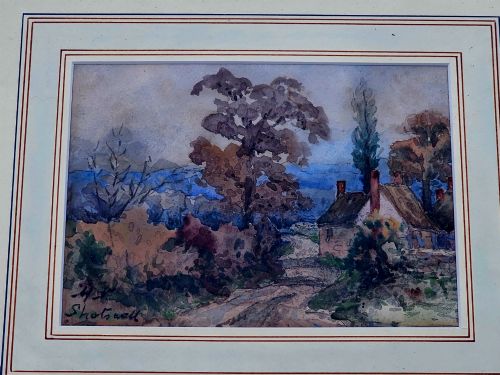
Artists painted these scenes using oil paint or watercolour pigment applied to paper, canvas, wooden board, or card. Oil paintings on canvas or panel allowed for rich layering and textured brushwork, while watercolours on paper utilised fluid washes to capture light and atmosphere.
Supports varied according to the medium and period, with wooden panels, card, and stretched canvas serving oil compositions. Framed presentation often included gilt or wooden surrounds that protected the delicate surfaces of paper and canvas.
Several watercolours capture quiet moments of ducks feeding and cattle grazing by nineteenth-century ponds.
What Varies in Quality
The standard of a rural cottage landscape painting rests upon the confidence of the brushwork and the artist's ability to render light, atmosphere, and architectural proportion. Stronger examples display deft handling of pigment and balanced composition, whether in the fine detail of a thatched roof or the loose touches of an impressionist study.
Condition and originality also separate pieces within the range, including the preservation of the pigment, the stability of the support, and the presence of period framing. Works that retain their original surface texture and clear provenance command greater appreciation among collectors.
William Howard Hardy·A. Marie Parsons·John McDougal·Robert A. Nottingham·Robert John Hammond·Charles Houben·George Morland·John Horace Hooper·Reginald Grange Brundrit·Fred Lawson·William Hoggatt·James Hardy Junior·Frederick James Knowles·William Greaves·Charles Vickers·Robert Finley McIntyre·Linnie Watt·Lorenzo Headley·Helmut Reuter·Harry Sylvester Stannard·Henry Charles Fox·Will Anderson·Robert Hollands Walker·John Falconar Slater·Thomas James Lloyd
The Rural Cottage Landscape Painting Glossary
- Oil on Canvas
- Pigment bound in drying oil applied to a woven fabric stretched across a wooden frame. This technique allows for deep colour saturation and reworkable textures.
- Watercolour
- Pigment suspended in a water-based, transparent solution applied to paper. It relies on the white of the paper to provide luminosity and light.
- Panel
- A flat piece of wood or wooden board used as a rigid support for painting. Artists frequently utilised panels for smaller landscape works during the nineteenth century.
- Pastoral
- A style of art that idealises rural life, country cottages, and agricultural settings. These scenes focus on tranquil interactions between people, animals, and nature.
- Impressionism
- An artistic approach focusing on the visual impression of the moment, utilising open brushstrokes and ordinary subject matter. It emerged strongly in late nineteenth and early twentieth-century painting.
Rural Cottage Landscape Painting: Frequently Asked Questions
What is a rural cottage landscape painting?
A rural cottage landscape painting is a work of art depicting country scenes, traditional houses, and agricultural life.
These pieces typically date from the nineteenth and twentieth centuries and use oil or watercolour mediums.
How were these paintings displayed originally?
These artworks were traditionally housed in wooden or gilt frames designed to protect the paper or canvas.
Many period frames survive with the paintings, contributing to the historical presentation of the artwork.
How do I care for an antique painting?
Protect the artwork from direct sunlight and maintain stable indoor humidity levels to preserve the paint and canvas.
Avoid using liquid cleaners on the painted surface and consult a professional restorer for cleaning.
How can I tell the period of a painting?
Dating relies on stylistic clues, materials like canvas or card, and signatures or attribution to known artists.
Examining the back of the panel or stretcher frame can also reveal historical labels and framing evidence.