
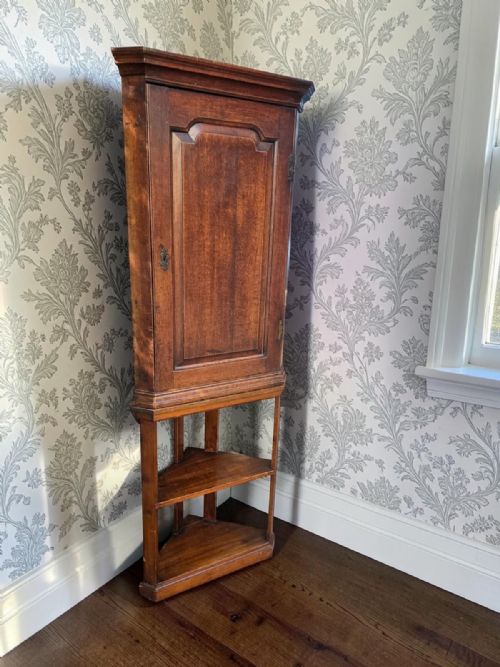
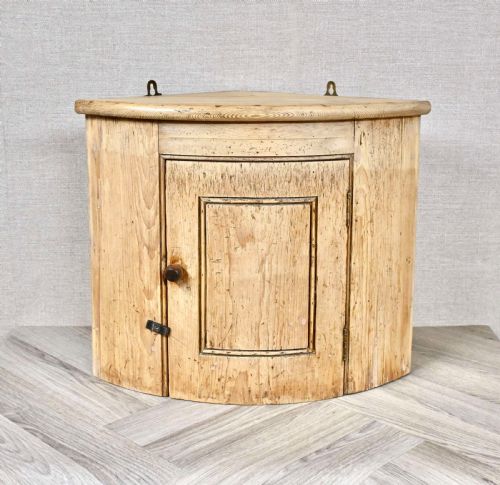
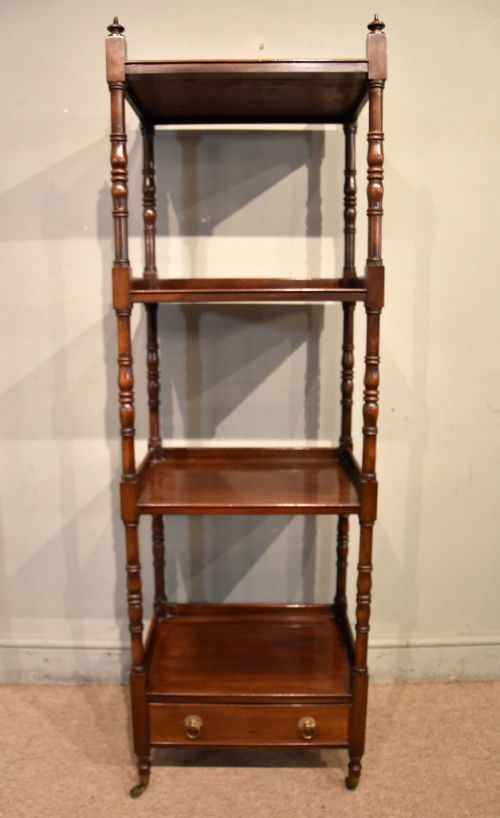
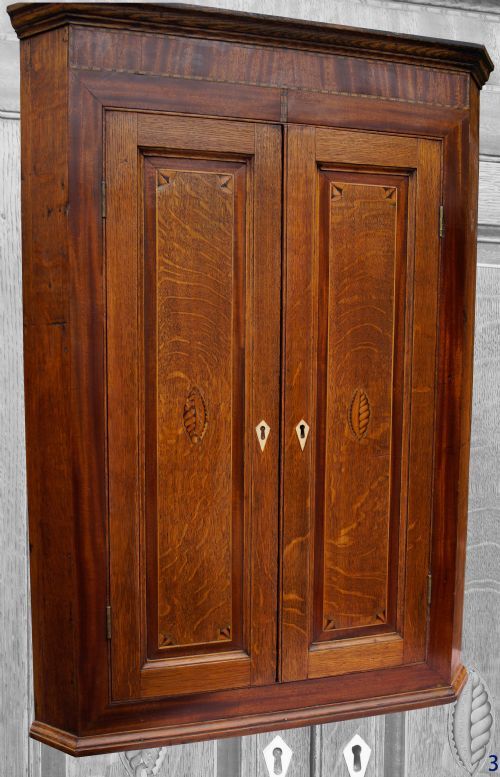
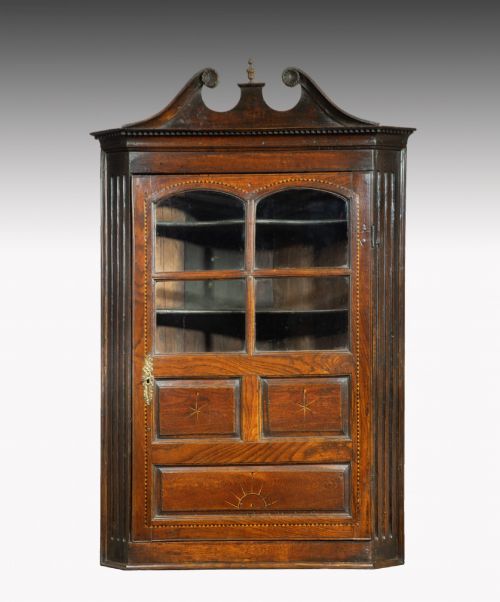
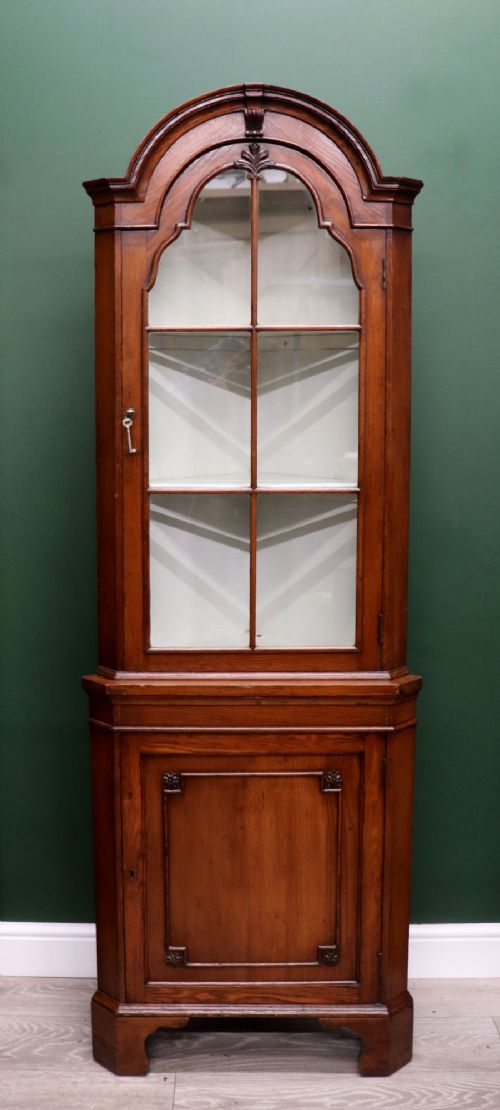
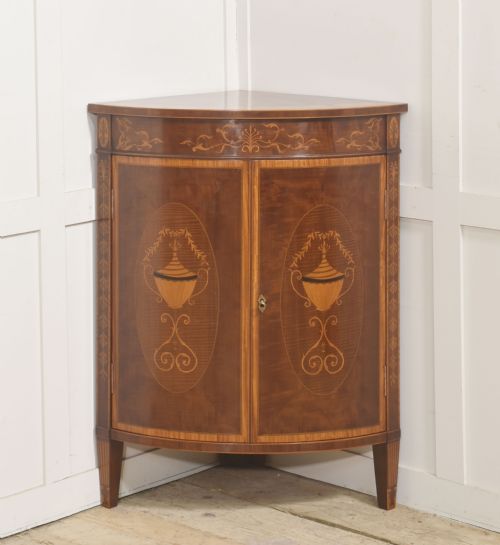

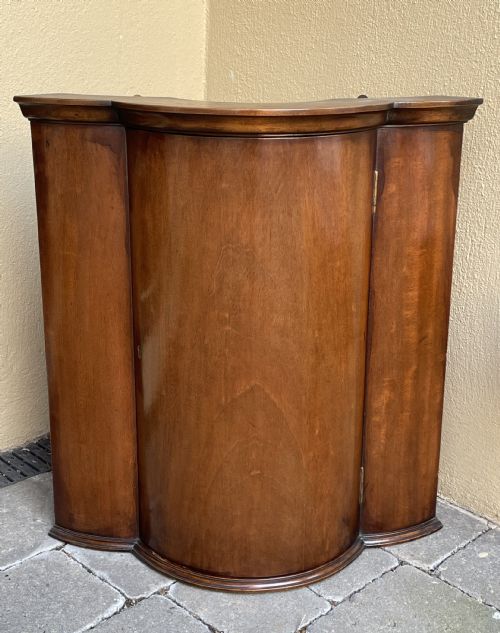


Vintage Corner Storage Unit
A vintage corner storage unit turns dead angles into display space, offering clever architectural storage built to fit snugly where walls meet.
Vintage Corner Storage Unit
A vintage corner storage unit uses wasted angular space to hold domestic items, appearing in hanging and floor standing formats across multiple decades.
Georgian and Victorian examples dominate the selection, built from heavy timbers designed to fit neatly into domestic rooms.
Common variations include bow front cupboards, wall mounted units, and tiered whatnots designed to sit flush against interior walls.
How they were made
Cabinet makers constructed these units predominantly using solid oak, mahogany, and pine, often finished with brass hinges, escutcheons, and glass panels.
Surface treatments range from plain polished wood to painted pine, lacquer, and intricate Chinoiserie decoration applied to bow front doors.
Joinery techniques include panelled construction for doors and walls, alongside inlaid veneers on later Edwardian and revival pieces.
Makers squeezed storage into impossible angles, proving that even awkward room corners deserve fine joinery.
What varies in quality
The choice of primary timber and secondary wood dictates the baseline quality, with dense oak and figured mahogany sitting above basic pine carcases.
Fine detailing such as brass hardware, crisp panel carving, and balanced proportions separate standard utilitarian cupboards from ambitious cabinet maker commissions.
The Vintage Corner Storage Unit Glossary
- Bow front
- A convex curved cabinet front that projects outward from the corner. This curved profile requires skilled joinery to shape the doors and frame.
- Hanging cupboard
- A wall mounted storage unit fitted with internal brackets or fixing points. These pieces keep floor space clear while utilising upper room angles.
- Whatnot
- An open tiered shelving unit designed for displaying decorative objects. Multiple platforms rise in stages to fit tight room corners.
- Sheraton Revival
- Late nineteenth century design movement replicating neoclassical furniture forms. Pieces typically display light mahogany construction and delicate inlay work.
Vintage Corner Storage Unit: Frequently Asked Questions
How do I hang a wall cabinet?
Hanging corner cupboards require secure fixing to solid wall studs or masonry using appropriate internal brackets. Because solid oak and mahogany units carry substantial weight, professional installation prevents movement.
Ensure the wall angles match the square of the cabinet backboards to avoid straining the frame when screwed into place.
Are these units suitable for small rooms?
Corner storage units make efficient use of compact rooms by occupying unused wall junctions instead of protruding into open floor space. Hanging versions clear the floor entirely.
Floor standing models anchor room corners while providing tall shelving capacity without blocking central circulation paths.
How do I clean mahogany surfaces?
Dust mahogany and oak regularly with a soft, dry cloth to prevent grit accumulation on polished finishes. Avoid silicone polishes that build up residue over time.
Feed dry antique timber occasionally with traditional wax to maintain the moisture and lustre of the wood grain.
Can I paint a pine cupboard?
Pine cupboards appear in various finishes, and unpainted or stripped examples offer a rustic aesthetic. Some period pieces feature historic painted surfaces.
Applying modern paint to unpainted antique timber alters the original finish, so consider the existing state before undertaking alterations.