
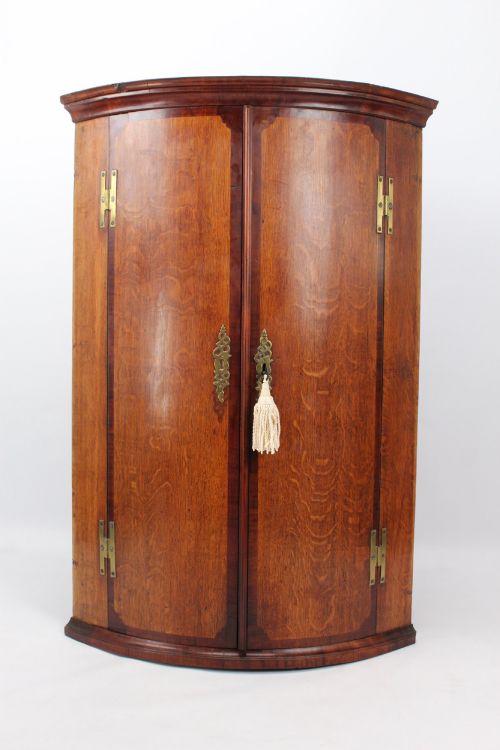
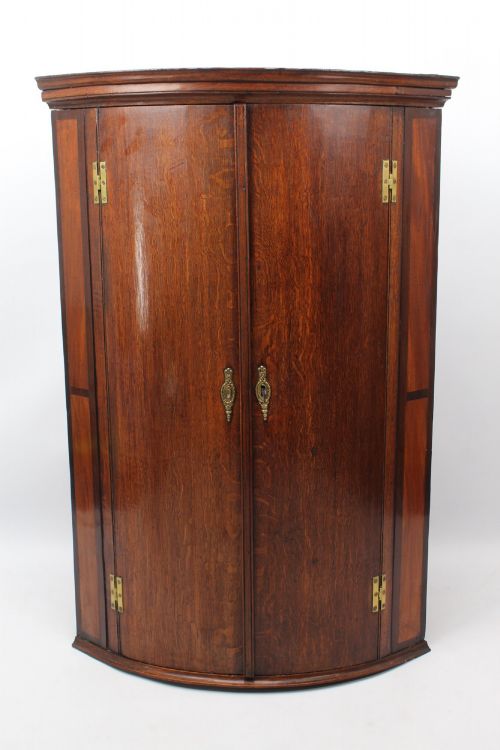


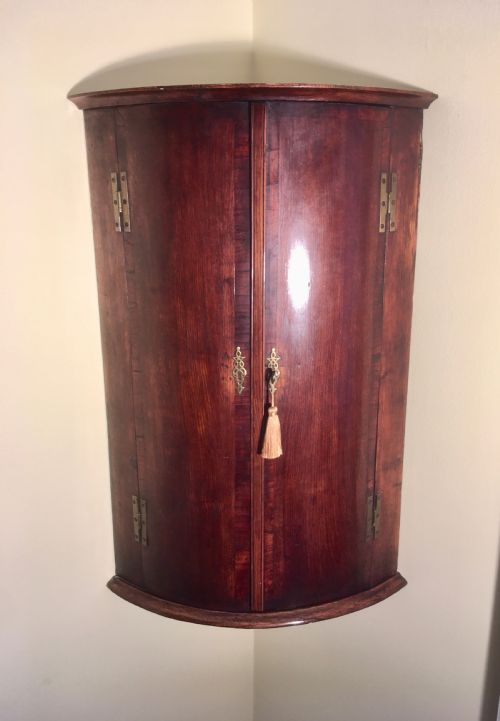
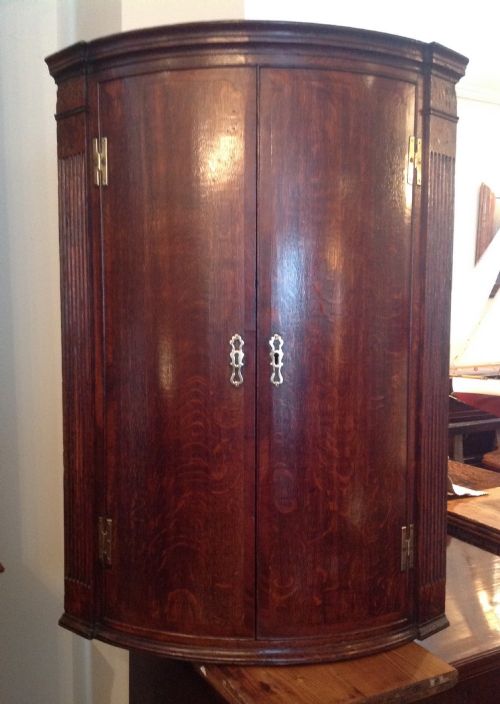

Oak Bow Fronted Cabinet
An oak bow fronted cabinet is a practical piece of storage furniture with a curved front, prized for fitting neatly into rooms.
Oak Bow Fronted Cabinet
An oak bow fronted cabinet is a practical storage piece designed to fit into corners or stand against a wall, utilising a curved front to soften the geometry of a room. When you search for an oak bow fronted cabinet, you encounter forms ranging from hanging wall cupboards to standing and corner variants.
The pieces appearing on this page span the Georgian period, the eighteenth century, and the early twentieth century, showing both Georgian and Edwardian styles. Corner cupboards and chests of drawers dominate the forms, reflecting how these items were originally built to maximise domestic space.
Georgian examples and eighteenth-century pieces form the bulk of the selection, often constructed as hanging or standing corner cabinets. You also find later interpretations from the twentieth century, including shop cabinets and chests of drawers.
Materials and construction methods
Makers built these cabinets primarily using solid oak, frequently augmented with mahogany, veneer, and wood inlay to create decorative contrast on the curved doors and panels. Brass hardware, such as hinges and escutcheons, provides functional fastening and visual accent against the dark timber.
The curved bow fronts required skilled carpentry to shape the solid timber or bent veneers to a consistent radius. Iron fittings occasionally appear on internal fixings and hanging brackets, ensuring structural stability for wall-mounted corner cupboards.
Several cabinets were built specifically for nineteenth-century shops, watching over trade long before entering domestic rooms.
Distinctions in quality
Quality in these cabinets rests upon the precision of the curved joinery and the selection of the timber grain. Finer examples display carefully matched oak boards and subtle veneer work that follows the sweep of the bow front without distortion.
The integration of secondary timbers like mahogany and the execution of wood inlay mark the difference between standard utility pieces and finer decorative items. Original brass fittings and sound structural integrity in the hanging brackets or standing frames further elevate a piece.
The Oak Bow Fronted Cabinet Glossary
- Bow front
- A convex, curved front on a cabinet or chest of drawers that projects outward. This shape softens the corners of a room and adds visual depth.
- Corner cabinet
- A specialised storage cupboard built with angled sides designed to fit directly into the corner of a room. These save floor space while providing enclosed shelving.
- Veneer
- A thin layer of finer wood applied over a base timber surface to create decorative patterns. It allows makers to utilise expensive grain figures economically.
- Wood inlay
- Pieces of contrasting timber or other materials inserted into recesses in the wood surface to form decorative motifs. This technique highlights the craftsmanship of the maker.
- Hanging cupboard
- A wall-mounted storage unit fitted with internal brackets or fixings for suspension. These items keep floor space clear in smaller domestic interiors.
Oak Bow Fronted Cabinet: Frequently Asked Questions
What is an oak bow fronted cabinet?
An oak bow fronted cabinet is a storage unit featuring a convex curved front facade, constructed predominantly from oak timber. These pieces range from wall-mounted corner cupboards to standing chests of drawers.
They were designed to combine practical domestic storage with space-saving geometry, particularly suited to corners and smaller rooms.
How were corner cupboards used?
Corner cupboards provided secure storage for household goods, tableware, or documents while utilising awkward room angles. Their curved fronts allowed easy access in domestic interiors.
Many examples were hung on walls to keep floor space clear, while others stood independently as corner or shop cabinets.
Where should I place a bow front cabinet?
These cabinets suit corners or designated wall spaces where their curved fronts can be appreciated without obstructing movement. Corner models naturally anchor empty room angles.
Living rooms, hallways, and dining areas benefit from the enclosed storage and traditional presence these items provide.