




Vintage Copper Urn
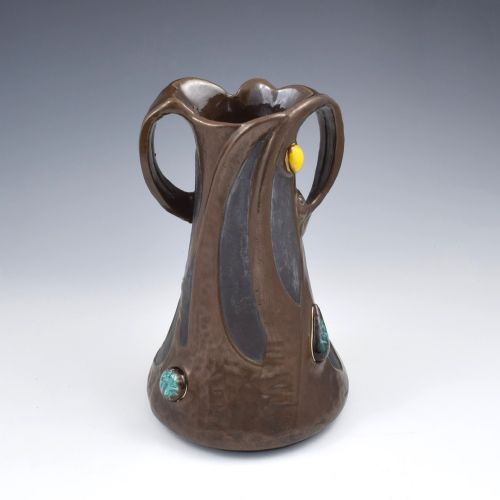
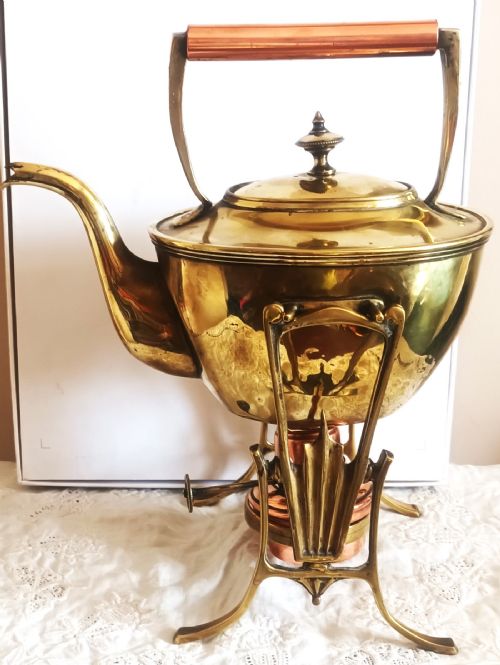
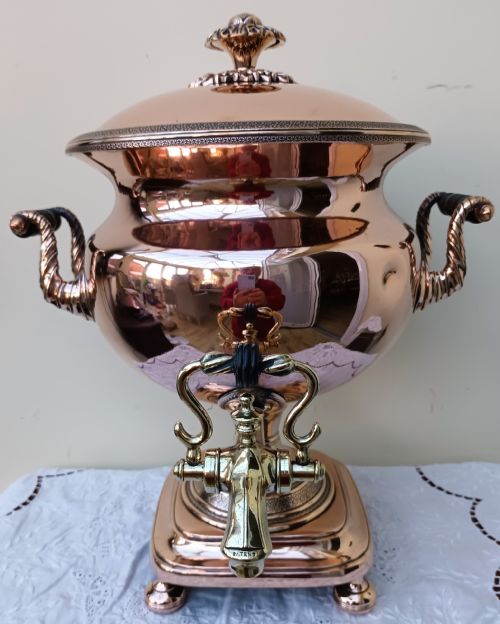
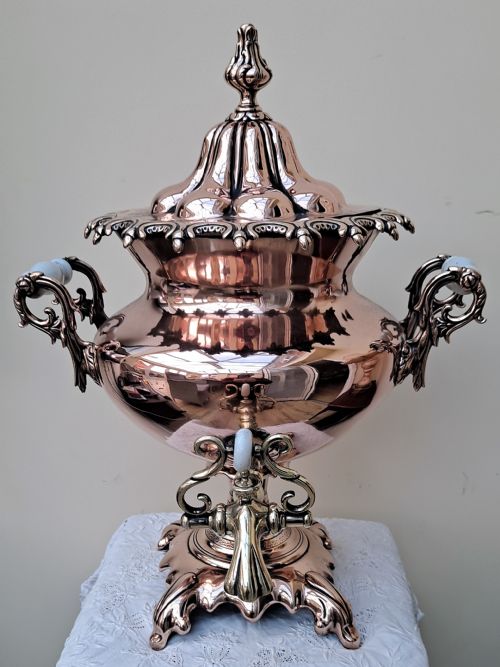
These vintage copper urn pieces bring warmth and weight to an interior, spanning Georgian samovars, Victorian kettles and Arts and Crafts jardiniere vessels.
Vintage Copper Urn
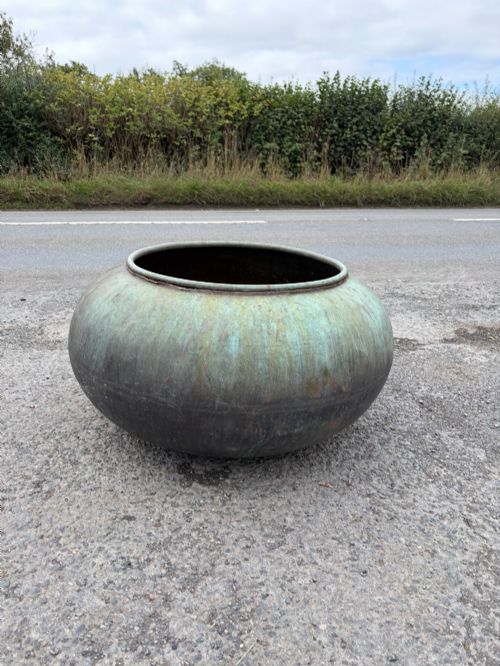
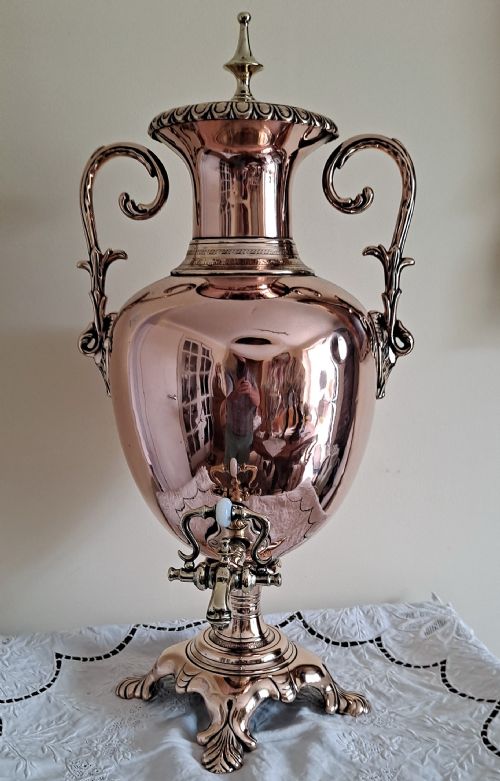
A vintage copper urn typically manifests as a Georgian or Victorian tea samovar, a tall jardiniere, or a decorative display vessel fashioned from heavy sheet metal. These forms served practical domestic purposes such as heating water or holding fuel before becoming decorative focal points in nineteenth-century and early twentieth-century interiors.
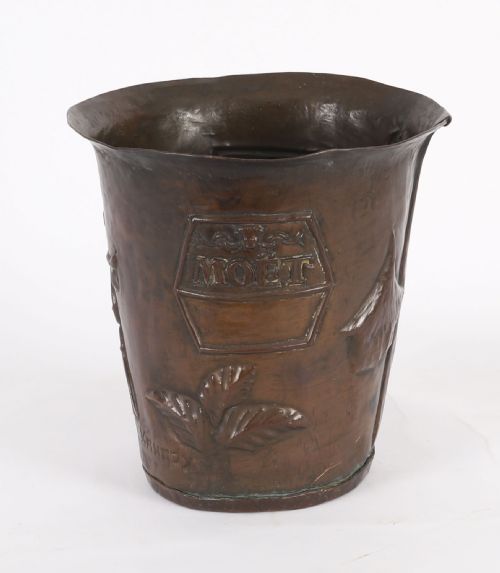
The varieties on this page extend from English and French wine coolers and log bins to Indian repoussé vases and Japanese cloisonné pieces, showing diverse global workshops. Buyers encounter everything from small spirit kettles on stands to large umbrella bins in iron frames, reflecting the broad utility of copper in period homes.
How they were made
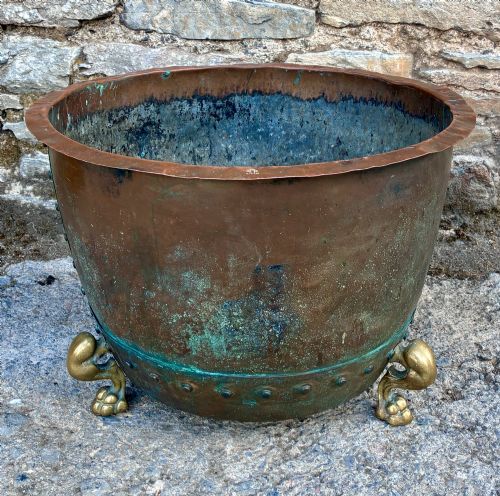
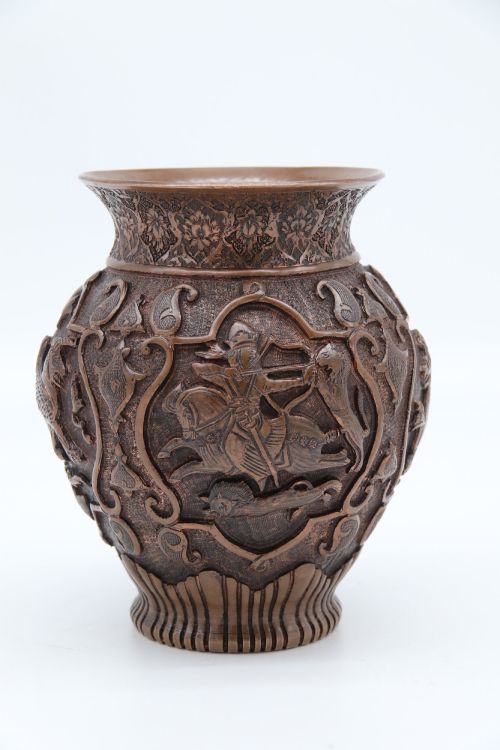
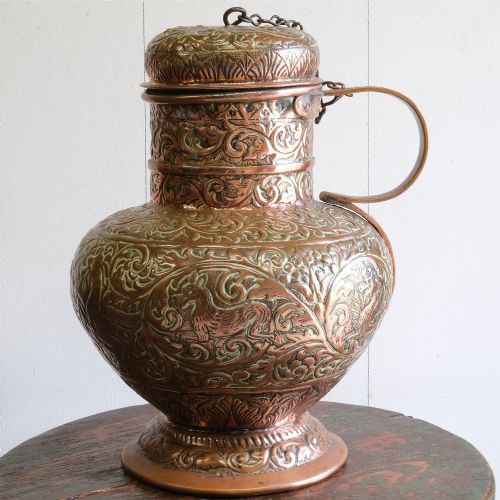
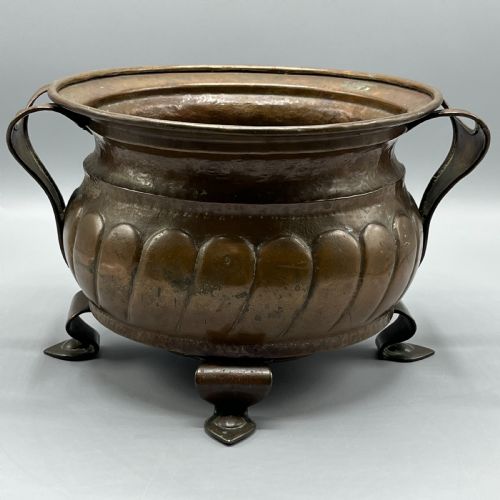
Makers shaped these objects primarily from sheet copper, often joining seams with visible rivets or hammering the metal by hand into vessels like cauldrons and jardiniere planters. Many items incorporate contrasting brass handles, taps, or mounts, whilst others feature intricate repoussé and chased floral decoration created with hammer and punch.
Surface finishes vary according to the period and region, encompassing bright polished surfaces alongside patinated bronze details and ebonised wood or bone fittings. Supporting frames utilise wrought iron or turned timber, giving structural stability to heavy water barrels and log buckets.
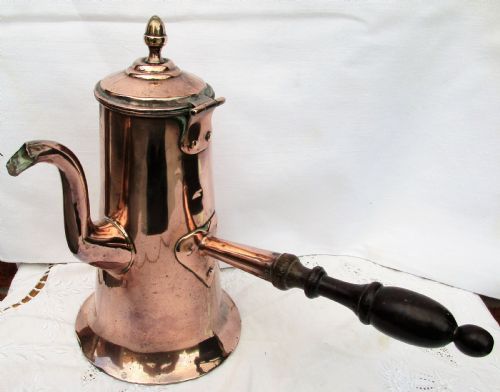
Several Victorian copper kettles come equipped with tiny spirit burners ready to boil water for tea on your modern desk.
What varies in quality
Quality rests in the heaviness of the gauge metal used and the crispness of any chased or repoussé ornament, distinguishing masterwork samovars from simpler utilitarian boilers. The integration of original brass spigots, matching handles, and fitted stands elevates the integrity of a piece.
Proportion and decorative coherence dictate the standing of items like Art Nouveau and Arts and Crafts planters, where balanced form and careful hand-beating separate standard production items from exceptional workshop examples.
William Soutter And Sons·Bretby Pottery·Cantagalli
The Vintage Copper Urn Glossary
- Samovar
- A heated metal urn traditionally used to boil water for tea in Russian and European households. These large vessels often sit on four legs with a central spigot.
- Repoussé
- A metalworking technique where the artisan hammers the design from the reverse side to create a raised pattern on the front. This ornamentation appears frequently on vases and jardiniere planters.
- Jardiniere
- An ornamental pot or stand designed to hold growing plants or flowers. In copper, these often double as log bins or umbrella stands.
- Spirit Kettle
- A small water kettle mounted on a metal stand above a small spirit burner. They were used at the tea table to keep water hot.
- Dinanderie
- A term for objects made of beaten brass, copper, or bronze, often associated with decorative vessels from the early twentieth century. These items display rich surface textures.
Vintage Copper Urn: Frequently Asked Questions
What is a copper samovar?
A copper samovar is a large heated urn equipped with an internal vertical tube and a spigot, designed to maintain boiling water for tea. Georgian and Victorian examples often stand on ornate feet with brass handles and taps.
These vessels occupied a central position in period dining and drawing rooms, combining heavy gauge metal construction with refined decorative handles and finials.
How do I clean copper urns?
Maintenance depends on whether you prefer a bright polished metallic shine or an aged dark patina with historical character. Most collectors use mild soapy water and specialised non-abrasive metal creams only if polishing is necessary.
Harsh chemical cleaning agents strip away centuries of oxidation and can damage delicate chased or repoussé surface details permanently.
Are these urns waterproof?
Many copper vessels, particularly jardiniere planters, log bins, and wine coolers, were built to hold liquids or damp materials. However, older soldered seams can develop minor leaks over time.
It is advisable to test vessels with a small amount of water or use a discreet internal liner if utilising them for fresh floral arrangements.
How do I date a copper urn?
Dating relies on examining construction techniques such as hand-riveting, dovetail joins, and the style of brass mounts or handles. Georgian and Victorian pieces show heavy cast brass elements, while later Arts and Crafts or Art Nouveau items feature specific motifs and hammered textures.
Maker marks stamped into the base or handles provide the most direct evidence of a workshop's active period.