


Vintage Copper Pan Handle
A vintage copper pan handle anchors pieces of utilitarian kitchenware shaped by centuries of heavy hearth use.
Vintage Copper Pan Handle
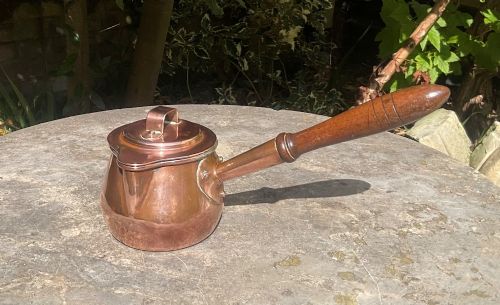
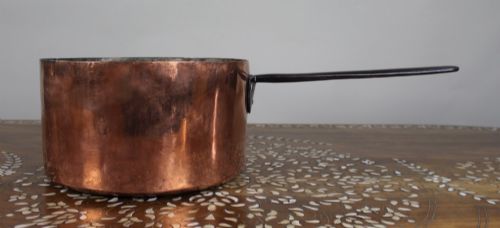
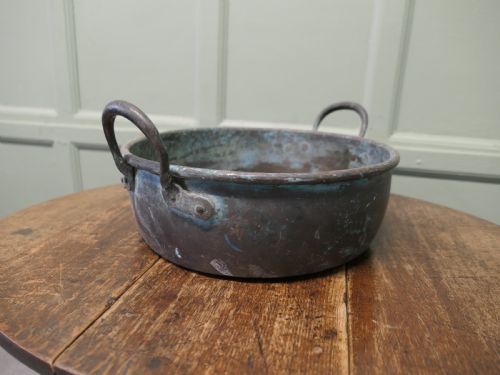
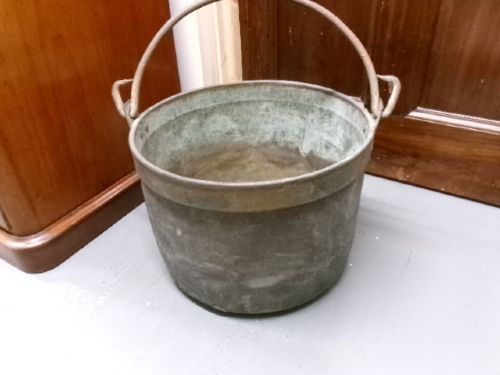
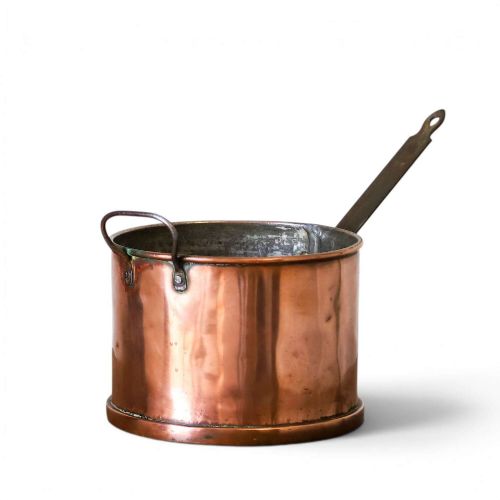
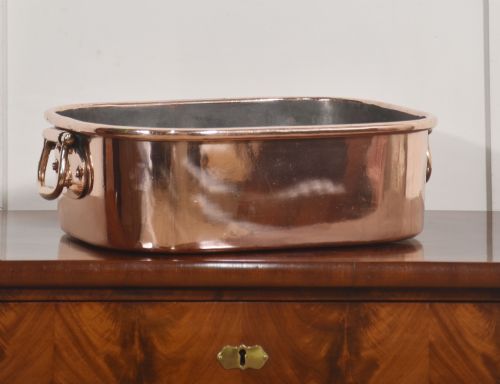
A vintage copper pan handle is typically encountered on substantial Georgian and Victorian vessels designed for serious domestic or institutional cookery. These listings feature heavy preserving pans, deep saucepans, cauldrons and fish kettles sourced from English and French kitchens.
Buyers frequently find individual saucepans alongside matching sets of graduating pans and large preserving vessels with riveted attachments. The forms range from simple milk pans to lidded kitchen workhorses and specialised warming vessels.
The periods represented span from the eighteenth century through the nineteenth century, including Arts and Crafts examples. Each piece demonstrates the heavy-gauge metalwork required for open-fire and early stove cooking.
Materials and construction
The primary construction relies on heavy-gauge hand-beaten copper paired with contrasting structural metals for durability. Makers joined handles and bodies using robust copper rivets or secure mountings.
Handles incorporate diverse materials chosen for heat management and grip, including brass, cast iron, wrought iron and oak. Interiors often retain remnants of traditional tin linings applied to prevent direct contact between food and copper.
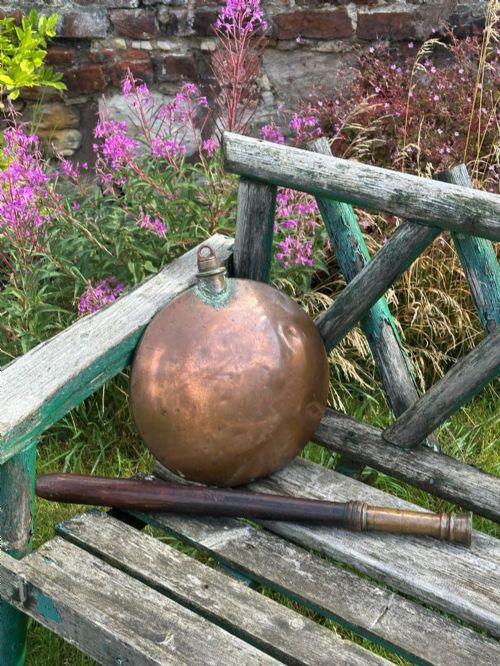
Some warming flasks were specifically shaped like moons to tuck comfortably against the body during chilly Georgian carriage rides.
Markers of distinction
Quality rests in the thickness of the copper gauge and the integrity of the original handle attachment. Superior pieces maintain their structural form despite heavy use over centuries at the hearth.
Maker stamps and patination elevate certain items, showing evidence of skilled hand-beaten shaping rather than mass production. The harmony between the copper vessel and its securely fastened handle defines the finer specimens.
Hodges and Sons·Griffiths Patent·Liptons
The Vintage Copper Pan Handle Glossary
- Gauge
- The thickness of the sheet copper used to form the body of the vessel. Heavier gauges indicate professional culinary grade cookware.
- Hand-beaten
- A manufacturing method where metal is shaped by hammer blows, leaving subtle surface facets visible on the exterior.
- Tinned
- The protective interior coating applied to copper cookware to prevent chemical reactions with acidic foods. Tin linings require periodic renewal.
- Cauldron
- A large deep cooking pot with a swing handle designed for suspension over an open fire or placement in a hearth.
- Preserving pan
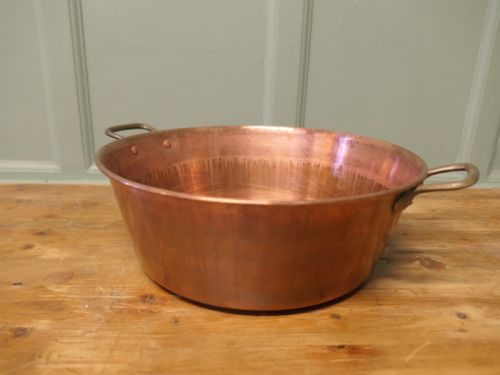
- A wide, shallow vessel used historically for jam making and fruit preserving, allowing rapid evaporation.
Vintage Copper Pan Handle: Frequently Asked Questions
Can I use these pans on a modern cooker?
Many of these historical pans feature heavy flat bases that sit steadily on modern hobs, though thermal transfer varies by age and thickness.
Buyers often use them for display or gentle domestic cooking after checking the interior tin lining.
How do I clean vintage copper safely?
Traditional cleaning involves mild polishes specifically formulated for copper to preserve the historic patination accumulated over generations.
Scouring pads and harsh abrasives should be avoided to protect the hand-beaten surface texture.
Why do handles use different metals?
Makers selected materials like iron, brass, and oak based on heat conduction, structural strength, and the intended weight of the vessel.
Wrought iron and cast iron provided rigid support for heavy cauldrons, while wood offered a cooler grip.
How do I date a copper pan?
Dating relies on construction methods such as hand-beating marks, dovetail seams, and the style of the riveted handle attachments.
Georgian and Victorian pieces display distinct forming techniques that separate them from later twentieth-century kitchenware.