


Large Victorian Copper Pan
A large victorian copper pan brings genuine nineteenth-century utility and warmth to a modern kitchen, offering heavy metal construction that lasts for generations.
Large Victorian Copper Pan
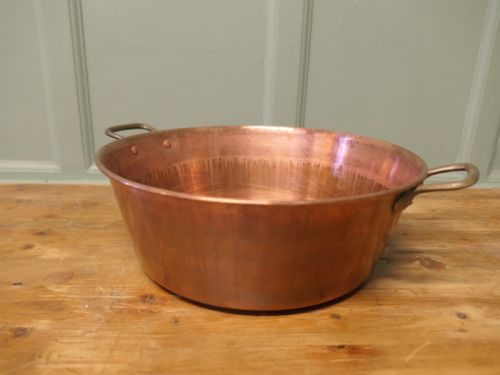
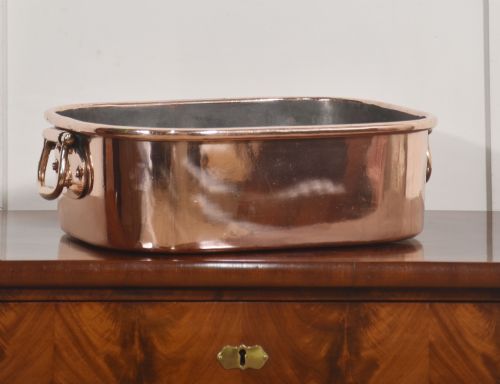
A large victorian copper pan encompasses heavy kitchenware shaped for preserving, jam-making, and stewing, alongside fish kettles, cream pans, and large cauldrons. The evidence shows these pieces span the nineteenth century, including specific dates from eighteen-sixty up to nineteen-thirty, reflecting long traditions of domestic and institutional cooking.
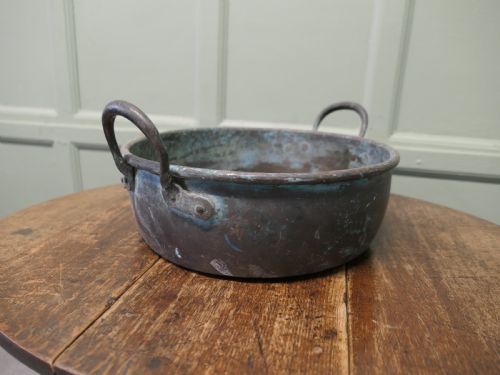
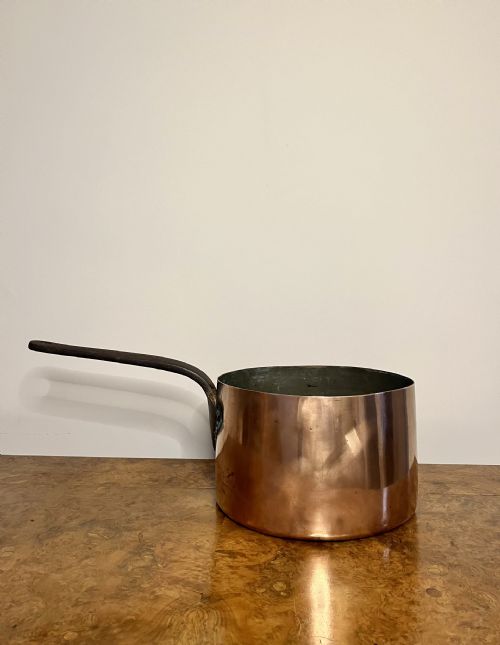
Buyers seeking a large victorian copper pan frequently encounter double-handled preserve pans, log bins, and lidded saucepans bearing the honest marks of hearth use. Many survivors retain practical forms like heavy swing handles in iron or brass fittings designed for heavy lifting over open fires or ranges.
While traditional cookware dominates the record, related vessels such as grain measures, balance scales, and planters appear among the wider category. Most items share a robust nineteenth-century country or rustic farmhouse character rather than delicate parlour refinement.
Construction and materials
Makers formed each large victorian copper pan from heavy sheet copper, hammering or rolling the metal to build thick walls capable of distributing heat evenly across large volumes. Wrought iron and cast iron frequently provide structural strength for handles, swing Bails, and rims.
Surviving pieces often incorporate brass attachments and internal tin linings intended to prevent copper from reacting with acidic foodstuffs during long preserving sessions. The integration of these disparate metals relies on traditional riveting and dovetailing techniques visible along seams and bases.
One grain measure bore the unassuming stamp No6, proving that even utilitarian farm vessels liked to keep their paperwork in order.
Assessing quality and weight
Weight serves as a primary indicator of worth, separating thin decorative vessels from substantial kitchen workhorses built for daily service in large households. Heavier gauge copper retains structural integrity better under heat and resists the warping common in lighter vessels.
The precision of hand-hammered seams and the survival of original iron or brass handles distinguish superior examples from ordinary production. Original surface patination and maker attribution further separate standard utility pieces from exceptional survivors.
Hodges and Sons
The Large Victorian Copper Pan Glossary
- Preserve pan
- A wide, open vessel designed for boiling fruits and sugar into jam. These pans typically feature curved bases to facilitate stirring.
- Fish kettle
- An elongated metal vessel fitted with a removable internal poaching rack. Such pieces enabled cooks to lift whole fish out of liquid intact.
- Cream setting pan
- A wide, shallow dish used in dairies to allow cream to rise to the surface of milk. They utilise broad surface areas for efficient separation.
- Patina
- The surface sheen and colour acquired by copper and iron through age and use. This natural oxidation records the history of the object.
- Wrought iron
- Tough, malleable iron shaped by hammering while hot. Makers used this material for strong handles and hanging bails on heavy pots.
Large Victorian Copper Pan: Frequently Asked Questions
Can I still cook with them?
Many of these vessels remain physically robust enough for modern stove use, provided the interior tin lining is intact and food-safe.
Buyers often choose to use them for preserving or serving while others prefer to display their historic patination in a kitchen setting.
How do I clean old copper?
Standard commercial copper cleaners remove heavy tarnish, though many collectors prefer preserving the darker patination earned over decades.
Washing by hand with mild soap and drying thoroughly prevents spotting and protects any surviving historic surfaces.
How do I date these pans?
Dating relies on construction methods, handle styles, and occasional stamped maker marks pointing to the nineteenth century.
Hand-beaten seams and wrought iron fittings generally indicate earlier nineteenth-century production compared to later stamped variations.
What were fish kettles used for?
Fish kettles served domestic and estate kitchens for poaching large whole fish in court-bouillon.
The internal perforated tray allowed the cook to lift the delicate fish out without breaking it apart.