


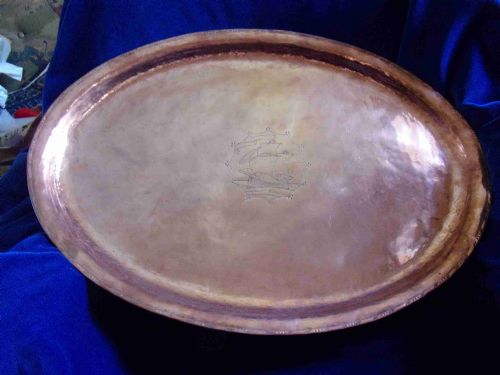


Vintage Copper Charger
A vintage copper charger brings warmth and heavy metalwork pattern to a room, ranging from Japanese cloisonne enamel to British Arts and Crafts pieces.
Vintage Copper Charger
A vintage copper charger is a large decorative plate or tray intended for display on walls or furniture rather than dining use. When you search for a vintage copper charger, you encounter items spanning the Victorian era through the early twentieth century, originating from British workshops, the Middle East, India and Japan.
The objects take the form of circular trays, platters and plaques featuring varied edge treatments and surface decoration. Japanese cloisonne enamel chargers and British Arts and Crafts beaten copper designs dominate the selections available, alongside Middle Eastern silver inlaid metalwork and Indian repousse work.
How they were made
The construction relies on sheet metal shaped by hammering, beating or repousse work to raise patterns from the reverse side. Makers used brass wire outlines to contain coloured cloisonne enamel on Japanese plates, and applied silver inlay or silver plating to enrich copper and brass surfaces.
Artisans employed engraving, piercing and mixed metal techniques to create complex motifs of animals, foliage and symbols. Workshops utilised pie crust edges and patinated finishes to complete the visual texture of the metal.
Vintage Copper Charger Retail Price Guide 2026
Typical asking prices for vintage copper charger among the pieces listed under this phrase on Sellingantiques today, from the lower quarter to the upper quarter. They describe what is for sale here now, not the wider market.
Listings combine British Arts and Crafts copper work with Japanese Meiji period cloisonne enamel and Middle Eastern inlaid metalwork.
What varies in quality
Quality rests upon the crispness of the handwork, the depth of the repousse relief and the complexity of the design. Pieces with intricate pictorial subjects like birds, dragons or human figures demand greater skill than plain surfaces.
The fineness of the enamel work, the precision of silver wire inlays and the integrity of the patination separate standard production from master-grade execution. Heavier gauge metal and signed studio attributions elevate the standing of individual chargers.
Hugh Wallis·Faulkner Bronze Company
The Vintage Copper Charger Glossary
- Repousse
- A metalworking technique where the artisan hammers a design from the reverse side to form a raised relief on the front. This method creates tactile depth on copper and brass chargers.
- Cloisonne
- An ancient technique for decorating metalwork objects with colour using vitreous enamel held within wire partitions. Japanese makers excelled in this method during the Meiji period.
- Cairo Ware
- Nineteenth-century metalwork produced in Egypt featuring intricate silver and copper inlay across brass or copper surfaces. These pieces were frequently acquired by travellers on the Grand Tour.
- Patinated Copper
- Copper that has been chemically treated or aged to alter its surface colour and tone. This treatment accentuates the engraved details and relief work.
- Arts and Crafts
- A design movement valuing handcraftsmanship and simple decoration over industrial mass production. British makers in this style produced beaten copper chargers with organic motifs.
Vintage Copper Charger: Frequently Asked Questions
How were copper chargers used?
These large metal plates served primarily as decorative wall plaques or tabletop display trays rather than practical tableware.
Craftsmen designed them to showcase metalworking skill and catch the light in domestic interiors.
How do I hang a heavy charger?
Large metal chargers require secure wall fixings designed to support the weight of solid copper or brass.
Use adjustable spring wire hangers that grip the rim safely without damaging the edge.
How do I clean a copper charger?
Dust the surface gently with a soft dry cloth to preserve existing patination and age character.
Avoid harsh chemical metal polishes that strip away historical dark patinas and enamel details.
How do I date a copper charger?
Examine the manufacturing technique, the style of the motif and any maker signatures or stamps present on the metal.
Japanese pieces often align with Meiji period reigns, while British examples reflect Victorian or Arts and Crafts periods.