



Vintage Compactum Clothes Press
A vintage compactum clothes press is a capacious bedroom storage piece combining hanging space and drawers, offering efficient organisation for a traditional wardrobe.
Vintage Compactum Clothes Press
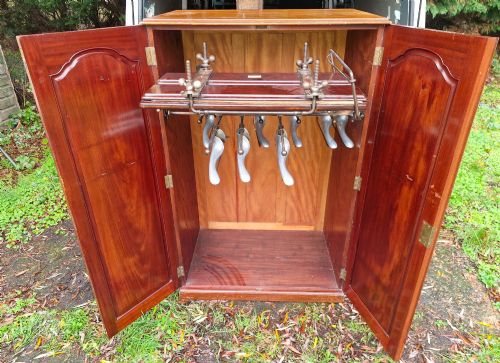
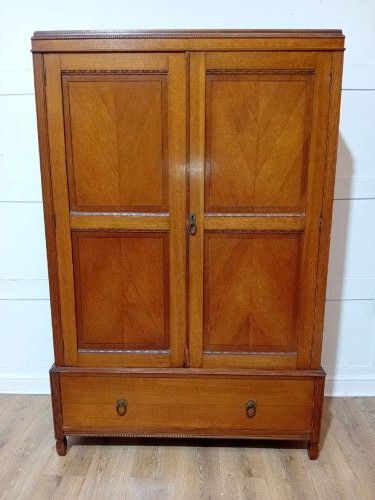
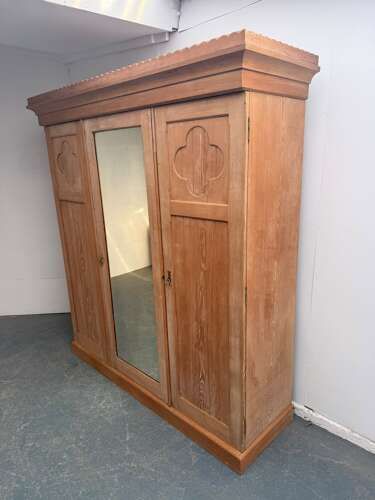
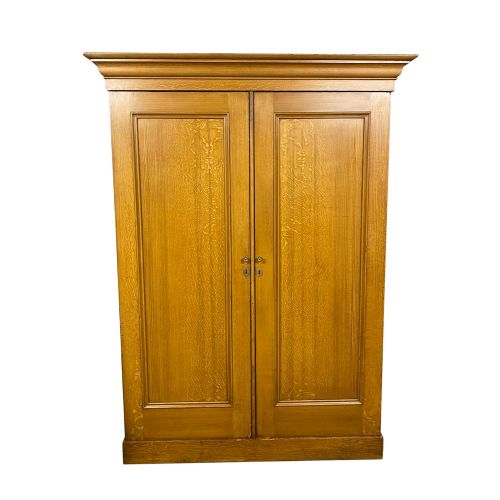
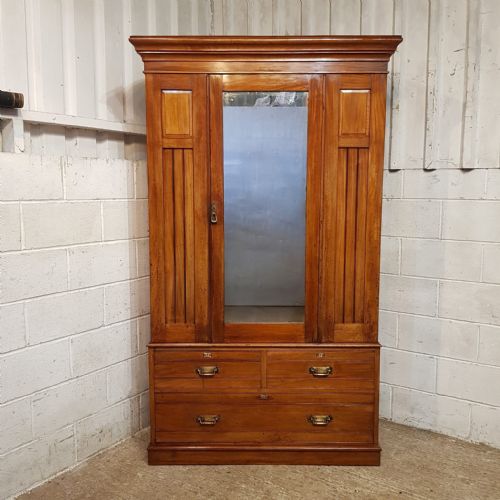
A vintage compactum clothes press provides substantial bedroom storage by merging wardrobe hanging compartments with banks of internal or external drawers. These items date primarily from the Victorian and Edwardian eras, alongside later examples from the 1920s and 1930s.
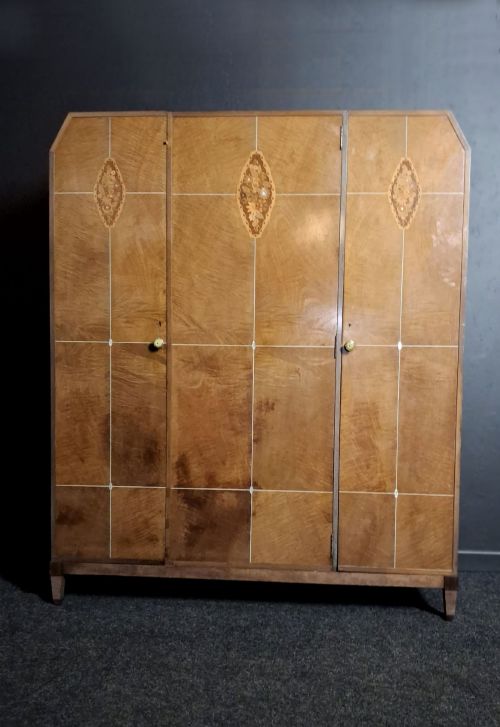
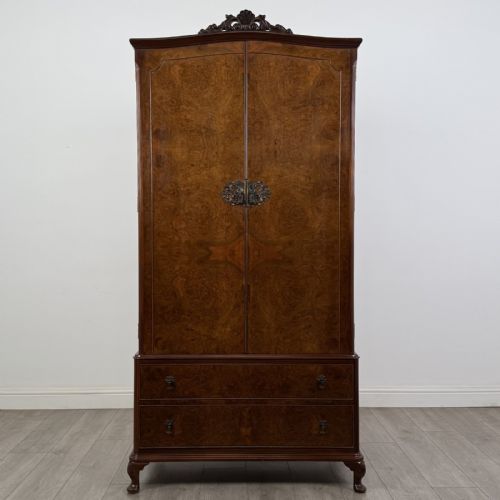
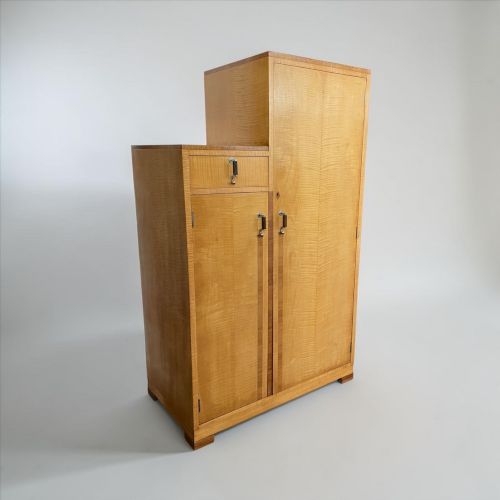
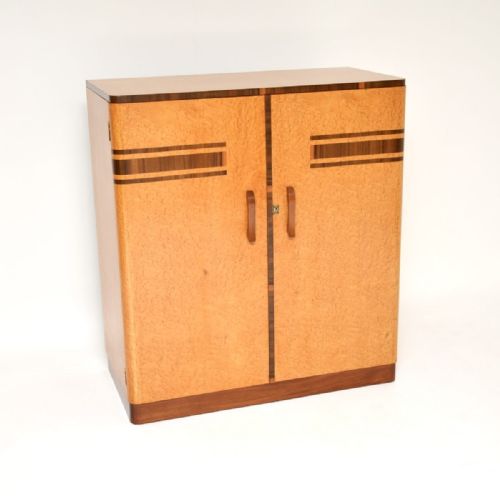
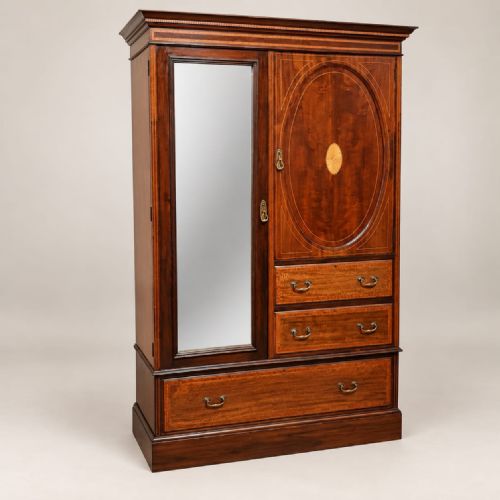
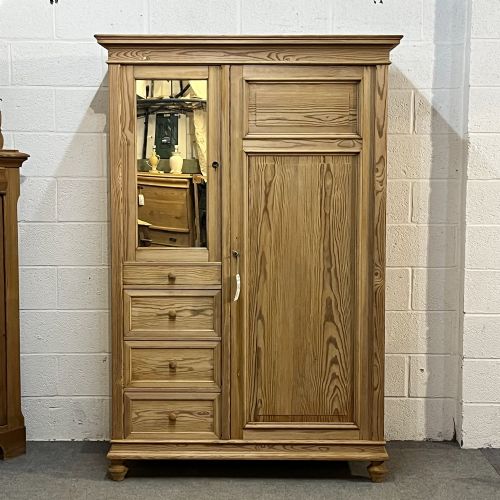
The most common variations on this page include mahogany, oak, and walnut models from the Edwardian period, often featuring inlaid details or mirrored doors. Buyers also encounter Arts and Crafts designs in ash and occasional painted finishes.
These multi-section forms typically arrive as large, imposing bedroom furniture requiring adequate ceiling height and wall space. They serve collectors seeking genuine period utility and traditional cabinetmaking.
How vintage compactum clothes press items were made
Cabinetmakers constructed these frames using dense hardwoods such as mahogany, oak, and walnut, frequently incorporating contrasting satinwood inlay or brass hardware. Structural carcases often utilised secondary timbers like pine for internal partitions and drawer linings.
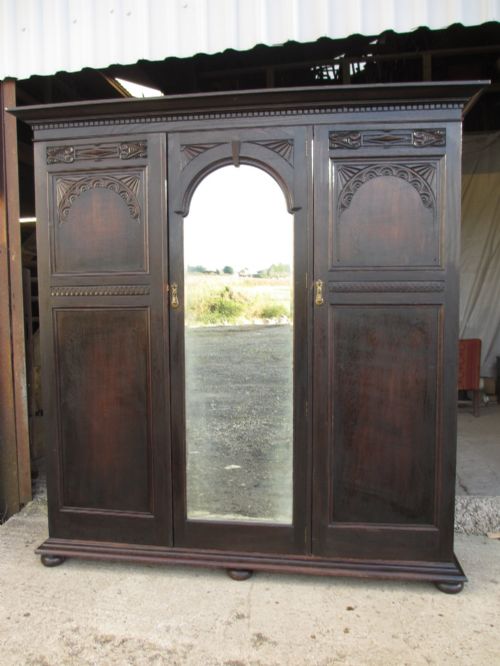
Mirrored doors incorporated bevelled glass plates set into panelled frames, while decorative finishes ranged from polished wax and french polish to original scumble faux paintwork. Carved details and moulded cornices added architectural depth to the larger triple and quadruple door configurations.
Vintage Compactum Clothes Press Retail Price Guide 2026
Typical asking prices for vintage compactum clothes press among the pieces listed under this phrase on Sellingantiques today, from the lower quarter to the upper quarter. They describe what is for sale here now, not the wider market.
Original scumble paintwork survives on nineteenth-century examples, mimicking fine oak grain with hand-brushed artistry.
What varies in quality
The standard of timber selection and complexity of inlay work separate standard utility items from finer cabinetmaker pieces. Richly figured mahogany veneers, intricate marquetry, and substantial brass mounts elevate the presence of Edwardian and Victorian examples.
Construction integrity relies on the retention of original panelled backs, functioning locks with working keys, and smooth operation of multi-drawer internal nests. The condition of original mirror glass and the crispness of hand-carved mouldings further distinguish superior specimens.
HARRIS LEBUS·Lamb of Manchester
The Vintage Compactum Clothes Press Glossary
- Compactum
- A multi-functional wardrobe combining hanging space, shelves, and internal drawers within a single fitted unit. This design maximised bedroom storage efficiency during the nineteenth and early twentieth centuries.
- Breakfront
- A cabinet design where the central section projects forward from the flanking wings. This configuration adds visual weight and architectural rhythm to large triple wardrobes.
- Scumble paintwork
- A decorative surface technique using translucent paint glazes applied over a base coat to imitate finer grained woods like oak or walnut. It provided an accessible alternative to solid hardwood furniture.
- Satinwood
- A pale, lustrous timber native to India and Ceylon, prized for its golden sheen and smooth texture. Cabinetmakers utilised it extensively for stringing and floral inlay on Edwardian mahogany pieces.
- Aesthetic Movement
- A late nineteenth-century design style emphasising artistic expression over strict historical revival. Pieces from this movement often feature simple lines and exposed natural wood grain.
Vintage Compactum Clothes Press: Frequently Asked Questions
What is a compactum wardrobe?
A compactum wardrobe is a large multi-purpose storage piece that integrates hanging compartments with built-in drawer units and shelving.
These pieces were designed to hold an entire gentleman's or lady's wardrobe within a single footprint, combining the functions of a press and a wardrobe.
How do I date an Edwardian wardrobe?
Edwardian wardrobes usually date between 1901 and 1910, often displaying light satinwood inlay, neoclassical motifs, and mirrored doors.
Cabinetmakers of this era frequently worked in mahogany or oak, producing lighter-scaled proportions than their heavy Victorian predecessors.
Do these wardrobes dismantle for moving?
Many large period wardrobes and compactums were constructed to dismantle into modular sections, including a separate cornice, base, and flanking sides.
This knockdown construction allowed large triple and quadruple door units to be transported up staircases and installed in period bedrooms.