
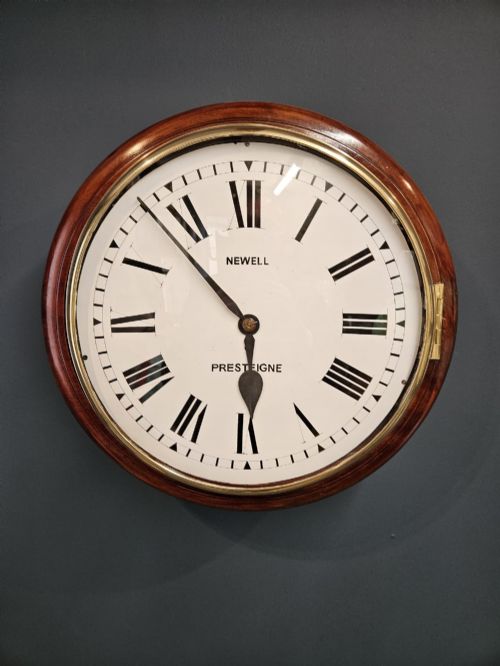
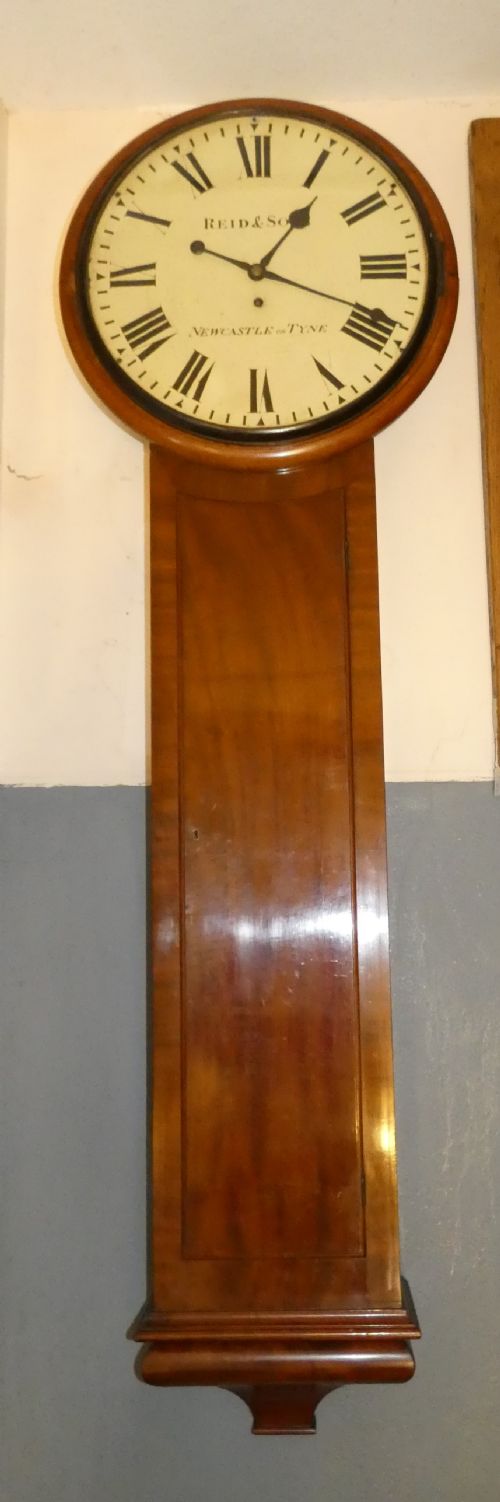


Vintage Commercial Clock
A vintage commercial clock brings the bold dials and honest timekeeping of railways, factories and offices straight onto your wall.
Vintage Commercial Clock
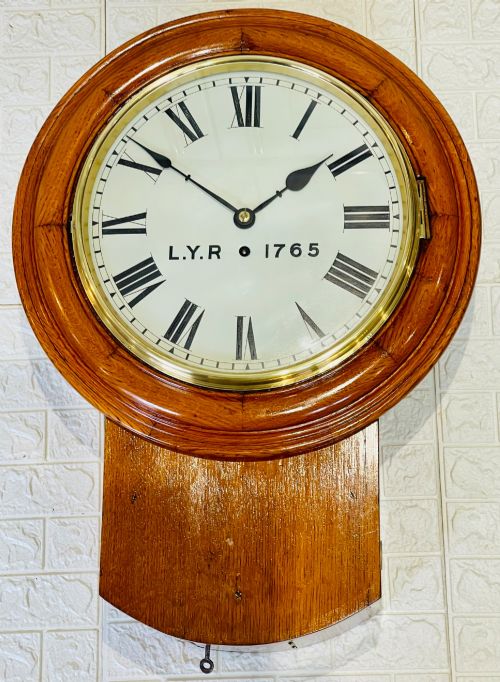
When you search for a vintage commercial clock, you are looking at utilitarian timepieces built for railways, postal services, offices and industrial workshops rather than domestic parlours. These heavy-duty dials were designed to be read clearly from across a large room, prioritising reliable movement and robust housings over decorative flourishes.
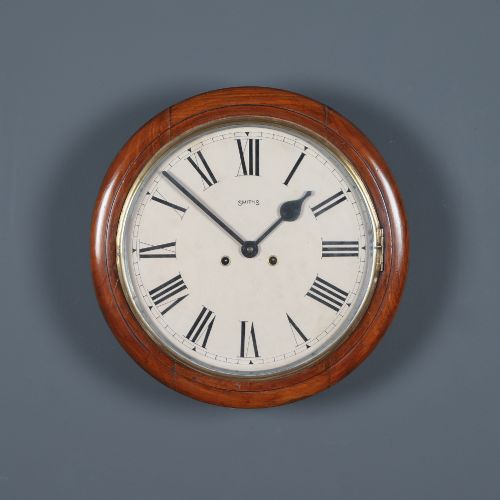
The selections available here span from Victorian fusee drop dial wall clocks and Edwardian factory pieces to 1930s station rounds, alongside trade signs and double-sided advertising designs. Mahogany, oak and iron cases dominate, with classic round dials bearing the names of makers, railways or retailers such as Smiths, John Walker and Camerer Cuss.
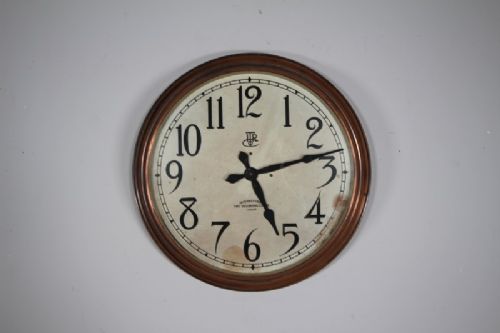
You will most frequently encounter sturdy round dial wall clocks featuring mechanical fusee movements or mid-century electric systems. Whether housed in deep mahogany rims, octagonal oak surrounds or painted metal frames, these pieces carry the authentic wear of daily service in British public and industrial life.
Materials and Construction
Cases were constructed from durable timbers like mahogany and oak, or cast in heavy iron and metal to withstand industrial environments, moisture and constant vibrations. Glazed bezels protected paper or painted dials from dust and damage in busy workplaces.
Mechanisms relied on precision engineering, most notably fusee movements that maintained steady tension as the mainspring wound down, ensuring accurate timekeeping over long operational periods. Stamped serial numbers, brass fittings and robust dial markings completed the construction of these hard-working units.
Materials represented in the inventory include mahogany, oak, brass, iron, chrome, glass and Bakelite.
Factors of Quality
Quality rests primarily in the originality of the movement, the integrity of the dial face and the preservation of the case housing. Clocks retaining their original fusee mechanisms and uncompromised painted or papered dials command deeper appreciation among collectors.
The distinction between standard commercial timepieces and superior examples often lies in provenance and maker attribution, such as signed dials from recognised railway contractors or established London clockmakers. Crisp case timber, well-stamped numbers and clear departmental markings elevate a piece above ordinary utility stock.
Smiths of London·John Walker·Camerer Cuss·Gledhill Brook·Anglo Swiss Watch Co·Josef Herzog
The Vintage Commercial Clock Glossary
- Fusee movement
- A conical pulley device attached to the mainspring barrel that equalises the torque as the spring unwinds, delivering steady power to the escapement for accurate timekeeping.
- Drop dial clock
- A wall clock featuring an extended wooden case below the circular dial, often housing a pendulum and allowing room for a longer drop.
- GVR
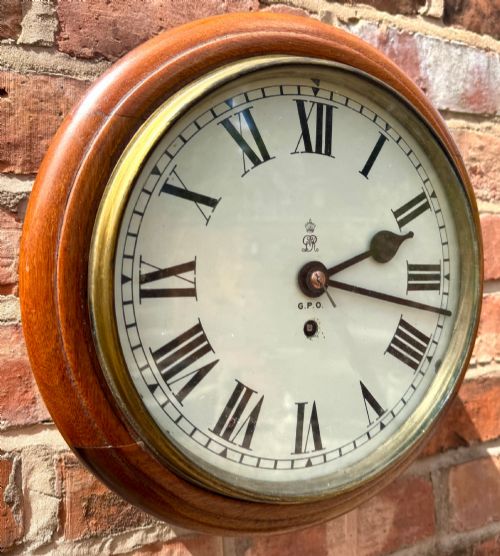
- Cypher denoting the reign of King George V, frequently stamped onto railway and Post Office clocks to indicate official government service.
- Time recorder
- A specialised industrial clock used for stamping employee arrival times on cards, combining standard timekeeping with mechanical time-recording mechanisms.
- Trade sign
- A large shop display piece shaped like a pocket watch or clock, intended to advertise a jeweler or watchmaker's premises from the street.
Vintage Commercial Clock: Frequently Asked Questions
How do I wind a fusee wall clock?
Most fusee wall clocks require a specialised winding key inserted into a small hole directly on the dial face. Turn the key gently clockwise until resistance is felt, taking care not to overwind the mainspring.
Because these movements are mechanical, set the hands by moving the minute hand forward rather than backward to protect the gear train. Regular gentle winding keeps the tension balanced and the movement running true.
Where were these clocks originally used?
These utility clocks hung in high-traffic environments where precise time coordination was essential for daily operations. Common locations included railway station platforms, post offices, factory floors, school assembly halls and retail shops.
Many bear specific service stamps or lettering on their dials relating to transport boards and regional railway companies, revealing their exact institutional history.
How do I hang a heavy commercial wall clock safely?
Due to dense mahogany or oak frames and heavy cast iron bezels, these clocks demand secure wall fixings rather than standard picture hooks. Fasten a stout screw or heavy-duty bracket directly into a wall stud or masonry plug.
Ensure the hanging bracket engages fully with the reinforced mounting point on the back of the case so the clock hangs plumb and steady against the wall.
How can I tell a Victorian clock from a 1930s piece?
Victorian models frequently utilise traditional fusee movements housed in deep mahogany or oak cases with classical dial proportions. The lettering on the dial is often hand-painted with subtle serifs.
By contrast, 1930s pieces often incorporate bolder sans-serif typography, octagonal oak surrounds, metal frames or electric mechanisms associated with public transport boards and modernized factories.