





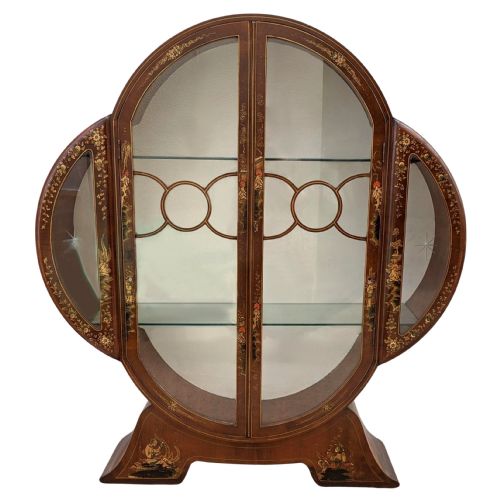


Vintage Circular Bookcase
A vintage circular bookcase brings geometric rhythm to a room, offering a rounded silhouette that holds books and display pieces with effortless mid-century charm.
Vintage Circular Bookcase
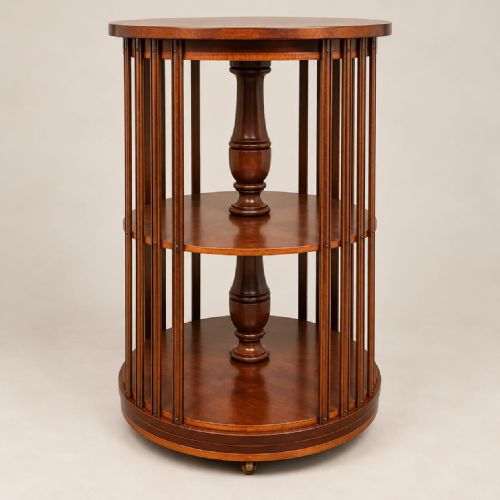
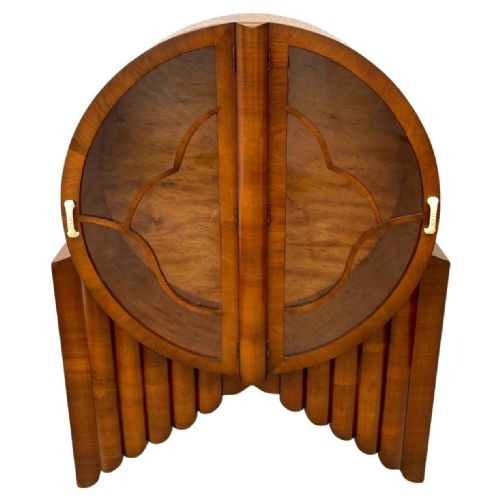
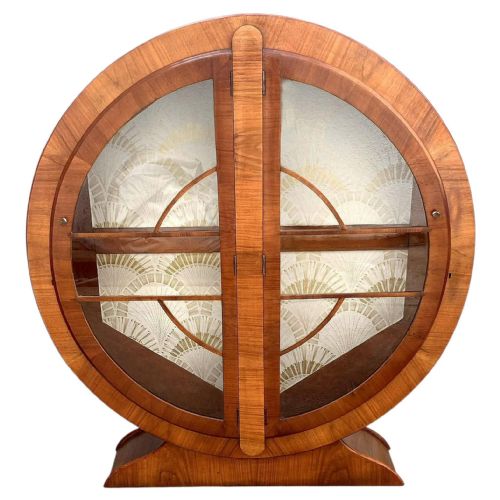
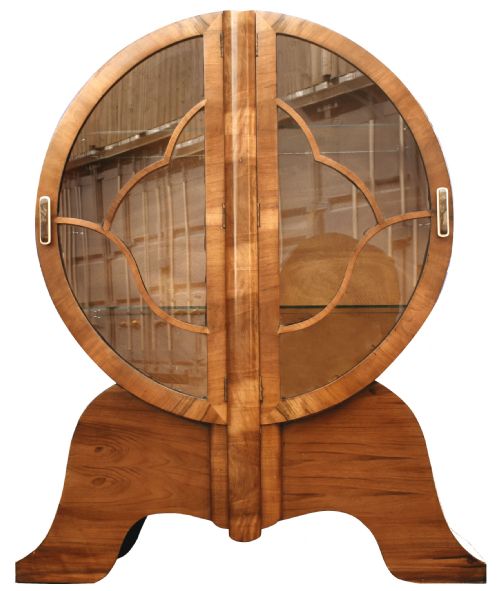
A vintage circular bookcase provides a distinct round or curved profile, appearing frequently in walnut and oak during the Art Deco era around nineteen thirty. These pieces function as revolving bookcases, vitrines, and display cabinets that turn functional storage into a central decorative feature.
The English examples on this page span the nineteen thirties and draw heavily upon Art Deco design principles. Buyers encounter rotating wooden tiers alongside glass-fronted cabinets built to house books and prized objects alike.
Forms vary from compact revolving designs to large china cabinets and rocket-style vitrines. Each piece utilises the curved geometry characteristic of the period to soften the corners of a modern interior.
Materials and construction methods
Cabinet makers constructed these circular bodies using walnut, oak, and maple veneers applied over sturdy timber frames. The reliance on figured walnut veneers created striking grain patterns that wrap continuously around the curved carcasses.
Glazing often incorporates leaded glass panels or simple clear panes held within wooden frameworks. Metal mechanisms permit smooth rotation in the revolving bookcases, while brass fittings add subtle metallic contrast to the dark wood.
Vintage Circular Bookcase Retail Price Guide 2026
Typical asking prices for vintage circular bookcase among the pieces listed under this phrase on Sellingantiques today, from the lower quarter to the upper quarter. They describe what is for sale here now, not the wider market.
The listings span the nineteen thirties, featuring Art Deco walnut, oak, and leaded glass.
Measures of quality and craftsmanship
Quality rests upon the selection and book-matching of the timber veneers across the curved surfaces. Superior pieces display seamless grain alignment that follows the round contours without interruption.
The integrity of the internal revolving mechanism or the precision of the glazed door seating dictates the standard of execution. Well-made examples maintain structural rigidity and smooth operation despite the inherent challenges of circular joinery.
The Vintage Circular Bookcase Glossary
- Vitrine
- A glass-fronted display cabinet designed for showcasing porcelain, books, or small objects. These pieces often feature prominent glazing to maximise visibility from multiple angles.
- Veneer
- A thin layer of finely figured wood applied over a secondary timber base. This technique allowed cabinet makers to display dramatic grain patterns across curved surfaces.
- Leaded glass
- Small panes of glass held together by strips of lead came. This method creates decorative geometric patterns within cabinet doors.
- Revolving bookcase
- A freestanding tiered bookcase engineered to spin on a central pivot base. This design allows access to volumes from every direction without moving the unit.
Vintage Circular Bookcase: Frequently Asked Questions
How do I care for walnut veneer?
Keep these wooden surfaces away from direct sunlight and excessive heat sources to prevent the veneer from drying out or fading over time. Apply a microcrystalline wax periodically to nourish the wood and maintain a gentle sheen.
Avoid using modern liquid polishes or silicone sprays, which can build up and damage the historic finish. A soft, dry cloth is sufficient for regular dusting.
Are these pieces stable on carpets?
Circular bookcases possess a compact footprint, yet revolving models require level flooring to turn smoothly and safely. Thick carpets can sometimes impede the rotation of revolving tiers or cause slight tilting.
Place these items on firm floors or low-pile rugs to ensure the base remains balanced and the rotating mechanism functions correctly.
What is a rocket cabinet?
A rocket cabinet is an Art Deco display piece characterised by an upward-tapering or streamlined silhouette reminiscent of early space-age design. These cabinets combine vertical emphasis with curved wooden construction.
They serve as striking focal points in a room, offering display space behind glass doors while occupying minimal floor area.
How do I identify nineteen thirties design?
Nineteen thirties furniture relies on clean geometric lines, rounded contours, and rich wood veneers rather than heavy carved ornamentation. Pieces from this era often feature symmetrical arrangements and streamlined forms.
The absence of Victorian revival motifs and the presence of circular or waterfall shapes clearly point toward the Art Deco period.