





1930s Round Display Cabinet
A 1930s round display cabinet brings distinctive Art Deco geometry into a room, offering curved glass and rich timber veneers to showcase precious objects.
1930s Round Display Cabinet
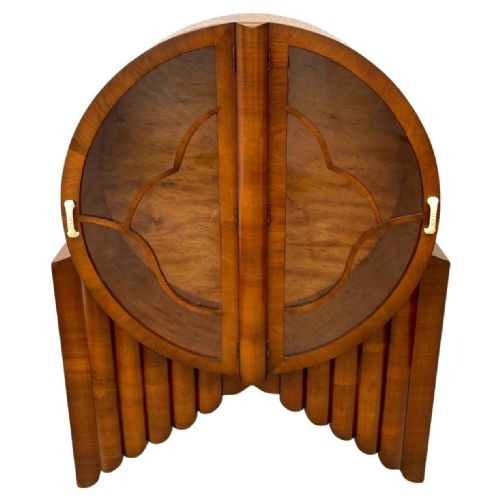
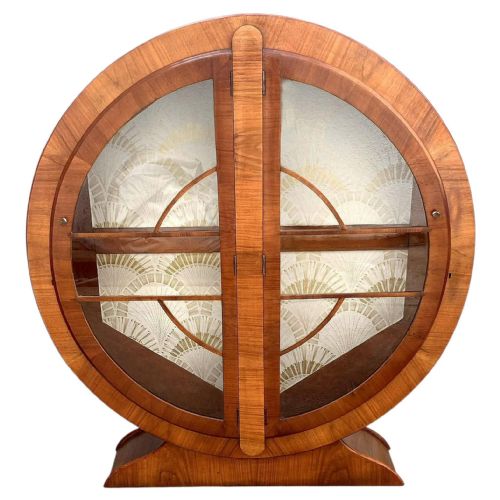
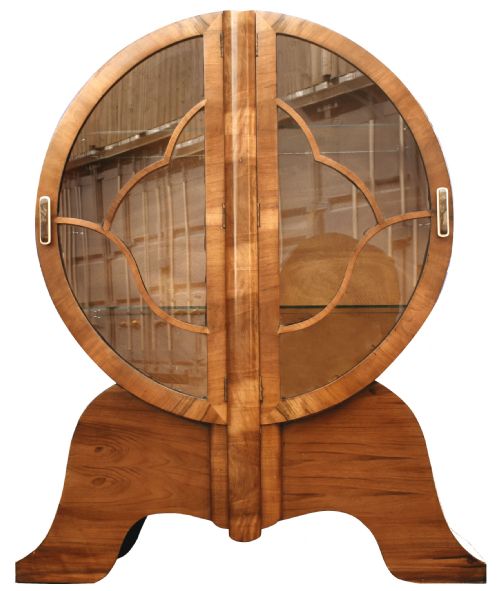
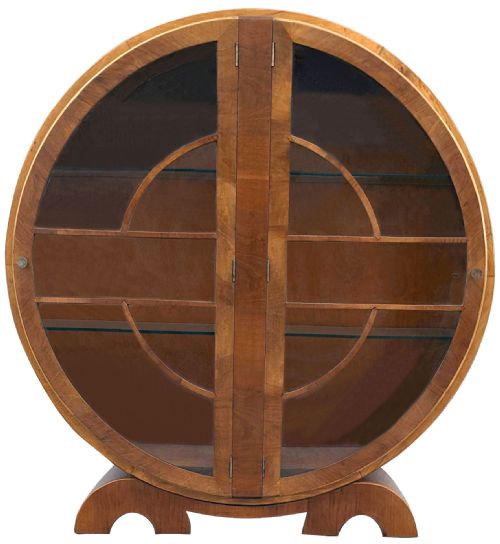
A 1930s round display cabinet is a striking furniture form designed to house and exhibit small collections, ceramics, or glassware. These pieces belong firmly to the Art Deco period, celebrated for bold curves and streamlined silhouettes.
How they were made
Cabinet makers constructed these circular carcasses using solid timbers faced with decorative veneers such as walnut and burr walnut. These figured veneers were laid symmetrically to create rich, sweeping grain patterns across the curved doors and panels.
Glazing typically involved bent or curved glass secured with lead or metal framework. Brass fittings and fabric linings often completed the interior and exterior details of these sophisticated display vitrines.
1930s Round Display Cabinet Retail Price Guide 2026
Typical asking prices for 1930s round display cabinet among the pieces listed under this phrase on Sellingantiques today, from the lower quarter to the upper quarter. They describe what is for sale here now, not the wider market.
The listings here consist entirely of Art Deco pieces dated to 1930, utilising walnut, glass, lead, and brass.
What varies in quality
The sophistication of the timber veneer work largely determines the distinction between ordinary and exceptional examples. Cabinets featuring highly figured burr walnut or contrasting maple details display a greater ambition in design.
The execution of the curved glazing and the integration of metal or lead cames also mark out superior pieces. Construction that maintains smooth door alignment across a circular frame reflects the skill of the original workshop.
The 1930s Round Display Cabinet Glossary
- Art Deco
- A design style spanning the 1920s and 1930s characterised by geometric shapes, streamlined forms, and modern materials. It replaced the ornate curves of earlier Edwardian and Victorian furniture.
- Burr walnut
- A prized timber harvested from the abnormal growth of a walnut tree, yielding swirling, knotty patterns. Cabinet makers used it to create dramatic decorative surfaces on high-end furniture.
- Vitrine
- A glass-fronted cabinet designed specifically for displaying fine porcelain, ornaments, or curiosities. The term originates from the French word for glass.
- Lead light
- Glass panels held together by narrow strips of lead, often formed into geometric patterns. In cabinet making, it provided structural division for curved viewing windows.
1930s Round Display Cabinet: Frequently Asked Questions
What is a 1930s round display cabinet?
A 1930s round display cabinet is an Art Deco furniture piece featuring a circular or curved silhouette designed to exhibit decorative objects. These cabinets use bent glass and timber veneers to create a focal point in a room.
English examples from this era frequently employ walnut and burr walnut, combining geometric styling with functional storage behind glass doors.
How do I place a round cabinet in a room?
Because of their curved profiles, round cabinets suit corners or open wall spaces where their three-dimensional shape can be appreciated. They work well in living rooms or studies as statement furniture.
Ensure the surrounding layout allows clear access to the hinged or curved doors so the interior shelving remains fully accessible.
What woods were used in these cabinets?
Makers relied heavily on walnut, including figured walnut and burr walnut, to achieve rich surface patterns. Some examples also incorporate contrasting timbers like maple.
These woods were chosen for their ability to take a high polish and display striking natural grain across curved surfaces.
How do I identify Art Deco furniture?
Art Deco furniture is recognised by its clean lines, symmetrical geometric patterns, and rejection of excessive historical ornamentation. The focus rests on streamlined silhouettes and modern material combinations.
In these cabinets, the circular geometry and use of polished walnut veneers provide clear signatures of the 1930s style.