





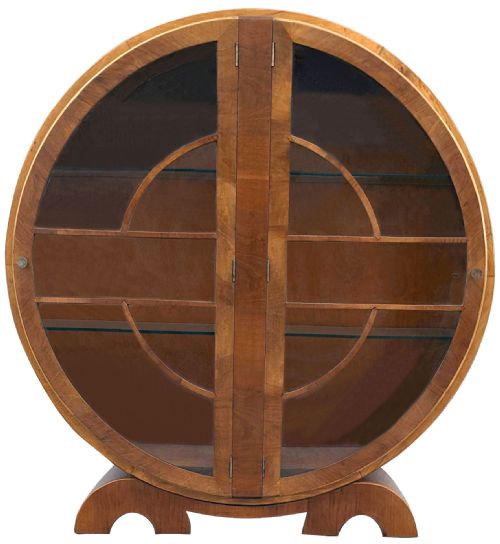
Circular Walnut China Cabinet
A circular walnut china cabinet brings bold geometric lines and rich timber into a room, offering a distinctive display for prized porcelain.
Circular Walnut China Cabinet
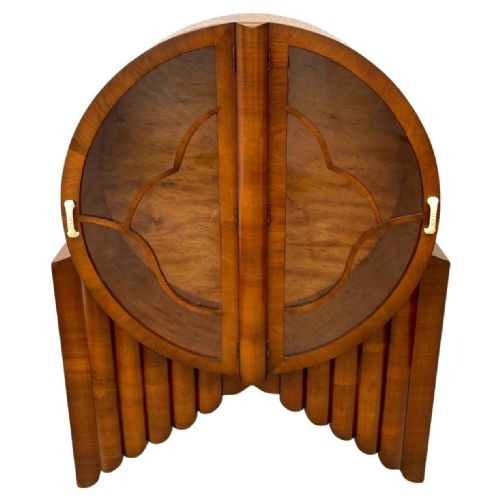
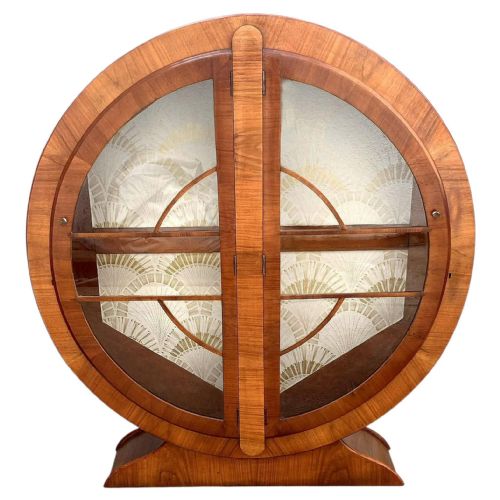
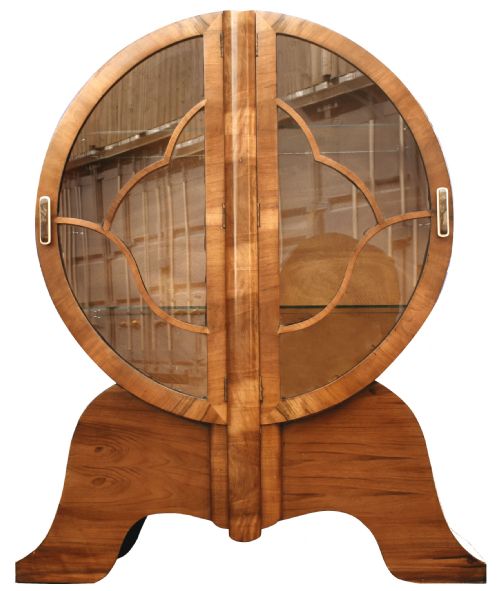
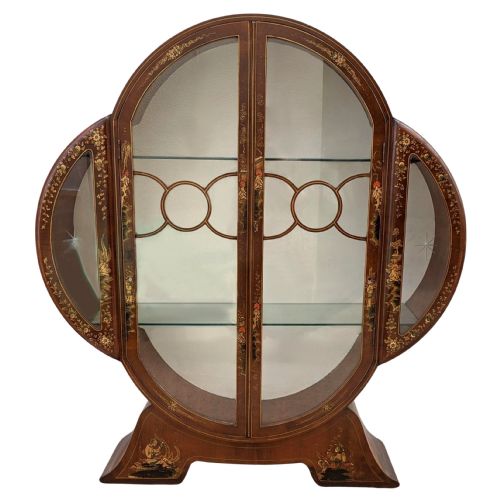
A circular walnut china cabinet represents the striking design ethos of the nineteen thirties, combining curved timber with generous glass viewing areas. Buyers seeking a circular walnut china cabinet encounter British examples shaped by the Art Deco movement, often referred to as vitrines or rocket cabinets.
The dominant material is walnut, frequently figured to showcase deep grain patterns, occasionally paired with maple highlights. These display cabinets stand as focal points in interiors, designed to house and exhibit fine ceramics behind leaded or clear glass doors.
How they were made
Cabinet makers utilised walnut veneers over solid timber carcasses to achieve sweeping curves and elaborate grain figures. Glass panels, sometimes held with lead cames, were carefully fitted into the rounded door frames.
Brass and other metals formed structural hardware and hinges, whilst internal fabric linings provided a contrasting backdrop for displayed china.
Circular Walnut China Cabinet Retail Price Guide 2026
Typical asking prices for circular walnut china cabinet among the pieces listed under this phrase on Sellingantiques today, from the lower quarter to the upper quarter. They describe what is for sale here now, not the wider market.
Materials appearing across the current selection include glass, walnut, lead, brass, fabric, metal, mahogany, and gold leaf.
What varies in quality
The distinction between standard and superior pieces rests on the choice of veneer and the fluidity of the cabinet's geometry. Highly figured walnut timber and harmonious proportions elevate a piece above simpler, plain-faced examples.
Glazing execution and the integration of internal fittings also separate routine production from finer cabinet work.
The Circular Walnut China Cabinet Glossary
- Art Deco
- A design style from the nineteen thirties characterised by sleek geometric shapes and stylised motifs. This aesthetic defines the curved silhouettes seen in these cabinets.
- Vitrine
- A glass-fronted display cabinet designed specifically for showing porcelain and small decorative objects. The glazed panels permit light to enter from multiple angles.
- Veneer
- A thin layer of valuable timber applied over a secondary wood base. This technique allows makers to display striking walnut grain patterns across curved surfaces.
- Leaded Glass
- Small panes of glass joined together by lead strips into decorative geometric patterns. This traditional technique frequently frames the doors of period display cabinets.
- Figured Walnut
- Timber exhibiting distinctive and attractive grain patterns caused by growth variations. Cabinet makers select these specific logs for prominent exterior surfaces.
Circular Walnut China Cabinet: Frequently Asked Questions
Where should I place a circular cabinet?
These curved pieces suit corners or open wall spaces where their rounded profile can be appreciated from multiple angles without obstructing room flow.
Ensure the cabinet sits away from direct sunlight to protect the walnut timber and any internal fabric linings from fading.
How do I clean the glass safely?
Use a mild glass cleaner applied to a soft cloth rather than directly onto the surface, preventing moisture from seeping into the surrounding wooden frames.
Take care around leaded joints to avoid loosening the metal cames holding the individual glass panes.
What periods do these cabinets represent?
The available pieces originate from the nineteen thirties, reflecting the height of the Art Deco period in British furniture design.
This era favoured streamlined forms and innovative silhouettes, moving away from traditional rectangular proportions.
Can these cabinets hold heavy items?
They are designed primarily for display ceramics and china rather than heavy kitchenware or dense book collections.
Distributing weight evenly across the internal shelves preserves the structural integrity of the curved wooden framework.