

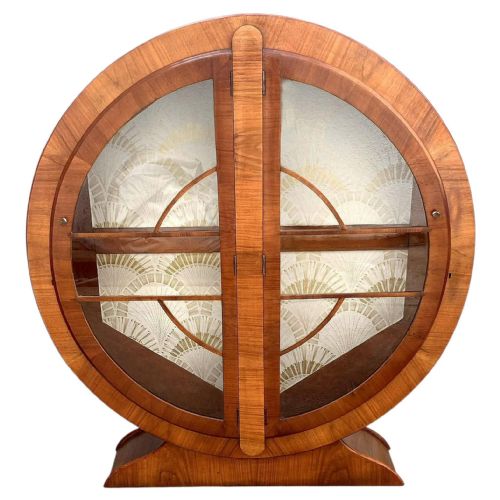


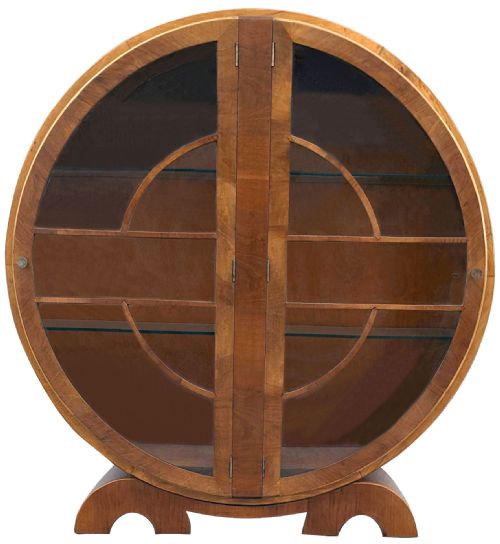
Round Glass Cabinet
A round glass cabinet offers a curved stage for treasured possessions, turning everyday display into an architectural feature of the room.
Round Glass Cabinet
A round glass cabinet encompasses circular display vessels, vitrines, and bijouterie tables designed to showcase objects from multiple angles. When searching for a round glass cabinet, collectors frequently encounter pieces originating from the Victorian period through to the Art Deco era and the mid-twentieth century.
The form spans tall circular floor-standing display cabinets in walnut or mahogany, alongside low glass domes and table-top vitrines. English and French workshops produced these vessels using bent or curved glass panels paired with timber frameworks.
Art Deco examples from nineteen thirty dominate the selection, often rendered in figured walnut with leaded glass details. Earlier Victorian interpretations lean towards French inlaid designs and kingwood construction with brass mounts.
Materials and construction
The fabrication of these cabinets relies upon the pairing of transparent glazing with dense cabinet timbers such as walnut, mahogany, and kingwood. Woodworkers bent timber or shaped veneers around circular carcasses to create the signature curved profiles.
Glazing techniques range from plain clear glass panes to leaded segments and etched decoration. Brass fittings, silk linings, and fabric interiors frequently complete the internal presentation of these display pieces.
Round Glass Cabinet Retail Price Guide 2026
Typical asking prices for round glass cabinet among the pieces listed under this phrase on Sellingantiques today, from the lower quarter to the upper quarter. They describe what is for sale here now, not the wider market.
Object forms span circular display cabinets, bijouterie tables, glass domes, and china cabinets from the nineteenth and twentieth centuries.
Differences in quality
Quality rests upon the precision of the curved joinery and the clarity of the glass panels fitted within the frame. Finer examples display seamless integration between the bent timber structure and the surrounding glazing bars.
The choice of decorative veneers, such as figured walnut or kingwood, elevates the visual weight of the piece. Superior specimens incorporate refined brass hardware and intact internal linings that complement the exterior timber.
The Round Glass Cabinet Glossary
- Vitrine
- A glass display cabinet used primarily for porcelain, curiosities, and small decorative objects. These glazed vessels protect contents from dust while maximising visibility.
- Bijouterie table
- A glass-topped display table designed specifically for jewellery, medals, and small valuables. The glazed surface allows items to be viewed from above.
- Display dome
- A blown glass cover mounted on a base, utilised to protect fragile ornaments and taxidermy. This circular vessel provides an uninterrupted transparent barrier.
- Kingwood
- A dense, richly figured timber imported from South America and frequently utilised in fine French cabinet-making. Its distinct grain patterns distinguish high-status furniture.
- Leaded glass
- Glass panes held together by narrow strips of lead came to form decorative patterns. This technique appears across various geometric Art Deco designs.
Round Glass Cabinet: Frequently Asked Questions
What is a round glass cabinet used for?
These cabinets serve to display ceramics, glassware, and small collections while keeping them protected from dust and handling. The curved glass design allows objects to be viewed from multiple angles within the room.
They function equally well in private drawing rooms and retail environments for highlighting curated items.
How do I date an Art Deco round glass cabinet?
Art Deco cabinets typically date to around nineteen thirty and feature streamlined circular forms constructed from walnut or maple. The emphasis rests on clean geometric lines and figured wood grains rather than heavy carving.
Leadwork patterns and distinct veneers help separate these twentieth-century designs from earlier nineteenth-century production.
What is the difference between a vitrine and a bijouterie table?
A vitrine is generally an upright cabinet with vertical glass doors or panels designed to stand against a wall or within a room. A bijouterie table is a low-profile display table with a glazed horizontal top.
Bijouterie tables position objects directly beneath the glass for downward viewing, whereas vitrines present items at eye level.
Where were most antique round glass cabinets made?
Surviving examples originate primarily from English and French workshops active during the Victorian and Art Deco periods. French makers frequently employed kingwood and elaborate brass mounts.
English makers tended to focus on walnut and mahogany construction with straightforward circular glazing.
How do I care for a glass display cabinet?
Maintain the timber surfaces with appropriate furniture wax while avoiding abrasive cleaners on the glass and lead cames. Keep the cabinet away from direct sunlight to protect interior fabrics and silk linings.
Ensure the floor beneath the cabinet is level to prevent stress on the curved glass panels.