





Vintage Church Candle Stands
These vintage church candle stands bring vertical presence and ritual weight to a room, ranging from soaring wrought iron floor pieces to heavy brass altar lights.
Vintage Church Candle Stands
Vintage church candle stands encompass tall floor-standing holders, heavy altar sticks, and multi-light candelabras designed for ecclesiastical spaces. When searching for vintage church candle stands, buyers encounter lighting forms executed in brass, wrought iron, bronze, and carved wood.
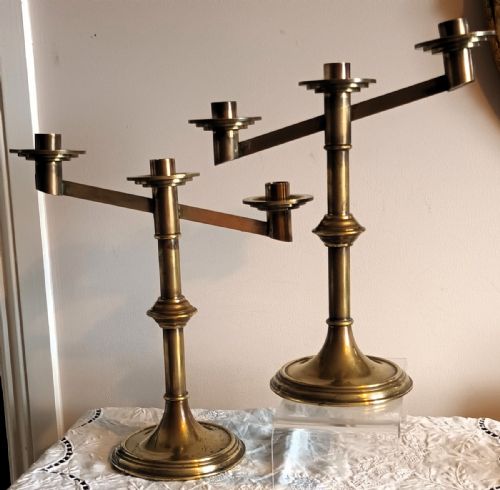
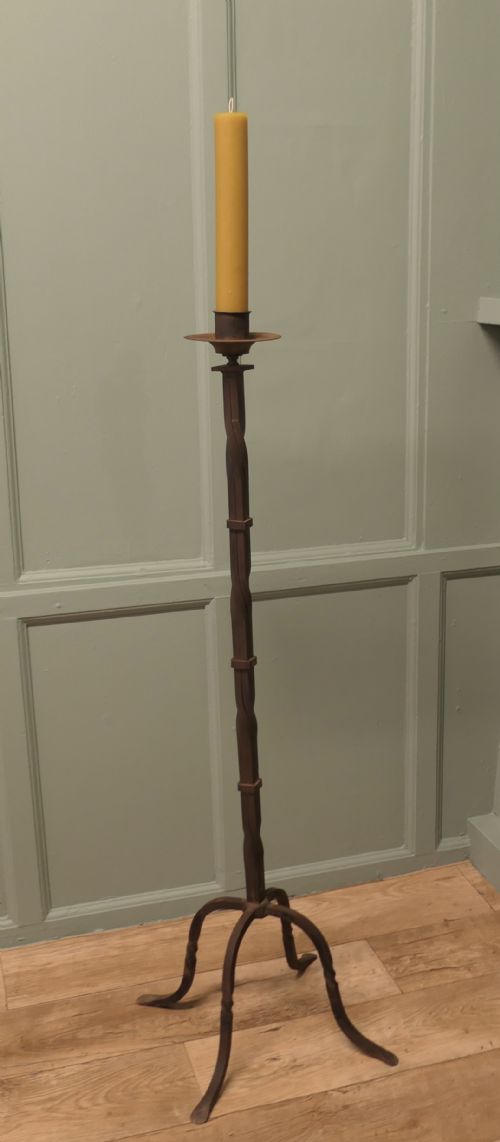
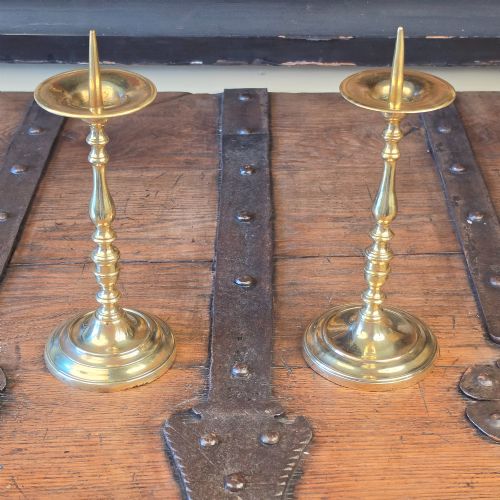
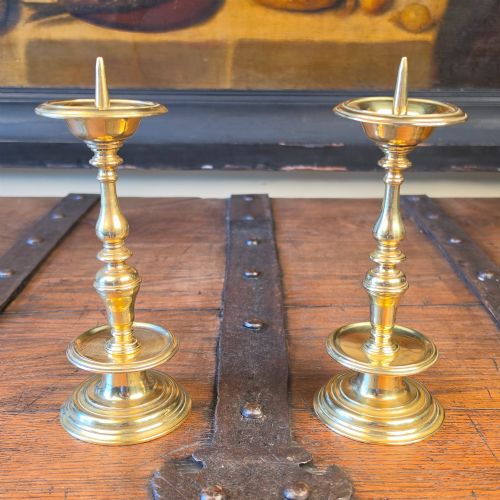
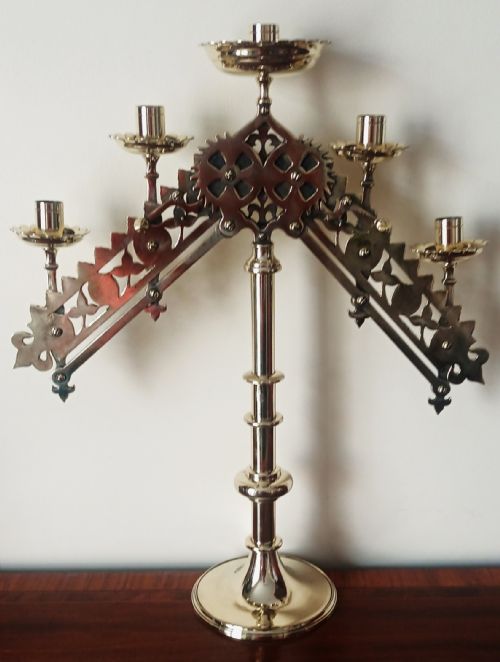
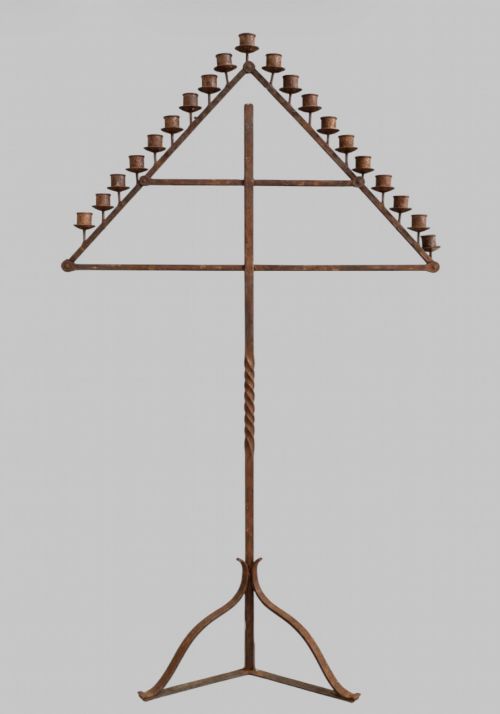
The selections available here lean heavily into 19th-century and early 20th-century craftsmanship. Common configurations include towering pricket candlesticks, articulated brass designs, and architectural multi-candle floor stands.
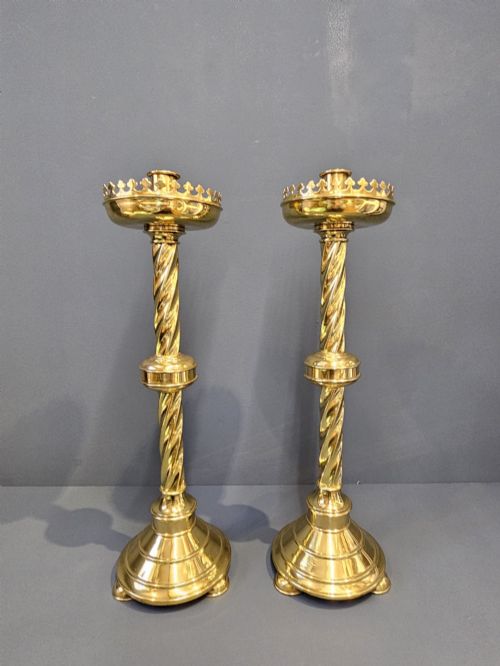
Stylistic influences span from strict Gothic Revival and Victorian ecclesiastical designs to Amsterdam School interpretations and 17th-century style revivals. Floor models and large table pairs dominate the selection, offering substantial height and decorative presence.
How they were made
Metalworking dominates these pieces, utilising heavy cast brass, forged wrought iron, and bronze formed through traditional foundry and blacksmithing techniques. Artisans assembled structural elements with threaded joints, rivets, or hand-hammered welds to support considerable height and weight.
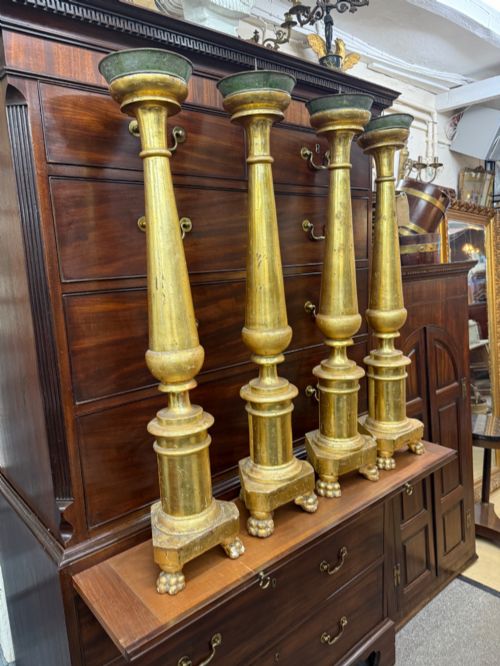
Wooden examples rely on carved timber, often finished with gesso and giltwood overlays to mimic heavier ecclesiastical furnishings. Painted decoration and turned column construction appear on specific decorative or Masonic variants from the nineteenth century.
Vintage Church Candle Stands Retail Price Guide 2026
Typical asking prices for vintage church candle stands among the pieces listed under this phrase on Sellingantiques today, from the lower quarter to the upper quarter. They describe what is for sale here now, not the wider market.
Materials recorded across the selection include cast brass, forged wrought iron, bronze, copper, giltwood, and gessoed carved timber.
What varies in quality
Mass and structural integrity dictate the upper tier of these pieces, separating hollow stamped components from solid cast brass and heavy hand-forged iron. Superior stands maintain strict vertical alignment even at tall floor-standing heights, without lean or wobble.
Finishing detail separates standard production from exceptional ecclesiastical metalwork, visible in crisp chased detailing on Corinthian capitals and the deliberate patination of bronze surfaces. Original pricket spikes, matching pairs, and intact giltwood or gesso layers elevate the distinction of surviving examples.
T Thomason & Co
The Vintage Church Candle Stands Glossary
- Pricket
- A sharp metal spike on top of a candlestick designed to skewer and hold a candle in place. This form appears frequently on ecclesiastical and altar lighting.
- Candelabra
- A branched candlestick holding multiple candles on separate arms or lights. These range from heavy table pairs to architectural floor-standing formats.
- Gothic Revival
- An architectural and decorative style drawing inspiration from medieval design, featuring pointed arches and ecclesiastical motifs. Many nineteenth-century church stands adopt this aesthetic.
- Amsterdam School
- An early twentieth-century architectural movement known for expressive brickwork, organic metal forms, and rich textures. Pieces from this school utilise bold brass and iron shapes.
- Giltwood
- Wood that has been covered with a thin layer of gold leaf or gold paint. This finish creates an ornate surface on decorative Italian and French candle holders.
Vintage Church Candle Stands: Frequently Asked Questions
How were church candle stands used?
Ecclesiastical candle stands served liturgical functions on altars or flanked chancels to provide illumination during services and ceremonies. Taller floor models anchored larger spaces, directing light upward and framing architectural focal points within religious interiors.
Over time, many of these utilitarian stands transitioned from active sanctuaries into domestic interiors, where their height and scale suited grand reception rooms and hallways.
How do I style a tall floor candle stand?
Tall floor stands work best in open corners, beside large fireplaces, or framing architectural doorways where their vertical proportions can command the space. They require clearance and stability, making them natural anchors for empty wall spans.
Pair them with thick pillar candles or leave the pricket exposed as a sculptural metal element. Their dark iron or polished brass finishes contrast effectively against plain plastered walls or wood-panelled backdrops.
Are these candle stands safe to burn candles on?
Most antique stands feature original pricket spikes or platform holders designed for specific liturgical candle dimensions. Modern pillar candles can often be adapted to fit securely, though stability should be checked before lighting.
Many collectors prefer to use them unlit as sculptural floor art or utilise drip protectors to safeguard the historic metal and wood surfaces below the flame.
How do I distinguish Gothic Revival from Amsterdam School stands?
Gothic Revival stands lean heavily on medieval architectural vocabulary, displaying pointed arches, quatrefoils, and strict ecclesiastical symmetry. Their brass work often mimics stone tracery and traditional church ornamentation.
Amsterdam School stands embrace early twentieth-century modernism through heavier, more sculptural metalwork, combining brass and iron with expressive, organic silhouettes rather than strict historical imitation.