

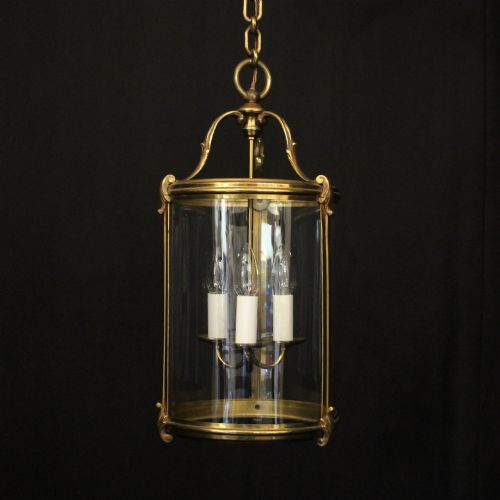


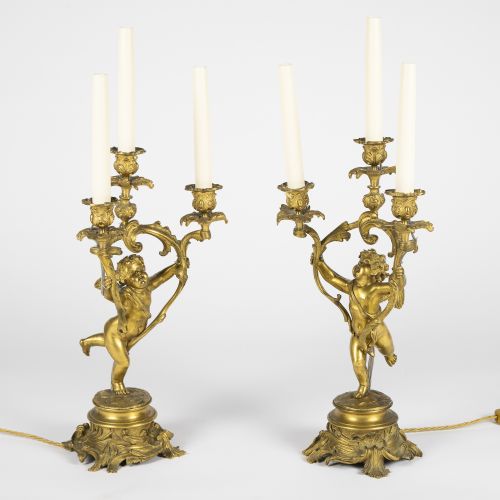


Brass Three Light Candelabra
These brass three light candelabra provide three branches of illumination, bringing period weight and formal symmetry to a table or mantle.
Brass Three Light Candelabra
A brass three light candelabra is a branched candleholder designed to support three distinct candles or light sources from a central stem. The pieces grouped under this description encompass both traditional candle-bearing examples and variations that have been adapted into table lamps or fitted with crystal and glass elements.
The selections span multiple periods, with nineteenth-century examples and twentieth-century items appearing frequently. Buyers encounter various regional interpretations, including French Rococo Revival styles alongside English Victorian and Regency pieces.
Many survivors take the form of balanced pairs designed for mantles or sideboards. Alongside standard candelabra, the listings include related three-branch lighting forms such as wall lights, wall sconces, and table chandeliers.
Materials and construction
Brass serves as the primary structural metal, frequently paired with gilt bronze, ormolu, and bronze to create varied surface textures and tones. Makers utilised these durable copper alloys for their ability to be cast into intricate, multi-branched forms and decorative motifs.
Many examples incorporate decorative details such as crystal drops, glass elements, marble bases, and fabric components. These secondary materials complement the metalwork, adding reflective qualities and contrasting colours to the finished lighting.
Brass Three Light Candelabra Retail Price Guide 2026
Typical asking prices for brass three light candelabra among the pieces listed under this phrase on Sellingantiques today, from the lower quarter to the upper quarter. They describe what is for sale here now, not the wider market.
Several heavy brass candelabra quietly gave up their candle cups decades ago to spend their retirement holding up electric lightbulbs.
Assessing craftsmanship and finish
The standard of a piece rests in the crispness of the metal casting and the precision of the assembly across the three branches. Finer examples display sharp, well-defined chased details on the bronze or brass surfaces, whereas simpler items show softer contours from the mould.
The choice of secondary materials also distinguishes the range. Pieces integrating high-grade crystal, genuine marble bases, or fire-gilded ormolu demonstrate superior workshop execution compared to plain brass or later commercial adaptations.
Wm. Tonks & Sons
The Brass Three Light Candelabra Glossary
- Ormolu
- A method of applying finely ground high-carat gold to a bronze base, creating a rich golden surface finish. This technique was widely utilised in French decorative metalwork.
- Candelabra
- A branched candlestick designed to hold multiple candles simultaneously. They typically feature a central shaft supporting two or more side arms.
- Gilt Bronze
- Bronze metal that has been coated with a thin layer of gold to give the appearance of solid gold. It provides durability alongside a bright metallic sheen.
- Regency
- A British design period spanning the early nineteenth century, noted for classical restraint and influences from ancient Rome and Greece. Pieces from this era often feature clean lines and disciplined ornamentation.
- Rococo Revival
- A nineteenth-century style drawing on the asymmetrical scrolls, natural motifs, and fluid curves of the eighteenth-century Rococo movement. It frequently appears in ornate candelabra and wall sconces.
Brass Three Light Candelabra: Frequently Asked Questions
What is a brass three light candelabra?
A brass three light candelabra is a branched lighting fixture featuring a central stem that supports three candle nozzles or lamp fittings. These pieces are typically cast from brass or bronze and arranged symmetrically.
They function as decorative and practical objects, historically placed on dining tables, sideboards, and fireplace mantles to distribute light across a room.
How were these candelabra used historically?
Originally designed to hold tallow or beeswax candles, these fixtures provided movable illumination in domestic interiors before the widespread adoption of gas and electricity. Their multiple branches allowed three flames to burn from a single base.
Over time, many surviving examples have been adapted to house electrical wiring, converting them into table lamps or small chandeliers while retaining their original metal frames.
How do I style a candelabra at home?
These candelabra suit placement on flat surfaces such as sideboards, entrance consoles, or mantlepieces where their vertical symmetry can anchor a room's decor. Pairs work well placed at opposite ends of a long surface to create balance.
When using electrified versions, position them near a discreet power source to keep cords tidy, or use traditional candles for dining settings where softer illumination is desired.
How can I tell the period of a candelabra?
Dating relies on observing the prevailing design style, such as the classical restraint of Regency pieces or the ornate curves of French Rococo Revival work. The casting technique and the wear patterns on the brass or bronze also offer clues to age.
Additionally, check for maker marks, screw types, and whether the wiring or candle cups show evidence of later conversion from candles to electricity.