

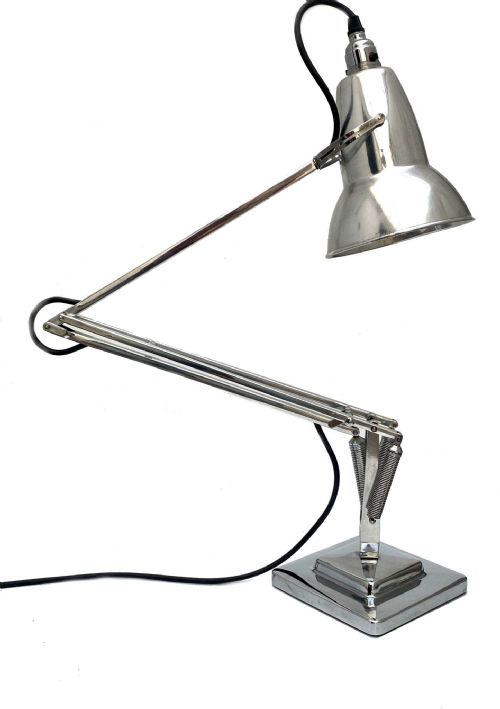


Vintage Chrome Table Lamp
A vintage chrome table lamp brings polished industrial shine and architectural form to a room, driven by mid-century and interwar aesthetics.
Vintage Chrome Table Lamp
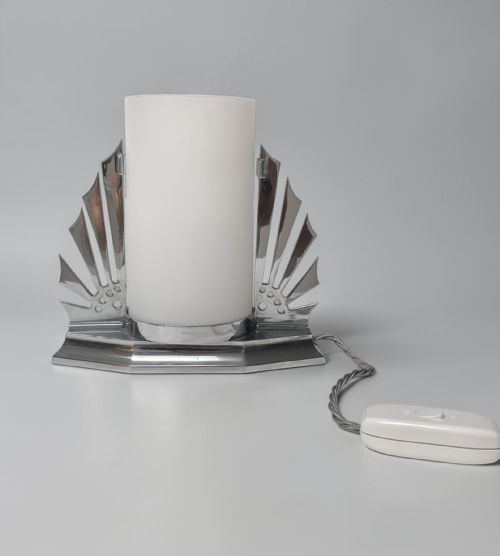
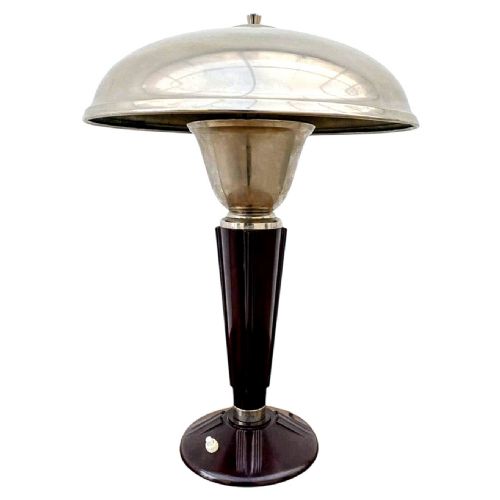
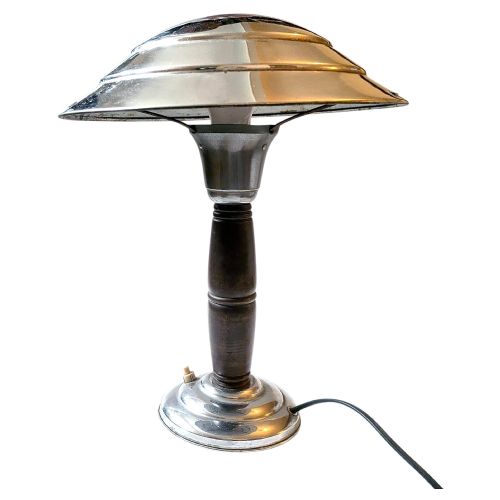
A vintage chrome table lamp selection focuses primarily on pieces from the 1930 and 1920 periods, carrying Art Deco, Machine Age, and Modernist styles. These lights range from utilitarian adjustable desk lamps to elaborate figural designs featuring athletes and nautical motifs.
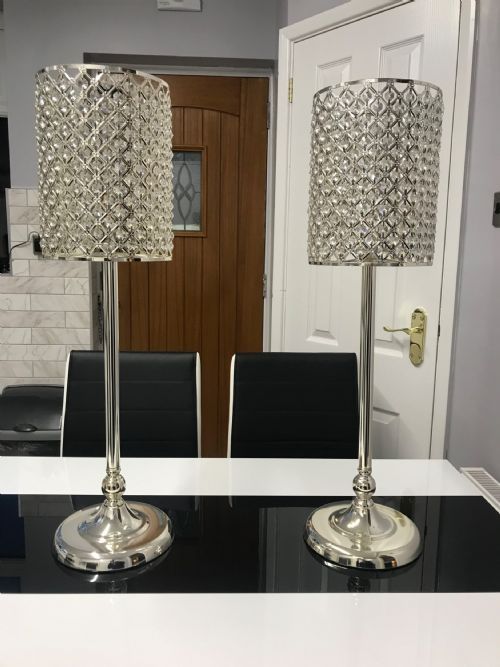
The assortment on this page blends functional task lighting with decorative objects, often incorporating glass, bakelite, or wood elements alongside metal. Bureau lights and reading lamps sit alongside sculptural pieces designed to catch the light.
How they were made
Makers utilised structural base metals finished with bright chrome plating to achieve the reflective sheen characteristic of the period. Components of frosted glass, opaline, or coloured glass were frequently paired with the metal frames to diffuse the light.
Moulded bakelite and catalin phenolic elements appear regularly alongside polished white metal and parchment leather details. Construction methods combined machined adjustable joints with weighted bases to support the metal shades and glass diffusers.
Listings feature pieces spanning the 1920, 1930, 1940, and 1960 periods, alongside occasional Regency items.
What varies in quality
The distinction between standard production and top tier pieces lies in the precision of the mechanical adjustments and the weight of the casting. Heavier gauge metals and superior plating thickness ensure the structure remains rigid and retains its reflectivity over decades.
Design complexity also separates categories, moving from simple utilitarian forms to intricate figural sculptures or complex multi-shade configurations. The integration of high grade coloured or frosted glass components elevates the overall standard of the construction.
Eileen Grey·Herbert Terry·Pirouette·Peter Ghyczy
The Vintage Chrome Table Lamp Glossary
- Chrome
- An electrolytic plating of chromium over a base metal that provides a hard, highly reflective corrosion resistant surface. This finish defines the gleaming aesthetic of interwar industrial design.
- Bakelite
- An early synthetic thermosetting plastic formed from phenol and formaldehyde. It was widely utilised for electrical insulators, switches, and decorative lamp bases due to its durable and heat resistant properties.
- Machine Age
- An early twentieth century design style that celebrated industrial machinery, efficiency, and streamlined geometry. Objects from this movement often utilise exposed metal and functional engineering forms.
- Opaline glass
- A milky, semi-translucent glass that diffuses light softly without harsh glares. It is commonly found in shades and globes from the period to create an even glow.
- Art Deco
- A dominant design style from the interwar decades characterised by stylised motifs, geometric patterns, and sleek lines. It embraces modern materials like chrome and glass alongside traditional woods.
Vintage Chrome Table Lamp: Frequently Asked Questions
How do I date a chrome lamp?
Dating relies on examining the switch mechanisms, wiring styles, and manufacturing techniques typical of the interwar decades. Art Deco and Machine Age design traits usually point towards production in the nineteen-twenties or thirties.
Heavier cast bases and specific toggle switches help narrow down the era. Comparing the construction methods to known period pieces confirms the timeline.
Are these lamps safe to use today?
Many vintage lamps retain their original internal wiring, which may not meet modern electrical standards. Rewiring is often recommended for daily functional use.
A qualified electrician can easily update the internal flex and lamp holder while preserving the original exterior appearance and switches.
What is Machine Age design?
Machine Age design emerged in the interwar period as a celebration of industrial progress, mass production, and new technology. It favours clean metallic surfaces and functional engineering.
Objects from this movement often feature streamlined chrome components and minimal ornamentation. The aesthetic prioritises efficiency and modern utility.
How should I clean chrome plating?
Chrome surfaces require gentle cleaning with a soft microfibre cloth to remove dust and fingerprints without scratching the metal. Avoid abrasive scouring pads or harsh chemical cleaners.
A mild soap solution followed by immediate drying prevents moisture accumulation. Preserving the original plating requires avoiding acidic substances that can pit the surface.