




White Glass Bedside Lamps
White glass bedside lamps bring period light to a room, combining soft illumination with sculptural form from the Victorian era to the 1940s.
White Glass Bedside Lamps
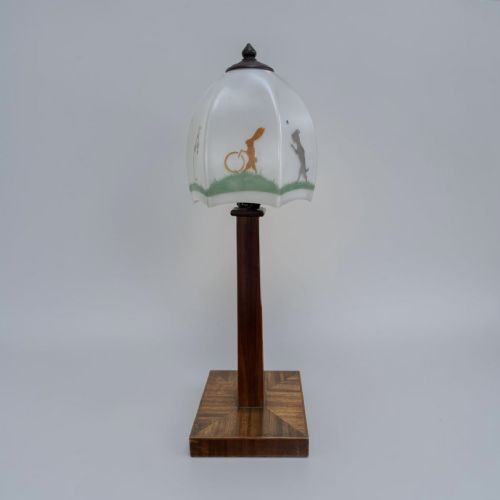
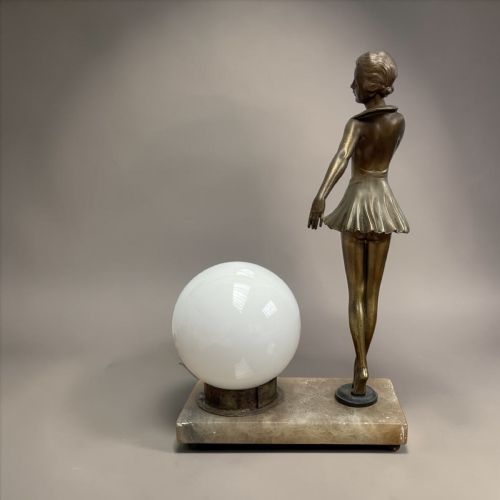
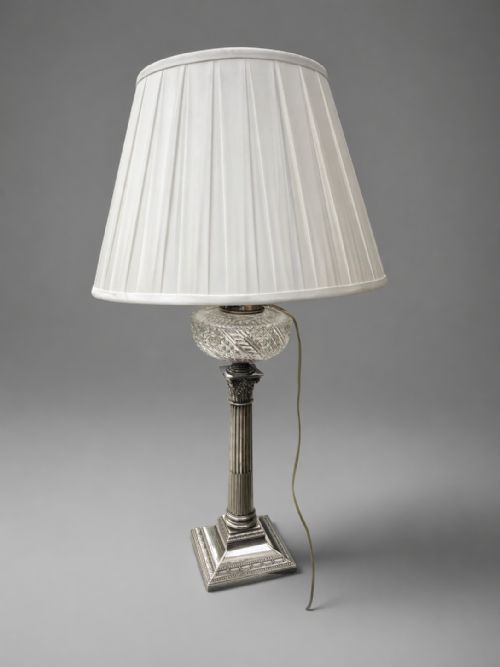
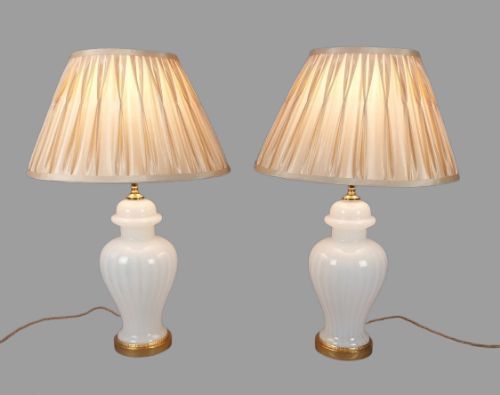
White glass bedside lamps encompass table lamps produced across the Victorian, Edwardian, and Art Deco periods, alongside early twentieth-century designs. When you search for white glass bedside lamps, you encounter pieces designed for functional interior lighting that double as decorative objects of their respective eras.
The selections available range from early opaline glass examples dating to around 1880 and 1900 to geometric Art Deco chrome and glass creations from the 1920s, 1930s, and 1940s. These pieces take the form of table lamps, often combining white or opaline glass bodies with metal fittings.
Victorian and Edwardian iterations frequently feature opaline glass paired with brass or converted oil lamp mechanisms. Later twentieth-century examples lean into Art Deco styles, utilising chrome, bronze, and distinct geometric motifs for bedroom and bedside placement.
How they were made
Maker techniques rely heavily on blown and moulded glass production, yielding smooth opaline and white glass shades and bodies. This glass is frequently combined with metalwork elements such as brass, gilt brass, silver plate, or chrome.
Assembly often involves mounting the glass components onto metal bases, sometimes incorporating bronze, ormolu, or walnut details. Wiring and fittings are integrated to convert these pieces for electrical use, occasionally adapting older oil lamp bodies.
Lightning flashes found their way into bedroom lighting during the 1940s.
What varies in quality
Quality differences stem from the weight and finish of the glass and metal components. Heavier opaline glass paired with solid cast bronze, brass, or chrome indicates superior construction compared to lighter, simpler assemblies.
The refinement of period details, such as gilt brass chasing, ormolu mounts, or precise Art Deco chrome twist and zigzag forms, distinguishes finer studio outputs from standard commercial lighting.
The White Glass Bedside Lamps Glossary
- Opaline glass
- A milky-white or semi-translucent glass popular in the nineteenth and early twentieth centuries for decorative lighting and tableware. It diffuses light softly, making it ideal for domestic lamps.
- Art Deco
- A design style spanning the 1920s and 1930s characterised by sleek geometric shapes, streamlined forms, and modern industrial materials like chrome. It succeeded Edwardian aesthetics.
- Ormolu
- Gilded bronze used as an ornamental mount on decorative objects and lighting fixtures during the nineteenth and early twentieth centuries. It provides a rich golden finish.
- Edwardian
- The period spanning the reign of King Edward VII, noted for elegance and refinement in domestic furnishings following the Victorian era.
White Glass Bedside Lamps: Frequently Asked Questions
Are these lamps originally electric?
Many early pieces began as oil lamps before being converted to electricity later in their lifespan.
Others were manufactured specifically as electric table lamps during the Art Deco period.
What is opaline glass?
Opaline is a translucent or milky-white glass that gained popularity during the Victorian period.
It diffuses bulb light evenly, creating a gentle glow suited for bedside use.
How do I date a brass and glass lamp?
Dating relies on stylistic clues like the heavy ornamentation of Victorian Neoclassical pieces versus the clean lines of 1920s chrome.
Materials like gilt brass or ormolu point toward earlier manufacturing dates.