


Vintage Chinese Urn Pedestal
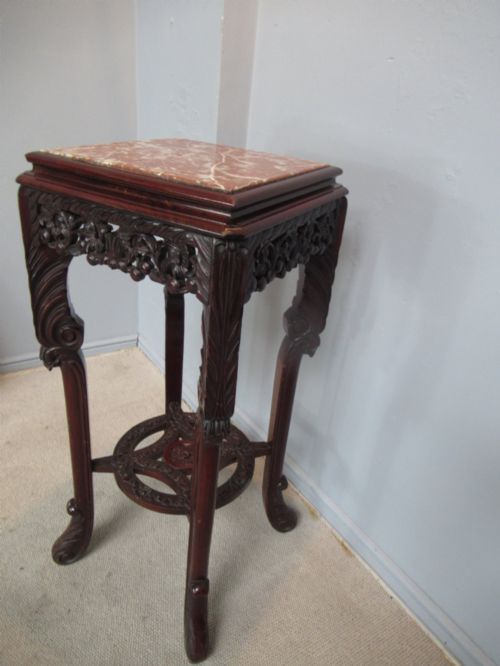
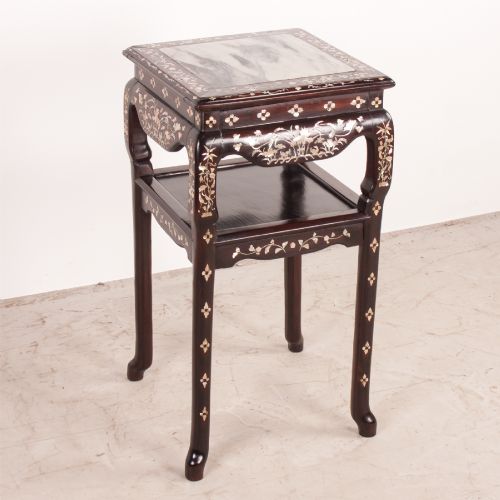
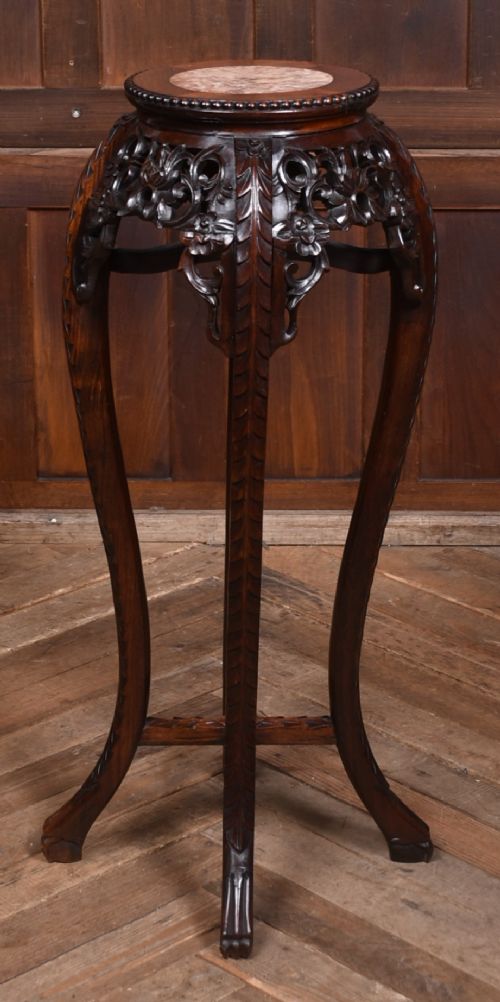
These vintage chinese urn pedestal pieces provide sturdy elevated surfaces for display, combining dense timber frames with inset stone panels.
Vintage Chinese Urn Pedestal
A vintage chinese urn pedestal serves as an elevated support for decorative items like vases, jardinières, and plants within a room. The selection here leans heavily towards plant stands, side tables, and occasional tables originating from the nineteenth century up through the mid twentieth century.
Makers produced these forms in styles spanning Chinese Export, Qing Dynasty, and Republic Period Chinese, alongside Victorian interpretations and Chinoiserie. Buyers encounter sturdy hardwood frames fitted with inset marble panels designed to withstand the weight of heavy ceramic vessels.
Construction and materials
Craftsmen utilised dense hardwoods such as rosewood, mahogany, and hongmu, often ebonising the timber to achieve a dark, uniform finish. These frames feature intricate carving work around the aprons and legs, demonstrating traditional joinery methods that support considerable weight.
Many examples incorporate contrasting inlays, utilising mother of pearl or brass details set directly into the wood. Smooth marble or rouge marble slabs sit flush within the top surface, providing a cool, stable platform for heavy urns and planters.
Listings feature items built from rosewood, mahogany, and hardwood, frequently paired with inset marble panels and mother of pearl inlay.
Judging the work
Quality rests in the depth and crispness of the wood carving, where sharper relief and undercut details separate finer pieces from simpler production. The density of the chosen timber and the precision of the joinery dictate how well the structure holds together over decades of use.
The integration of the inset marble top matters greatly, requiring a precise fit without movement within the wooden rebate. Pierced aprons and complex mother of pearl inlay work demand higher skill levels than plain turned legs and undecorated surfaces.
The Vintage Chinese Urn Pedestal Glossary
- Jardiniere stand
- A tall furniture piece designed specifically to hold large decorative plant pots or ceramic jardinières. These stands elevate the foliage to improve visibility and protect flooring from moisture.
- Hongmu
- A dense, dark tropical hardwood used traditionally in Chinese furniture making. It translates to red wood and provides exceptional strength for carved structural elements.
- Cloisonné enamel
- A decorative metalwork technique where artists apply enamel paste into compartments wired to a metal base. This method appears on distinct vessel forms found alongside the wooden stands.
- Qing Dynasty
- The final imperial dynasty of China, spanning from sixteen forty-four to nineteen twelve. Pieces attributed to this period or its style showcase traditional carving motifs and classical forms.
Vintage Chinese Urn Pedestal: Frequently Asked Questions
What is an urn pedestal used for?
These pieces function primarily to elevate heavy decorative vessels, jardinières, and large ceramic vases to eye level. They allow display space in corners or hallways while protecting floors from damp planters.
Historically, they also served as occasional tables or lamp tables within formal sitting rooms. Their sturdy construction ensures they bear heavy weights safely.
How do I clean a marble top stand?
Wipe the stone surface gently using a soft damp cloth with mild soap, avoiding acidic cleaners that etch marble. Dry thoroughly to prevent water rings on the polished stone.
Treat the surrounding hardwood frame with appropriate furniture wax, buffing lightly to maintain the sheen. Keep the stand away from direct heat sources to protect the timber joints.
What wood types are common?
Makers relied heavily on dense exotic timbers including rosewood, mahogany, and hongmu. These heavy woods resist warping and support intricate hand carving along the aprons and legs.
Some examples feature ebonised wood surfaces mimicking more costly black timbers. Mother of pearl and brass elements frequently accent these primary woods.
How do I date these pieces?
Dating relies on examining the joinery methods, timber characteristics, and stylistic markers such as Republic Period or Qing Dynasty influences. Nineteenth-century examples typically show heavier hand carving and denser timber stock.
Victorian era pieces often reflect a European taste applied to traditional Chinese forms. Later twentieth-century versions display more standardised construction techniques.