



Vintage Chinese Lighting
Vintage chinese lighting brings decorative porcelain, carved wood, and painted lacquer into domestic rooms through table lamps and standard lamps created from earlier vessels and objects.
Vintage Chinese Lighting
Vintage chinese lighting encompasses lamps fashioned from nineteenth and early twentieth century porcelain jars, vases, tea canisters, and carved wooden elements. The phrase covers table lamps and floor standing standard lamps derived from traditional Chinese craftsmanship and European Chinoiserie interpretations.
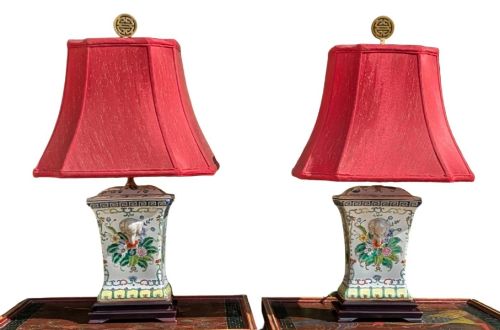
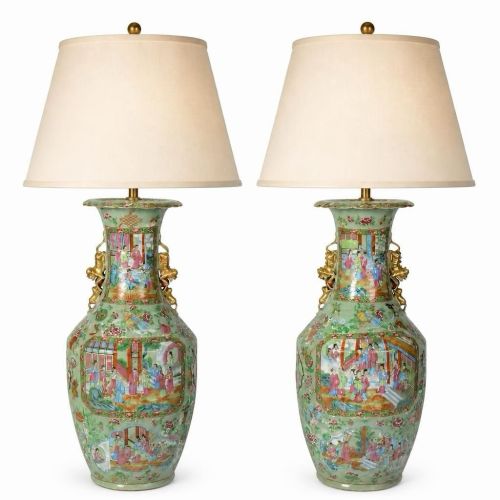
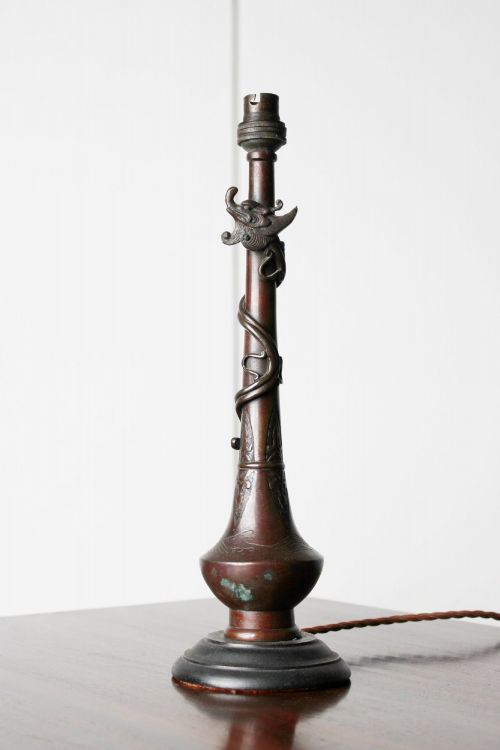
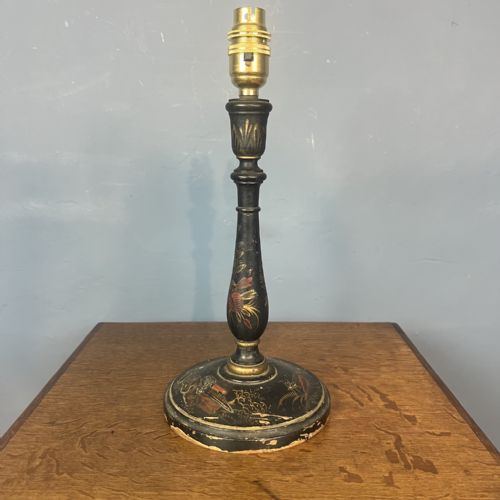
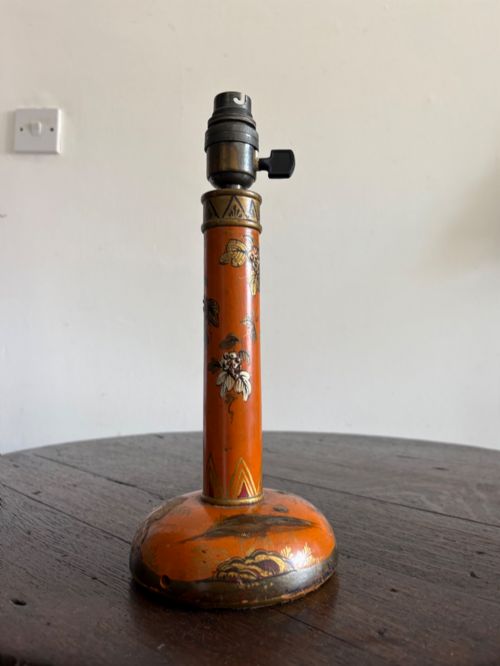
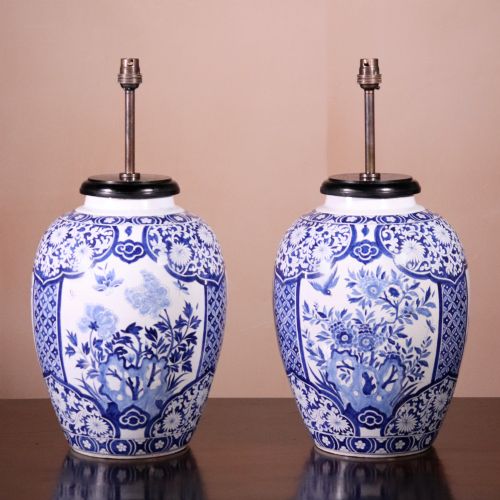
The objects seen most frequently on this page include porcelain ginger jars and vases mounted as table lamps, alongside lacquered wooden columns and bronze or cloisonné vessels adapted for electricity. These pieces span the Victorian, Edwardian, and early twentieth century periods, reflecting both direct imports and Western adaptations in the Chinese taste.
How they were made
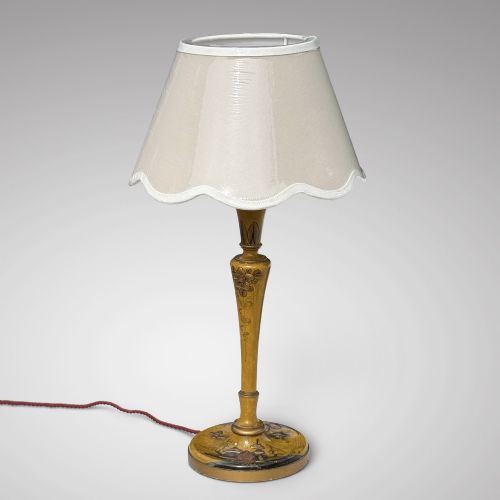
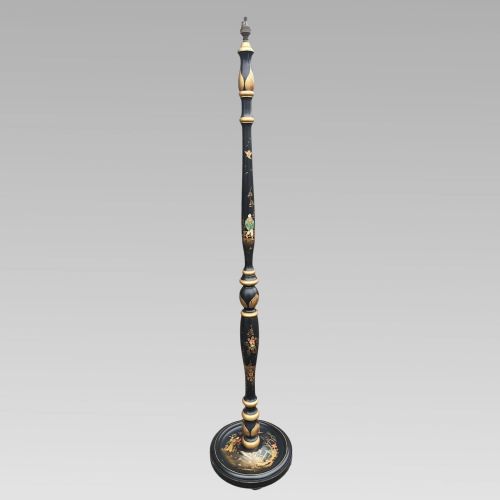
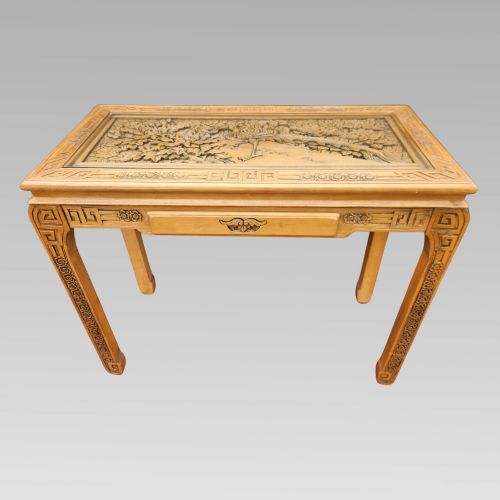
Makers utilised ceramic materials like blue and white porcelain, Famille Verte and Famille Rose enamels, and crackleware glazes, often taking antique vessels and mounting them with electrical fittings. Wooden standards and bases employ hardwood, padauk, and camphor wood, frequently shaped with hand carving or finished in black, ochre, or mandarin orange lacquer.
Metal components incorporate cast bronze, ormolu mounts, and cloisonné enamel work, combining structural hardware with decorative surface patterns. Fabric shades complete many of the lamp assemblies, pairing with hand painted ceramic bodies and carved root wood.
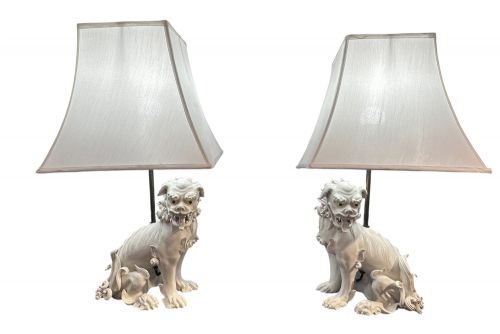
Several fierce Foo dogs stand guard over nineteenth century wiring, ready to protect your hallway from sudden power surges.
What varies in quality
Quality rests upon the original age and artistic merit of the underlying vessel or carving, distinguishing pieces built from genuine nineteenth century export ceramics from later decorative reproductions. The precision of hand painted enamel details on porcelain or the depth of relief in carved hardwood columns marks the difference between standard production and superior craftsmanship.
The integration of the electrical conversion also determines standard, separating neat professional mounting that preserves the vessel from crude alterations that damage antique porcelain or bronze.
The Vintage Chinese Lighting Glossary
- Chinoiserie
- European decorative style reflecting Chinese artistic motifs and techniques. This aesthetic heavily influenced Edwardian lacquerwork and lamp design.
- Cloisonné
- Enamelwork technique where thin metal wires form compartments on a metal base before filling with paste and firing. Pieces employ this method for colourful decorative surfaces.
- Famille Verte
- Chinese porcelain palette dominated by green enamel overglaze colours alongside iron red and blue. The style appears frequently on nineteenth century ginger jar lamps.
- Ginger Jar
- Ceramic storage vessel with a wide mouth and rounded body, frequently converted into a table lamp. These jars often display blue and white or famille rose painting.
- Root Wood
- Natural gnarled timber used to form sculptural lamp bases and stands. Artisans select these organic shapes for their expressive grain and texture.
Vintage Chinese Lighting: Frequently Asked Questions
What are vintage chinese lamps made from?
These lamps incorporate a range of materials derived from converted antique objects, including porcelain vases, cloisonné enamel vessels, and cast bronze.
Wooden elements utilise hardwoods, padauk, and carved root wood alongside lacquered surfaces finished in black, ochre, or mandarin orange.
How do I identify a period lamp?
Dating relies upon the characteristics of the ceramic body, the style of the metal mounts, and the nature of the wood carving. Nineteenth century examples often feature hand painted famille rose or blue and white porcelain.
Later Edwardian and 1920s pieces typically display Chinoiserie lacquer or standard electrical conversions typical of early twentieth century domestic interiors.
Were these originally made as lamps?
Most pieces started life as ritual vessels, tea canisters, ginger jars, or decorative vases before being converted into lighting during the Victorian and Edwardian eras.
Makers added weighted bases, electrical wiring, and lamp holders to traditional Chinese containers and carved wooden stands.
How do I place them in a room?
Table lamps suit sideboards, console tables, and desks where their colourful ceramic glazes or lacquered finishes add focal points of pattern and illumination.
Floor standing standard lamps provide ambient light in sitting rooms, often paired with matching wood furniture or architectural carvings.