


Vintage Ceramic Milk Jug
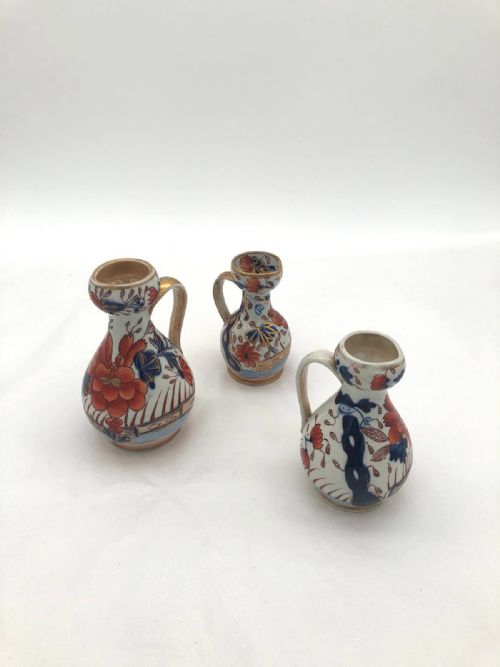
These vintage ceramic milk jug pieces span centuries of pottery traditions, offering robust earthenware and refined porcelain for daily service or display.
Vintage Ceramic Milk Jug
A vintage ceramic milk jug serves practical table duties while representing distinct historical periods from the eighteenth century onwards. Buyers encounter utilitarian earthenware alongside delicate porcelain creamers designed for formal tea service.
Pieces originate from periods spanning Georgian elegance through Victorian revival and mid-twentieth-century manufacturing. Each vessel displays the specific characteristics of its era, whether transfer-printed decoration or hand-painted botanical scenes.
How they were made
Potters utilised earthenware, ironstone, pearlware, and porcelain as foundational bodies for these vessels, shaping them by hand or mould. Glazes sealed the porous clay bodies, sometimes incorporating tin or lead for smooth white surfaces.
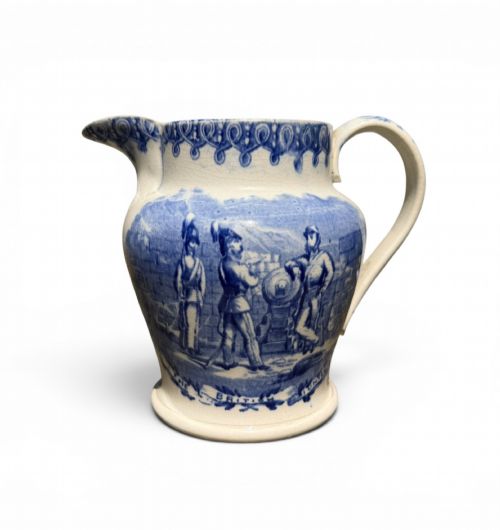
Decoration relied on hand-painting, transfer printing in purple and other colours, and applied gold leaf details. Kiln firing fixed the pigments and glazes, creating durable finishes that survived centuries of domestic use.
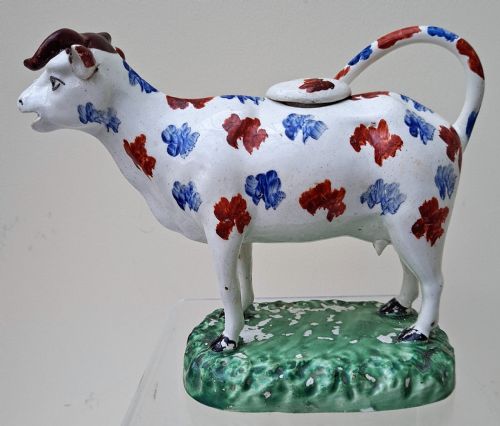
Cows turned into cream jugs serve milk directly from their own backs, with tails providing the handle.
What varies in quality
Quality rests on the crispness of the moulding, the precision of hand-painted or transfer-printed details, and the overall balance of the form. Finer porcelain bodies and delicate handle attachments elevate certain pieces above standard utilitarian wares.
The sophistication of the palette and the prestige of the factory influence the standing of an item. Intricate armorial crests or complex multi-coloured patterns demonstrate superior craftsmanship compared to simpler provincial designs.
Mason's·Royal Davenport·Royal Worcester·Chamberlain Worcester·Livesley Powell and Co·New Hall·Meissen·Copeland Spode·Crown Derby
The Vintage Ceramic Milk Jug Glossary
- Ironstone
- A durable type of earthenware patented in the nineteenth century to rival true porcelain. It resists chipping and staining effectively.
- Pearlware
- A refined earthenware developed in the late eighteenth century featuring a subtle bluish glaze that pooled in recesses. It provided a whiter surface than traditional creamware.
- Creamware
- A light-coloured refined earthenware perfected in Yorkshire during the eighteenth century with a warm yellow-toned glaze. It became a staple of British ceramic production.
- Cow creamer
- A hollow ceramic figure of a cow with a milk-pouring opening on its back and a tail serving as the handle. These novelties enjoyed particular popularity in Welsh and English potteries.
- Transfer printing
- A technique where an engraved metal plate applied ink to paper, which was then pressed onto the ceramic body to transfer the design before glazing. This allowed for intricate repeating patterns.
Vintage Ceramic Milk Jug: Frequently Asked Questions
What is a vintage ceramic milk jug used for?
These vessels served to hold and pour milk or cream during tea and dining services in homes across past centuries.
Today, collectors utilise them for table service, floral arrangements, or display within cabinet collections.
How do I identify Georgian ceramic jugs?
Georgian examples often display neoclassical shapes, delicate handles, and refined creamware or pearlware bodies produced before the nineteenth century.
Look for hand-painted botanical motifs, armorial crests, and softer glaze tones characteristic of eighteenth-century kilns.
What makes Victorian jugs different?
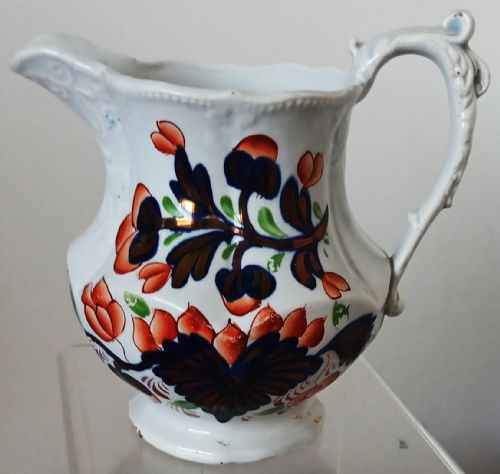
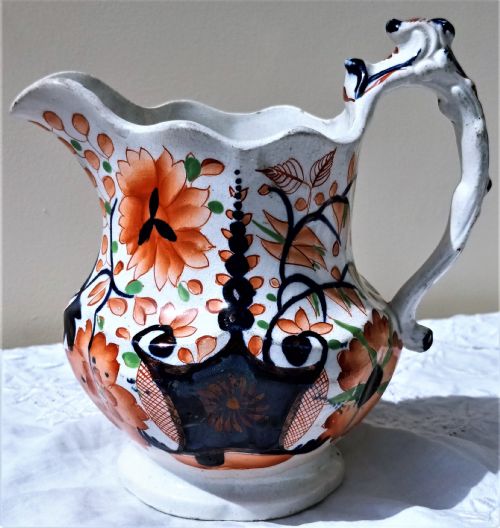
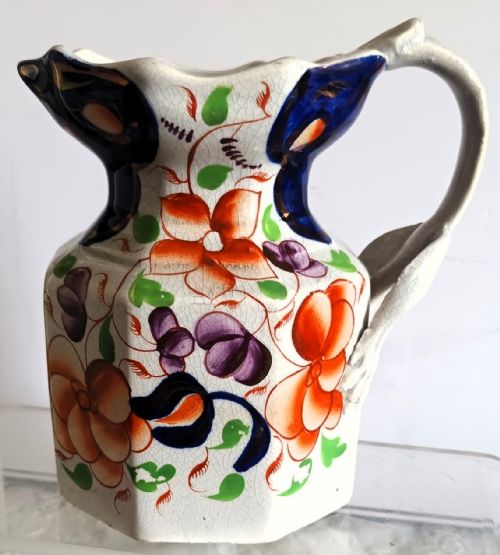
Victorian pieces frequently embrace bolder patterns like Gaudy Welsh designs, robust ironstone bodies, and transfer-printed scenes.
The era introduced mass production techniques alongside ornate decorative elements such as faceted bodies and gilded edges.
Are cow creamers rare?
Cow creamers represent a specific novelty form produced by Welsh and English potteries during the Georgian and Victorian eras.
Their whimsical animal shape makes them distinct additions to ceramic collections focused on figural utility.