




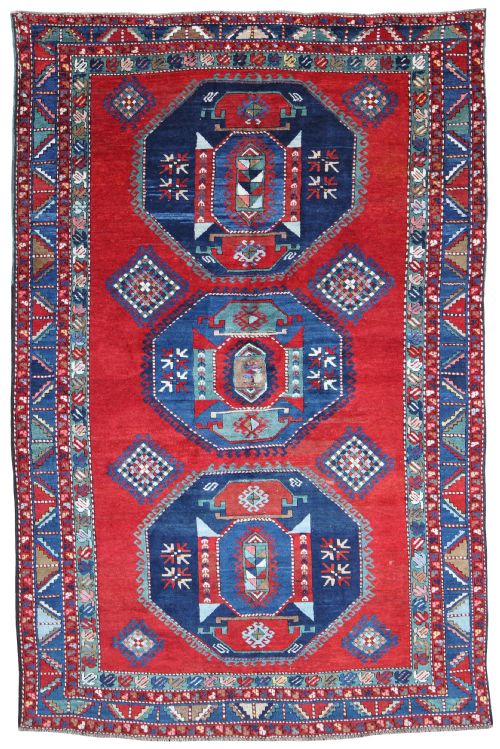


Vintage Caucasian Kazak Carpet
A vintage caucasian kazak carpet brings geometric power and rich village dye work into a room through hand-knotted wool.
Vintage Caucasian Kazak Carpet
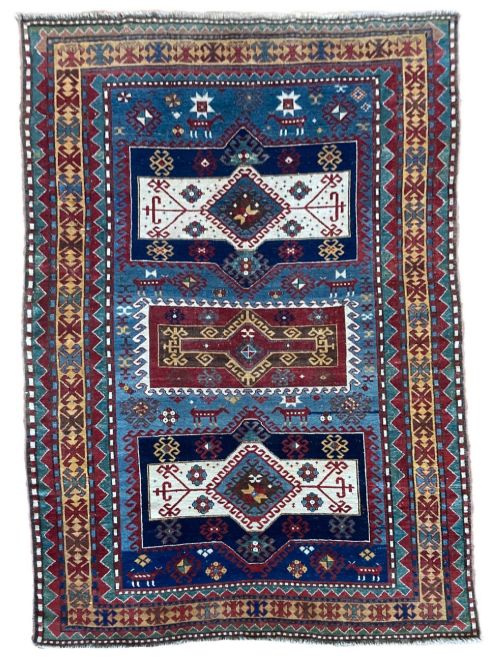
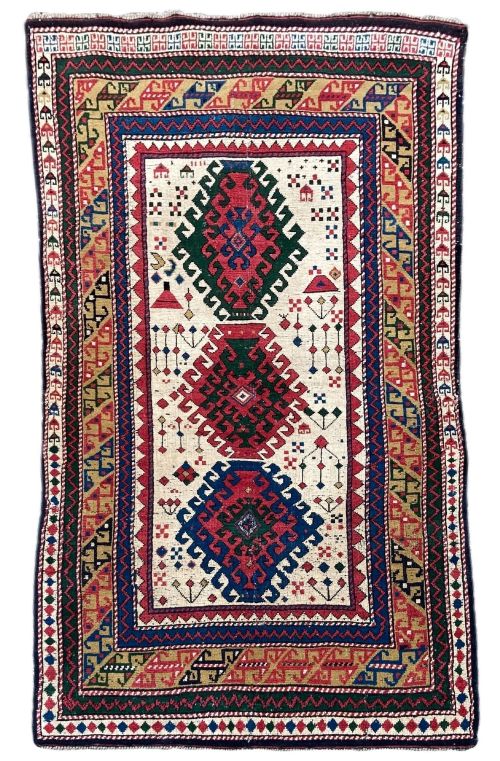
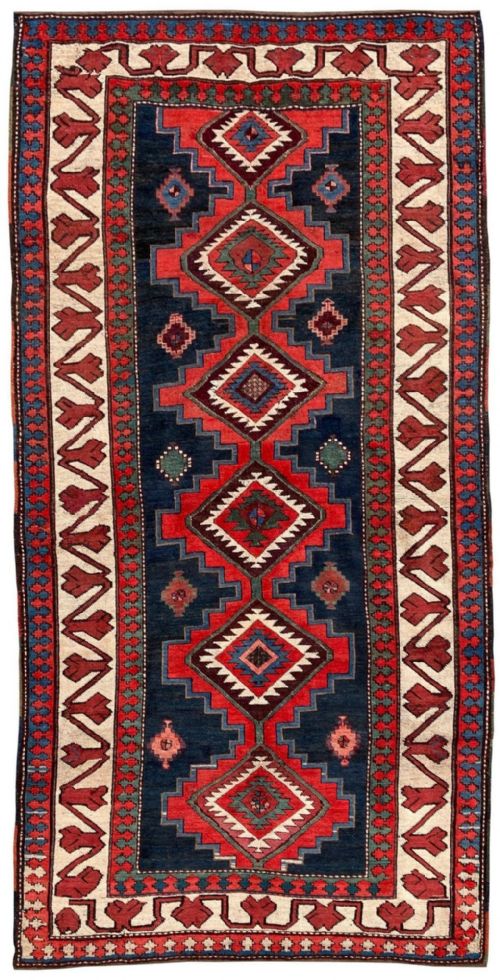
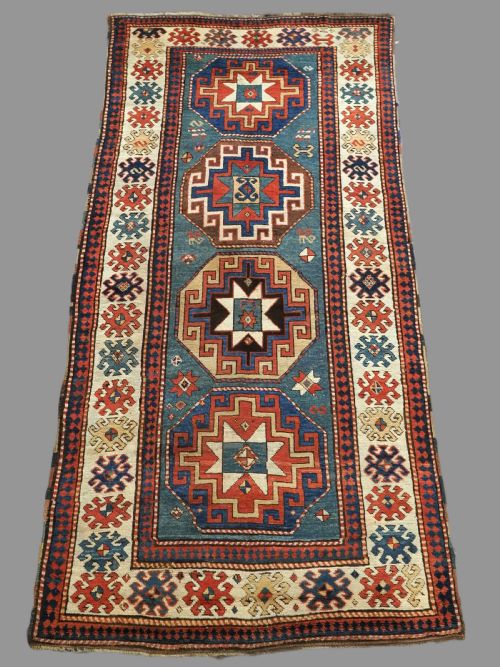
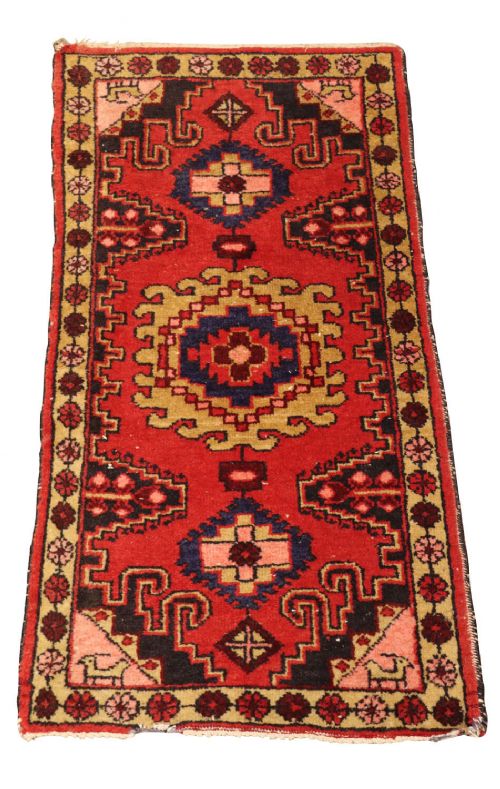
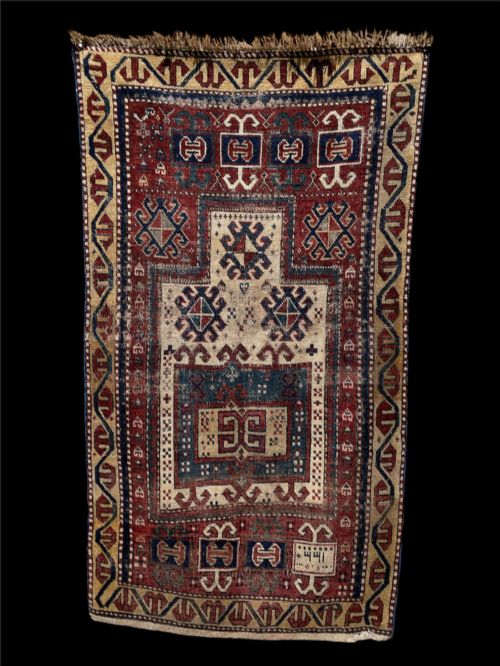
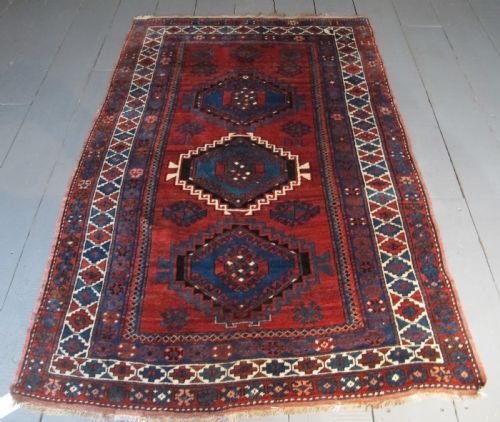
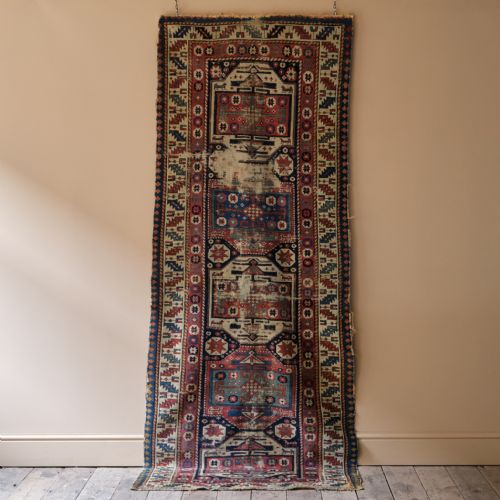
When buyers search for a vintage caucasian kazak carpet, they look for hand-knotted village and tribal floor coverings originating from the Caucasus region during the nineteenth and early twentieth centuries. These textiles include formats ranging from square prayer mats and long runners to substantial carpets bearing geometric medallions and animal motifs.
The pieces appearing on this page span several decades from the mid-nineteenth century through the 1930s, encompassing specific regional weaving traditions such as Fachralo, Borchalu, Moghan, Lori Pambak, Gendje, Karachov, and Chelaberd. Most examples take the form of domestic rugs and runners produced by village weavers utilising traditional tribal patterns passed down through generations.
How they were made
These textiles rely principally on wool and hand-spun wool for the pile, foundation warp, and weft threads, creating a dense and resilient structure suited to daily domestic use. The weavers knotted the wool by hand onto a supportive cotton or wool foundation, producing firm pile surfaces designed to withstand generations of foot traffic.
Natural dyestuffs impart the characteristic colour palette found across these regional types, creating saturated grounds and contrasting geometric details. The combination of hand-spun wool and traditional knotting techniques gives each rug its distinct weight and physical handle.
Vintage Caucasian Kazak Carpet Retail Price Guide 2026
Typical asking prices for vintage caucasian kazak carpet among the pieces listed under this phrase on Sellingantiques today, from the lower quarter to the upper quarter. They describe what is for sale here now, not the wider market.
Listings span weaving periods from the mid nineteenth century up to the 1930s, using wool, cotton, and hand-spun wool materials.
What varies in quality
Quality in these village carpets rests upon the precision of the wool spinning and the tightness of the knotting, which dictate the crispness of the geometric motifs. Finer density in the weave allows intricate medallion edges and hooked details to hold their sharp linear definition over decades of wear.
The handling of colour variation across the field also separates standard examples from exceptional ones. Rich saturation and balanced contrast between the central field and borders demonstrate superior command of traditional dyeing methods.
The Vintage Caucasian Kazak Carpet Glossary
- Medallion
- A central geometric or floral ornament set into the middle of the rug field. These enclosed shapes often form the primary focal point of tribal Caucasian designs.
- Prayer rug
- A small format textile featuring a distinct mihrab or arch design at one end. Historically used for personal devotion, these rugs are frequently square or compact in shape.
- Runner
- A long and narrow rectangular format designed for hallways, corridors, or alongside beds. These pieces repeat regional motifs along an elongated axis.
- Pile
- The upright woolen surface formed by the cut ends of knots tied to the foundation. Pile depth and density determine the physical feel and durability of the rug.
- Warp
- The vertical foundation threads stretched lengthwise on the loom before knotting begins. The visible ends of these threads often form the fringed edges at either end of the rug.
Vintage Caucasian Kazak Carpet: Frequently Asked Questions
How do I identify a regional Kazak type?
Regional subtypes such as Fachralo, Karachov, or Bordjalou are distinguished by their specific arrangements of central medallions, field colours, and border motifs. Examining the primary geometric structures reveals which specific village or valley tradition influenced the weaver.
Familiarity with the distinct palette and medallion shapes associated with names like Moghan or Gendje helps separate one regional group from another.
Where were these carpets originally woven?
These textiles were produced by village and tribal weavers across the Caucasus region, an area situated between the Black Sea and the Caspian Sea. Different communities and valleys developed their own specific variations of wool preparation and geometric design.
Local families and nomadic groups maintained distinct weaving practices that persisted across generations through the nineteenth and early twentieth centuries.
How should I care for an antique wool rug?
Regular gentle vacuuming without a rotating brush bar keeps dust from settling deep into the wool pile. Professional cleaning suited to antique textiles preserves the natural lanolin in the hand-spun wool.
Placing a breathable rug underlay beneath the piece prevents slipping and reduces friction between the foundation and the floor.
Are these carpets suitable for heavy traffic areas?
The dense hand-knotted wool construction makes these runners and carpets naturally durable and resilient under normal domestic use. Traditional village rugs were built to serve functional roles in busy households.
Placing them in hallways or living spaces allows the sturdy wool pile to absorb daily wear while maintaining its structural integrity.