


Vintage Carver Chair
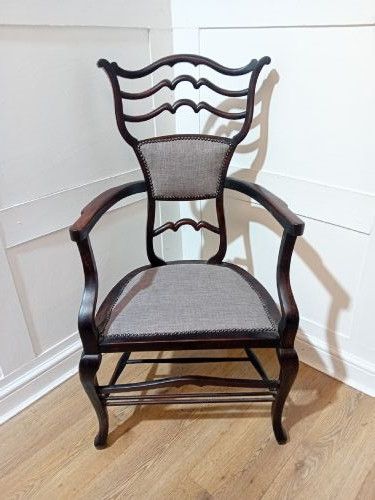
A vintage carver chair provides a proper armrest at the dining table or desk, combining practical seating with period character.
Vintage Carver Chair
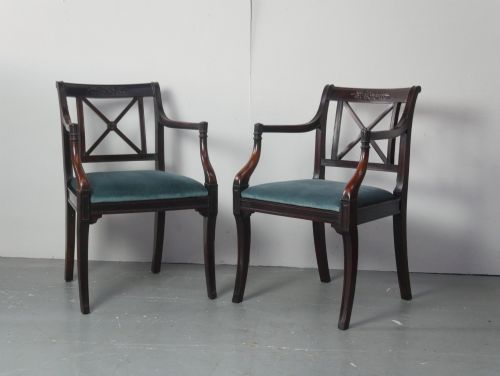
A vintage carver chair is an armchair designed to stand at the head of a dining table or serve as a desk seat, featuring distinct armrests that set it apart from standard dining chairs. The selection spans the 18th, 19th, and 20th centuries, taking in Victorian, Edwardian, and Regency eras alongside revivalist movements.
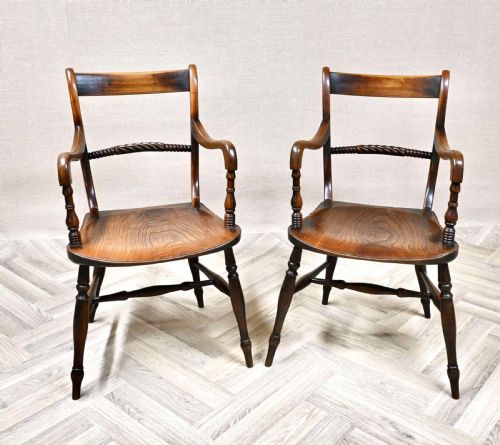
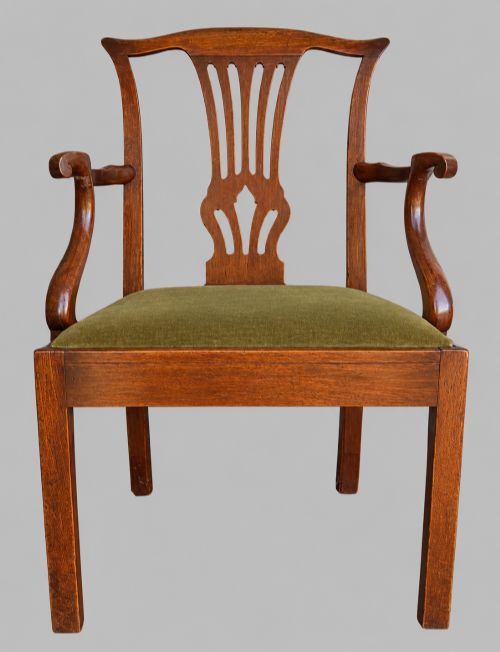
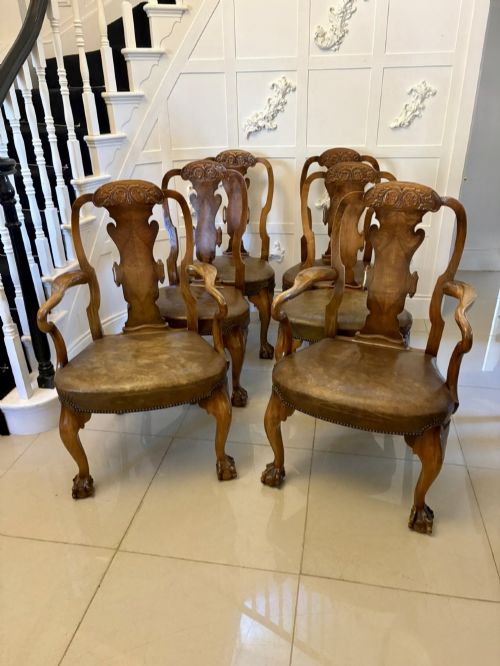
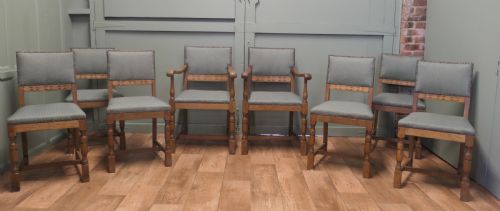
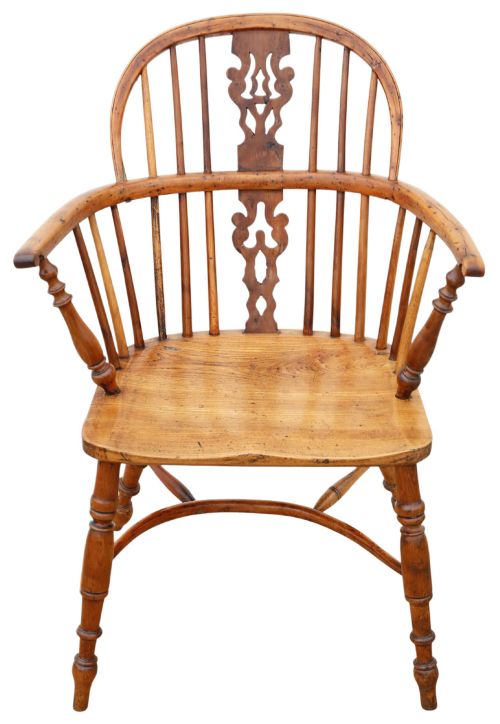
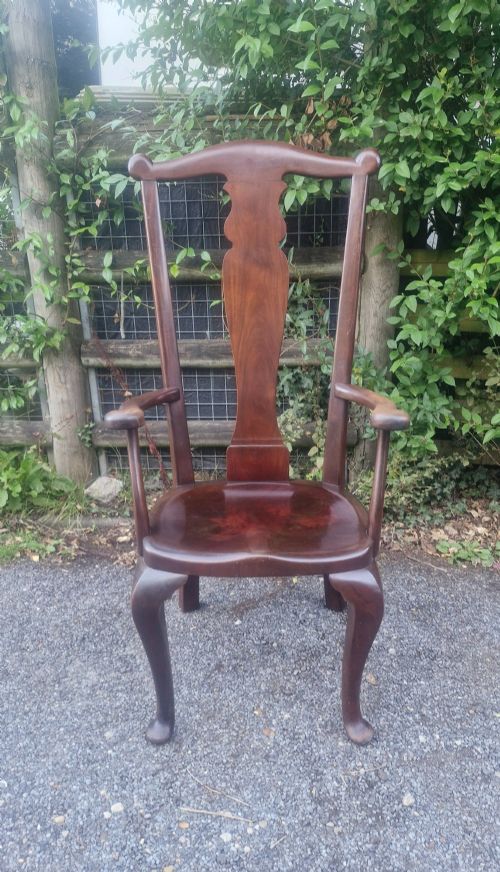
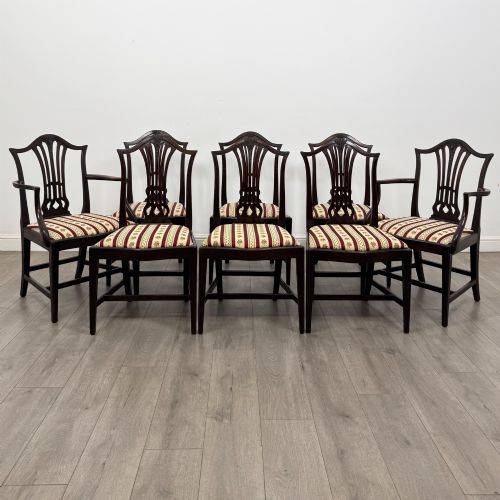
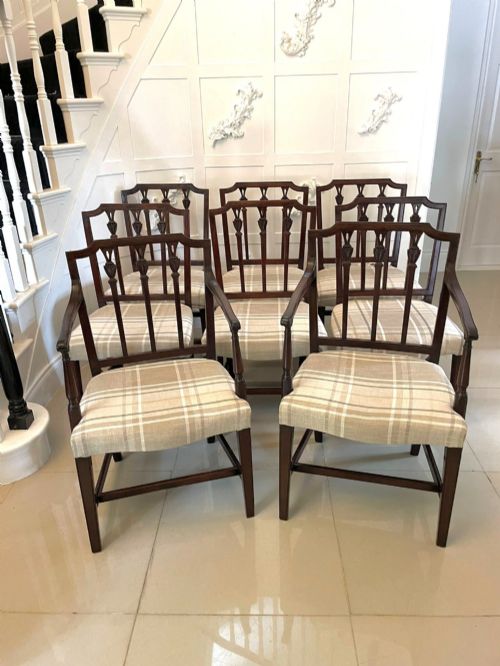
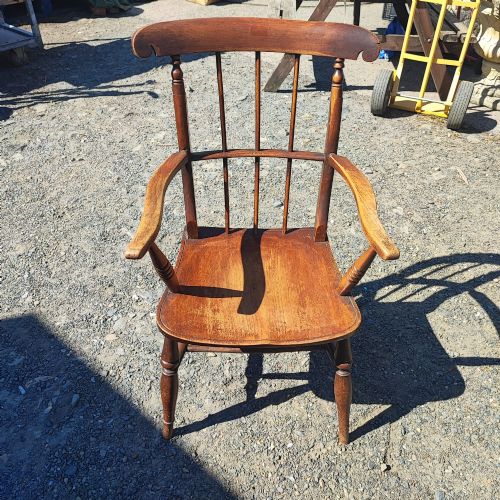
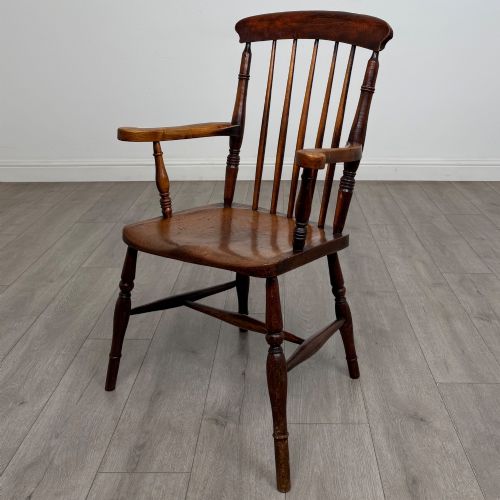
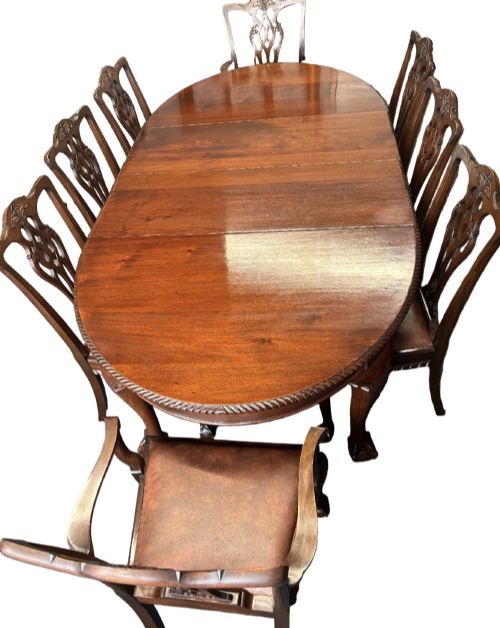
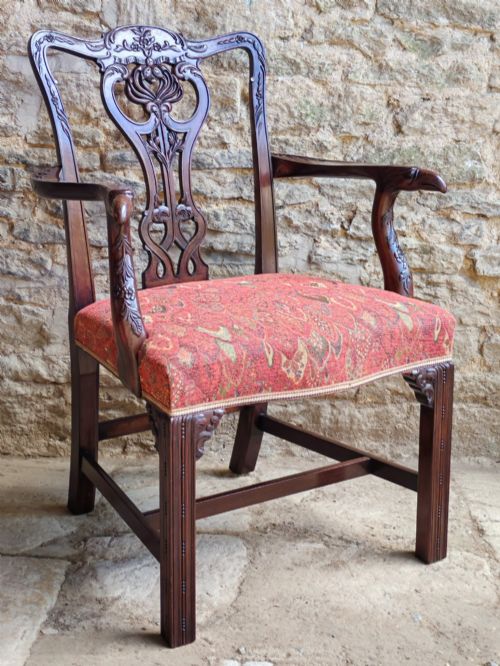
Most examples found here appear in polished mahogany, oak, or mixed country timbers such as elm and ash, often grouped within larger dining sets or offered as matched pairs. Forms range from heavy Windsor armchairs and rush-seated Arts and Crafts models to formal Chippendale and Georgian revival styles with carved details.
How they were made
Construction relies heavily on traditional cabinet-making timbers, chiefly solid mahogany, oak, and walnut, frequently paired with secondary woods like beech and elm for structural parts. Country pieces utilise local woods such as ash and yew, shaped through steam-bending and spindle-turning.
Upholstered versions integrate traditional stuffing materials covered in fabric, leather, or velvet, secured with brass tacks. Decoration is carved directly into the timber, showing pierced splats, shield backs, or inlaid brass and lighter wood veneers.
Vintage Carver Chair Retail Price Guide 2026
Typical asking prices for vintage carver chair among the pieces listed under this phrase on Sellingantiques today, from the lower quarter to the upper quarter. They describe what is for sale here now, not the wider market.
The evidence includes formal Chippendale style dining sets alongside rush-seated Arts and Crafts armchairs.
What varies in quality
The standard of timber selection and carving depth dictates the upper tier of these chairs, where dense mahogany and figured walnut display crisp, hand-chiselled details rather than shallow machine moulding. Superior joinery ensures that joints remain rigid without excessive modern reinforcement.
Proportion and historical fidelity separate finer revival pieces from ordinary commercial production, with better workshops maintaining correct scaling on splats, arms, and legs. Original surfaces, whether polished French polish or aged beeswax, retain greater depth than stripped and aggressively refinished timber.
Howard and Sons·Liberty Morris & Co·Maple & Co·Alfred Allen of Birmingham
The Vintage Carver Chair Glossary
- Carver chair
- An armchair traditionally placed at the head of a dining table. It matches or complements the surrounding side chairs.
- Elbow chair
- An alternative term for an armchair or carver. It highlights the prominent armrests designed to support the elbows.
- Chippendale style
- A decorative manner originating in the 18th century and revived later. It is defined by carved ribbon backs and cabriole legs.
- Windsor
- A traditional chair construction method. Spindles are fitted directly into a solid wooden seat rather than a framed back.
- Rush seat
- A woven seating surface made from dried marsh rushes. It appears frequently on Arts and Crafts chairs.
Vintage Carver Chair: Frequently Asked Questions
What is a vintage carver chair?
A vintage carver chair is an armchair traditionally placed at the head of a dining table or used as a desk seat. These pieces feature integrated armrests and date from various historical periods including the Victorian and Edwardian eras.
Such chairs match standard dining sets while offering added comfort through supportive arms. They appear in styles ranging from plain country Windsor designs to formal mahogany revival pieces.
How do I use a carver chair at a dining table?
Carver chairs typically sit at the two heads of a rectangular dining table to frame the setting. Their armrests require checking against the table height to ensure the arms slide underneath the top.
When paired with simpler side chairs, a matching pair of carvers creates a balanced arrangement. They also function independently as desk chairs or hallway seats.
How can I tell the period of a chair?
Dating relies on timber choices, construction techniques, and stylistic revival markers seen in the frame. For example, solid mahogany and shield backs point towards Georgian revival taste, while rush seats and exposed oak suggest the Arts and Crafts movement.
Wear patterns on the feet and the type of polish provide additional clues regarding age. Tool marks left by hand shaping differ noticeably from later factory production methods.
What woods were used for these chairs?
Cabinet makers predominantly used mahogany, oak, and walnut for formal dining and drawing room chairs. These dense timbers supported intricate carving and took a fine polished finish.
Country versions utilised accessible local timbers like elm, ash, beech, and yew. These woods provided the necessary flexibility for steam-bent components and spindle-turned parts.