


Vintage Carved Wood Bear
These vintage carved wood bear pieces bring character and charm into a room, spanning useful boxes, lamps, and sculptures.
Vintage Carved Wood Bear
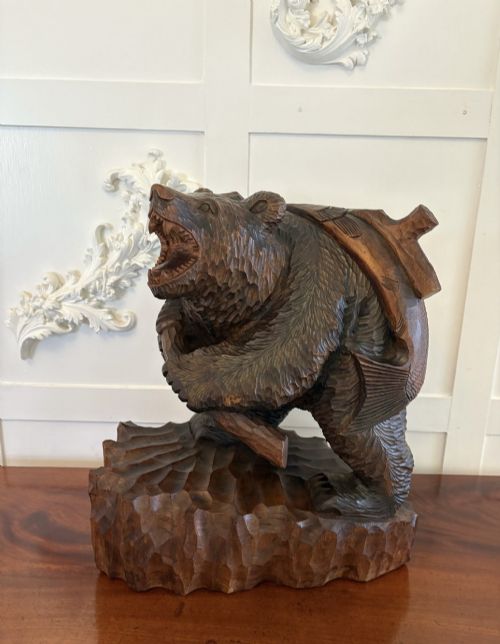
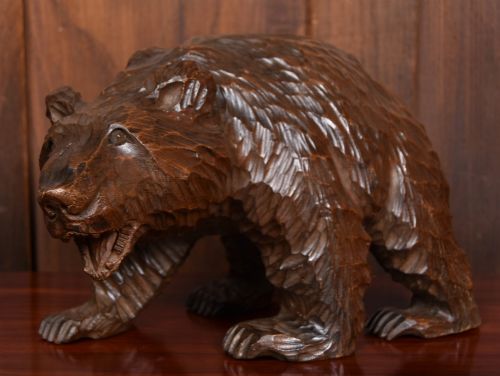
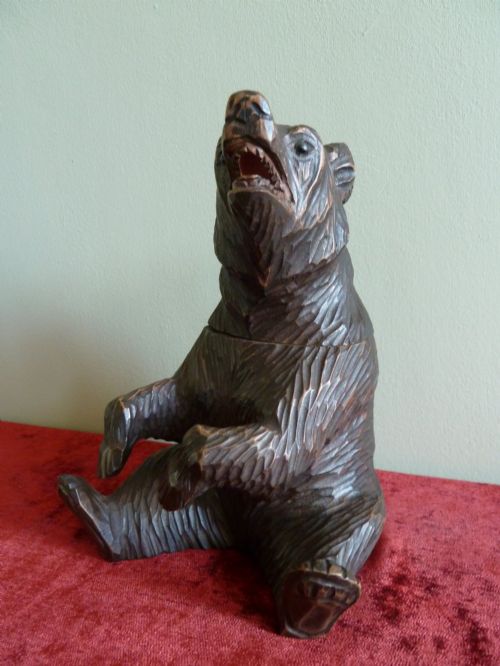
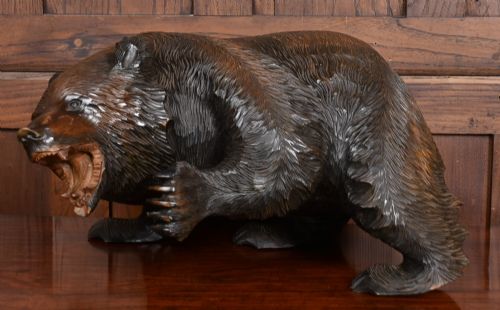
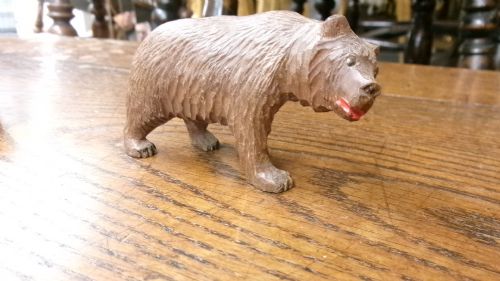
When you search for vintage carved wood bear, you find sculpted animal figures that range from tabletop sculptures and bookends to functional items like tobacco jars, humidor boxes, and table lamps. These pieces primarily date from the nineteenth century through to the Edwardian era and the nineteen-twenties.
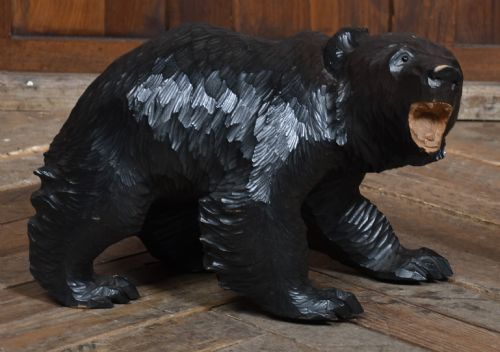
The versions you meet most often on this page stem from the Black Forest tradition or Japanese folk art, specifically the Kibori Kuma style. They include individual standing figures, pairs, and miniature groups carved with notable attention to anatomical detail and expression.
Beyond decorative table figures, the selection incorporates larger hall furniture, stick stands, and reading aids such as bookends. Each object balances utilitarian purpose with sculptural form, reflecting the craftsmanship of its period.
How they were made
Carvers shaped these figures predominantly from wood, utilising linden wood, mahogany, and general carved wood alongside stain for colour and finish. Selected pieces incorporate additional materials such as metal, glass, and fabric for eyes, hardware, or functional fittings.
Object forms on this page include table lamps, stick stands, hall stands, tobacco jars, humidor boxes, bookends, and miniature bear sets.
What varies in quality
Quality rests in the precision of the carving and the life within the bear's form, separating fluid, expressive animal postures from stiff or generic execution. Proportion and the handling of the fur texture dictate the visual success of the sculpture.
Functional integration also separates standard pieces from superior examples, where hinged tobacco boxes, fitted humidor compartments, or lamp electrical housings are engineered seamlessly into the bear's anatomy without disrupting the carved silhouette.
The Vintage Carved Wood Bear Glossary
- Black Forest
- A style of wood carving originating from the European mountain region, known for realistic representations of wildlife, particularly bears.
- Kibori Kuma
- A traditional style of Japanese wood-carved bear originating from Hokkaido, often featuring expressive, textured rendering of the animal.
- Humidor
- A specialised moisture-controlled box designed for storing tobacco, frequently carved in the form of an animal.
- Linden wood
- A pale, fine-grained timber favoured by carvers for its even texture and suitability for intricate detail.
Vintage Carved Wood Bear: Frequently Asked Questions
What were vintage carved wood bear pieces used for?
Many of these carved figures served practical purposes in domestic spaces, functioning as tobacco boxes, humidors, bookends, and hall stands.
Others acted purely as decorative sculptures, table lamps, or miniature collectibles placed upon desks and mantelpieces.
How do I care for a carved wood bear?
Keep the wood away from direct heat sources and strong sunlight to prevent the timber from drying out or splitting over time.
Dust gently with a dry, soft cloth and avoid applying modern polishes or cleaning agents that might alter the finish.
How do I tell Black Forest and Japanese bears apart?
Black Forest carvings typically emerge from European traditions, often incorporating naturalistic foliage, deep brown stains, and functional utility like stick stands.
Japanese Kibori Kuma bears reflect distinct regional folk art traditions from Hokkaido, showing characteristic surface texturing and tool marks.
Are these bear figures solid wood?
Most pieces are carved from solid blocks of timber, utilising woods such as linden wood or mahogany for the main body.
Some functional items include supplementary elements like metal hinges, glass inserts, or fabric components where required for their specific use.