


Vintage Carved Server
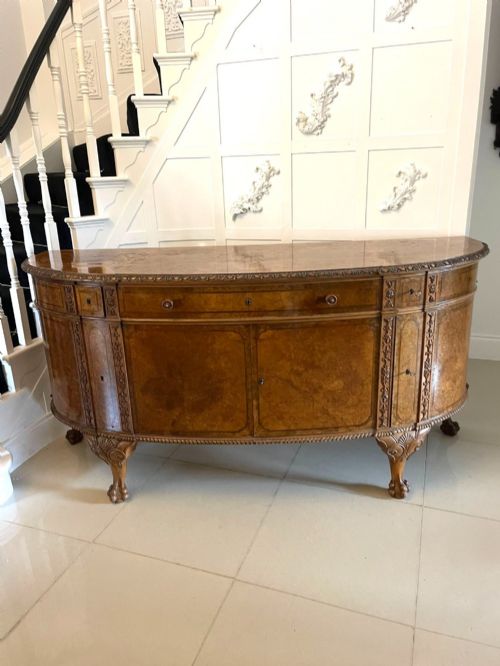
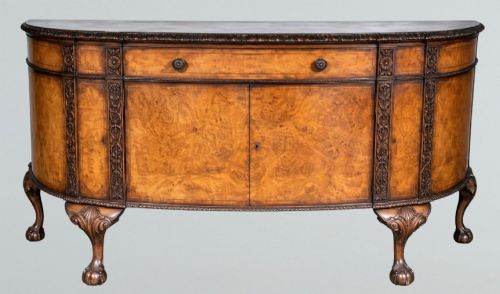
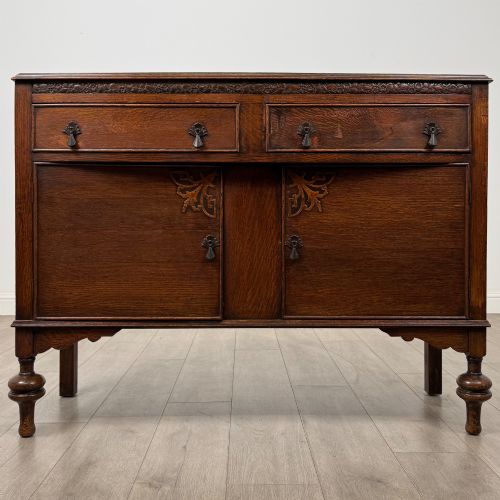
A vintage carved server offers robust dining room storage and surface space, bringing period character and heavy timber craftsmanship into daily domestic use.
Vintage Carved Server
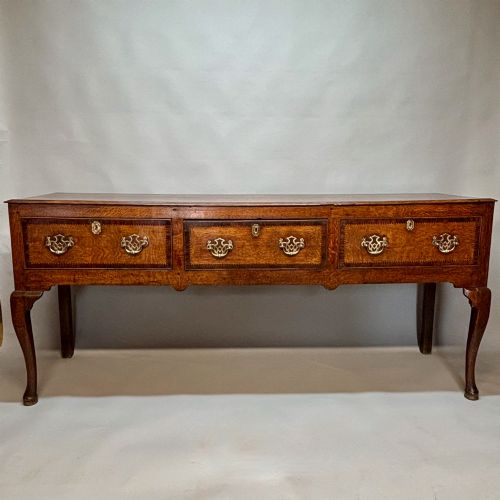
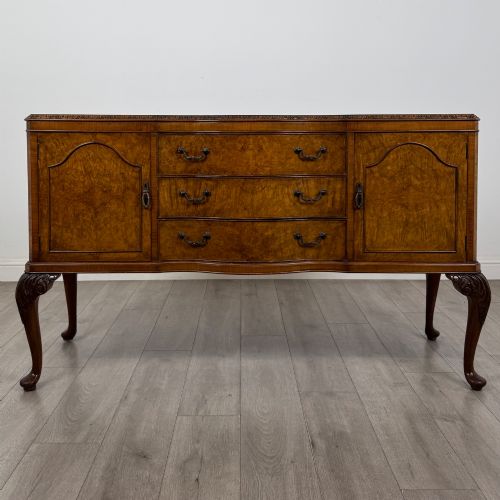
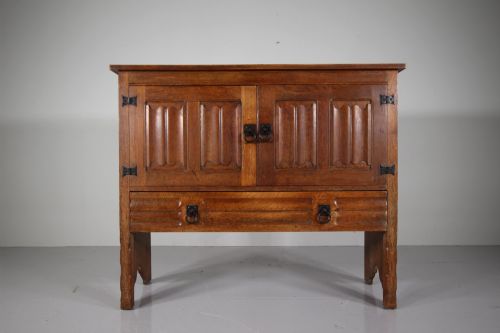
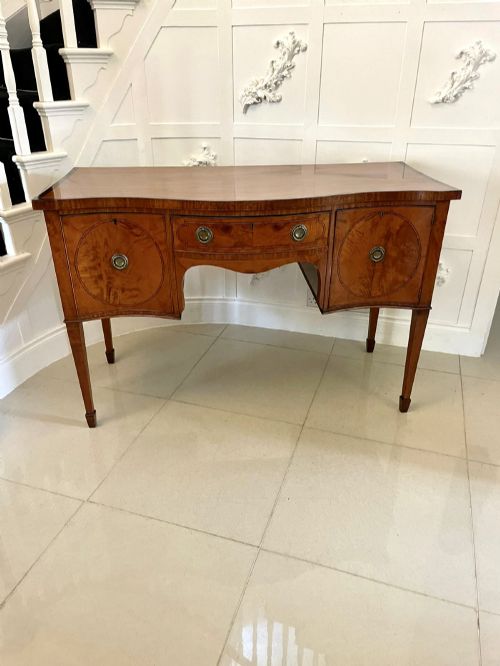
When you search for a vintage carved server, you encounter a variety of heavy dining furniture designed for serving food and storing tableware. These pieces span several decades and styles, reflecting the changing tastes of domestic interiors through the nineteenth and twentieth centuries.
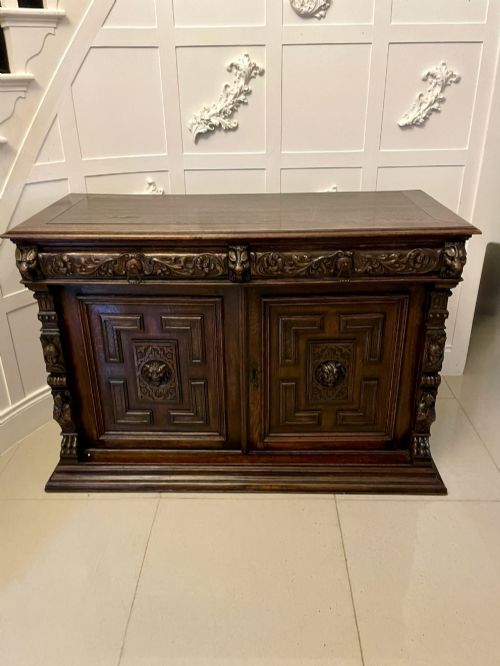
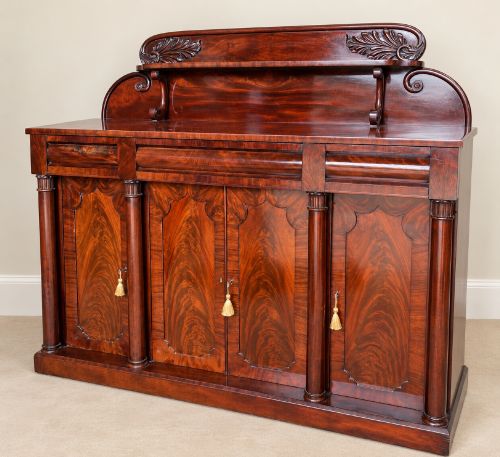
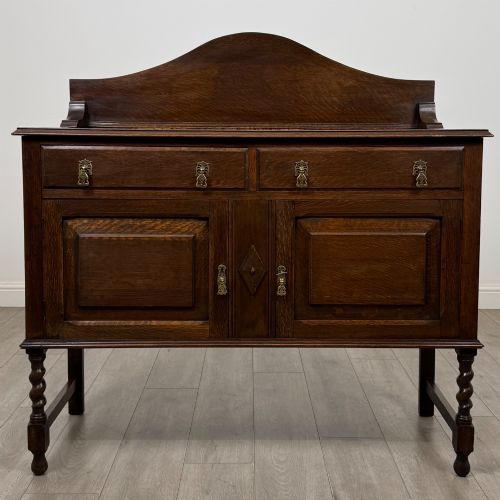
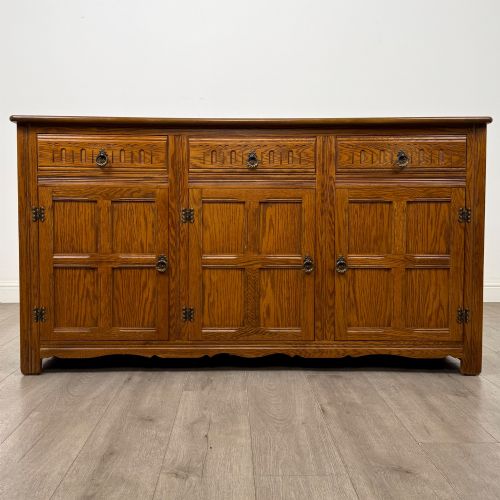
On this page, you are most likely to meet substantial oak sideboards, chiffoniers, and dresser bases originating from the Victorian, Edwardian, and 1920s periods. Many of these items incorporate revivalist aesthetics such as Jacobean, Gothic, and Queen Anne styles, defined by visible wood grain and ornamental carving.
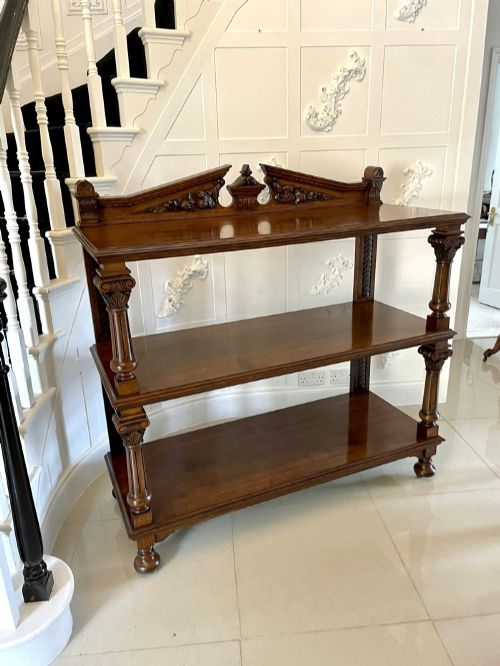
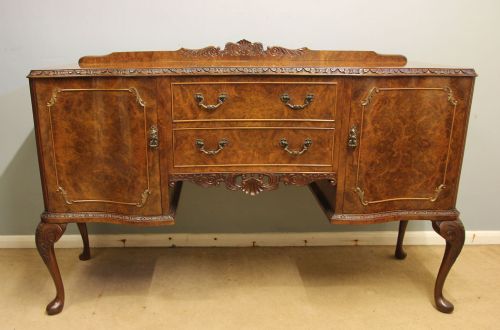
The category also encompasses walnut and mahogany serving tables alongside specialist items like pedestal sideboards and console tables. Each piece serves a practical function for hospitality while displaying the distinct regional design traits of its era.
Materials and construction methods
Makers relied primarily on native and imported timbers, selecting oak for heavy carved surfaces and burr walnut or mahogany for figured, decorative facades. Cabinetmakers joined panels using traditional techniques that allowed timber to move naturally with changes in household temperature.
Surface ornament depended on hand-carved motifs, linenfold panels, and barley twist turnings executed directly into the solid wood or applied as mouldings. French polishing and wax finishes brought out the natural depth and variation of the grain, particularly in walnut and mahogany surfaces.
Listings feature oak, burr walnut, and mahogany timbers across styles ranging from Jacobean Revival to Regency.
Distinctions in quality and execution
The upper tier of these pieces displays crisp, deeply undercut hand carving that retains sharp edges and balanced proportions across the entire facade. Lesser examples rely on shallow machine stamping or simpler applied mouldings that lack the three-dimensional depth found on finer commissions.
Selection of timber defines the distinction between standard production and superior work, with top examples utilising book-matched burr walnut veneers or dense, quarter-sawn oak with prominent medullary rays. Construction integrity in drawers and internal framing further separates standard utility items from master cabinet work.
Beresford and Hicks London·Roberts Cadman
The Vintage Carved Server Glossary
- Serpentine
- A curved front shape that bends inward in the centre and outward at the sides, creating a flowing undulating line. This form requires advanced woodworking skill to shape accurately.
- Chiffonier
- A compact sideboard or low cabinet equipped with drawers and cupboards, often featuring a raised shelf or mirror back. It gained popularity during the Victorian period for smaller dining spaces.
- Dresser Base
- A low wooden cabinet fitted with drawers and cupboards beneath a flat top surface, historically used for food preparation and serving. These pieces often display sturdy oak construction and period revival details.
- Pedestal Sideboard
- A large dining room cabinet featuring two substantial cupboards or pedestals supporting a central surface or drawer section. This formal layout became prominent during the Regency period.
- Linenfold
- A carved wooden panel motif that mimics the appearance of folded fabric or linen hanging in vertical folds. This decorative technique appears frequently on Tudor and Jacobean revival furniture.
Vintage Carved Server: Frequently Asked Questions
What is the difference between a sideboard and a server?
Sideboards generally offer larger enclosed cupboard spaces and broader top surfaces designed for heavy dining room storage. Servers tend to be slightly more compact table forms intended specifically for presenting dishes during meals.
Both pieces functioned within the dining room but served different scales of hospitality and household storage requirements.
How do I identify Edwardian oak revival furniture?
Edwardian revival pieces often display lighter golden oak tones combined with Jacobean or Gothic carved motifs. Look for machine-tooled elements alongside hand finishing, barley twist legs, and panelled cupboard doors.
These items date from the early twentieth century and adapt heavier seventeenth-century styles for more domestic Edwardian interiors.
Where should I place a console table at home?
Console tables fit well in narrow hallways, living room perimeters, or dining spaces where floor space is limited. Their shallow depth provides a convenient surface for lamps and decorative objects without blocking movement.
Pairing a console with a mirror creates a functional focal point near an entryway.