
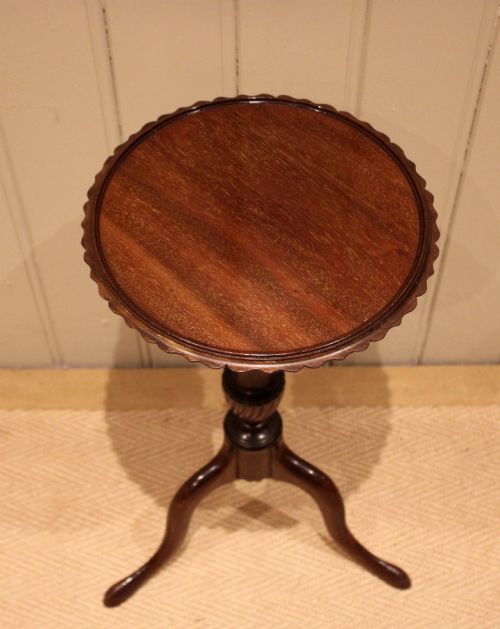
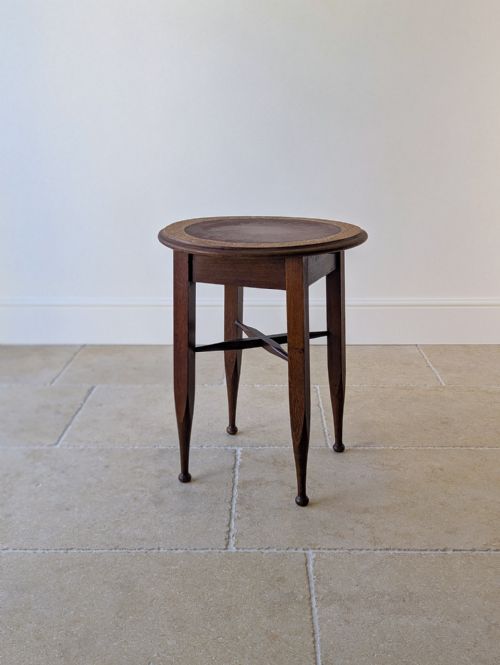
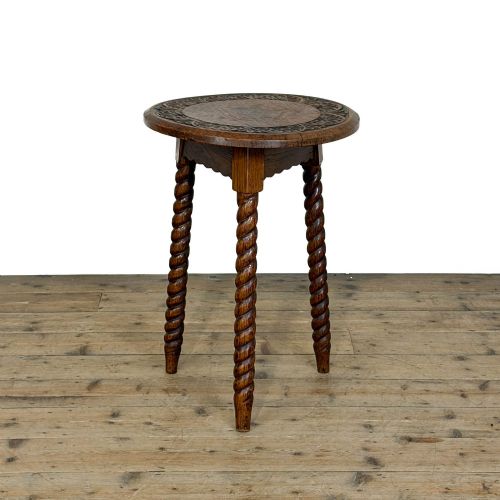
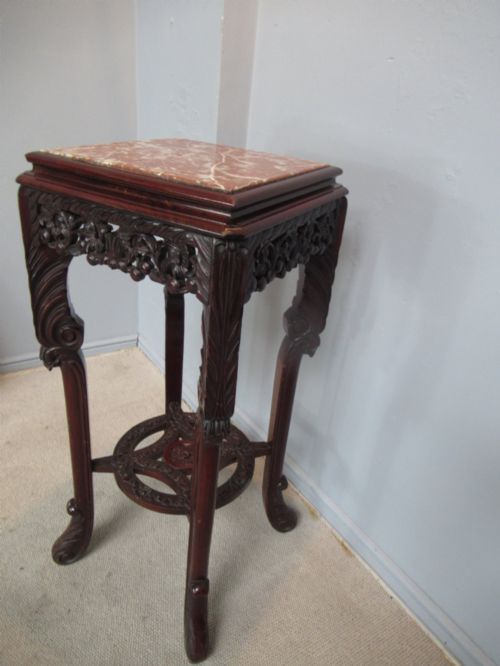
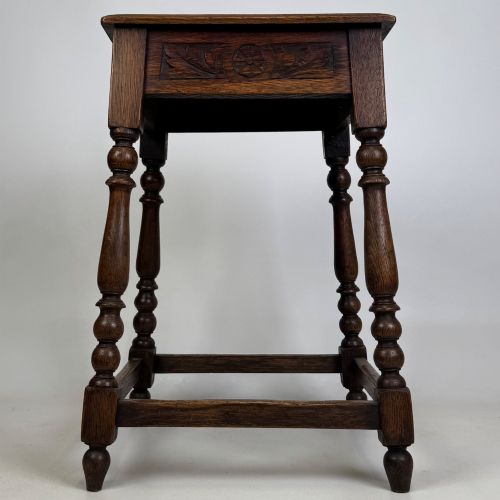
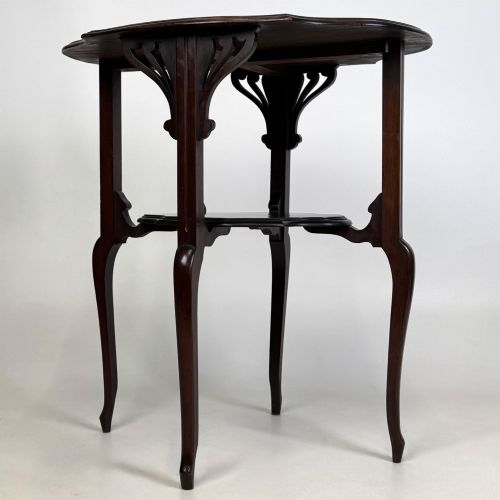
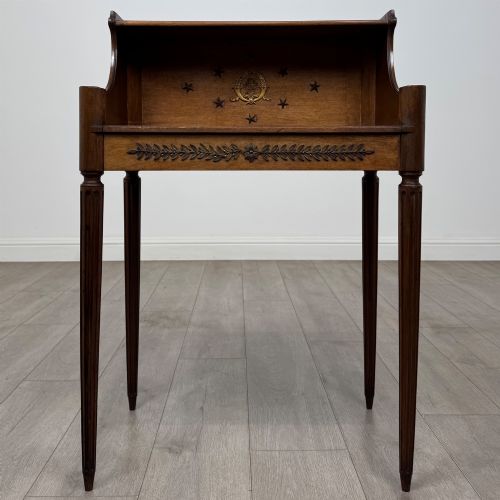
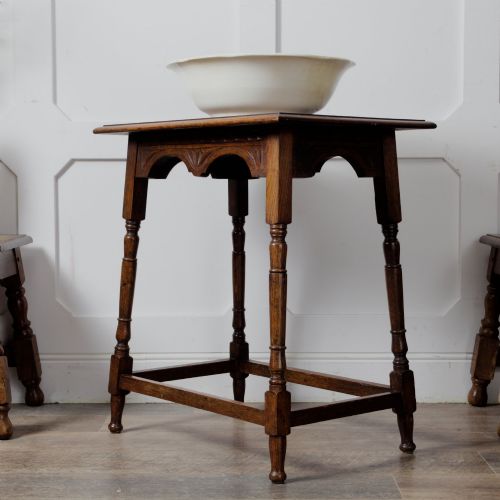
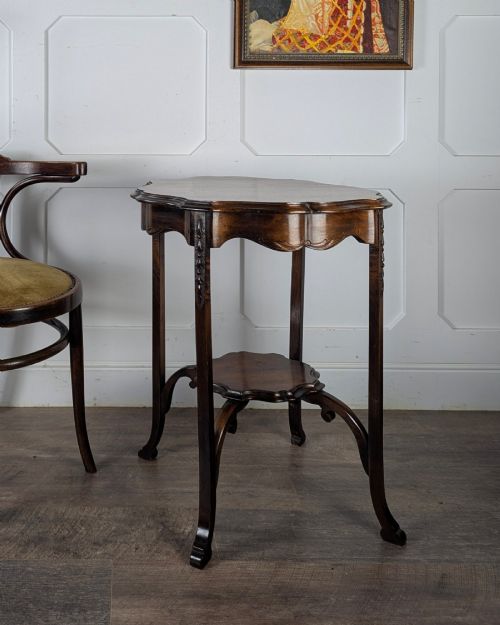
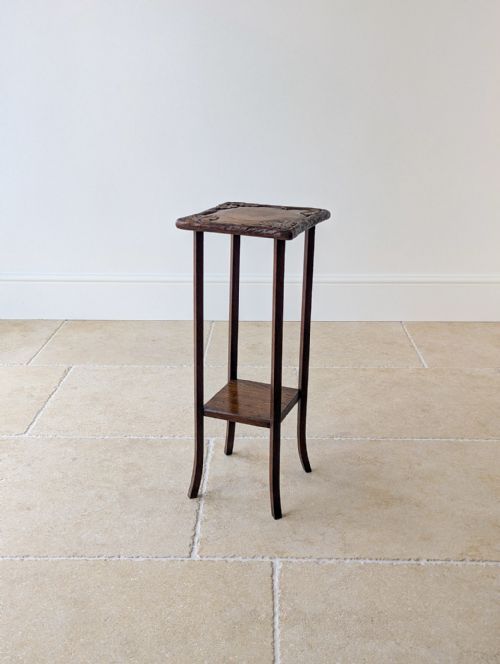
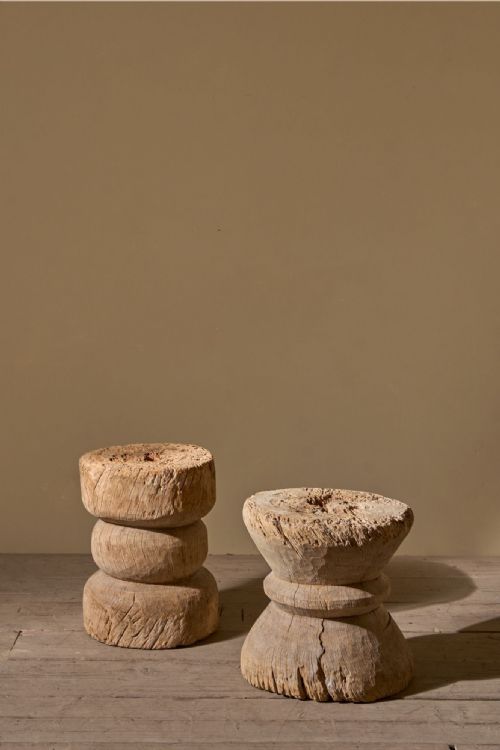
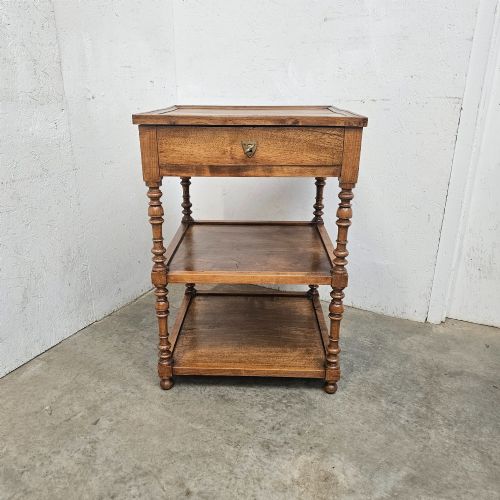
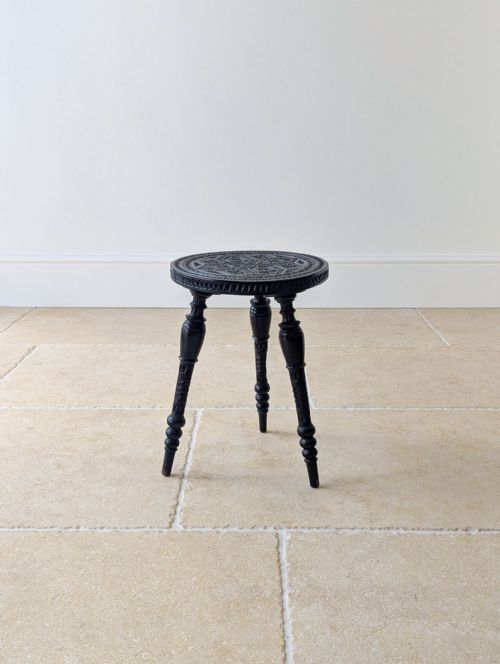
Vintage Carved Plant Table
A vintage carved plant table lifts greenery into the light, bringing handcrafted timber and intricate relief work directly into a room.
Materials and construction methods
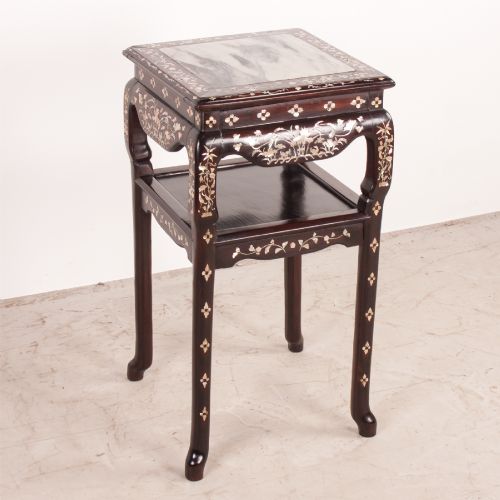
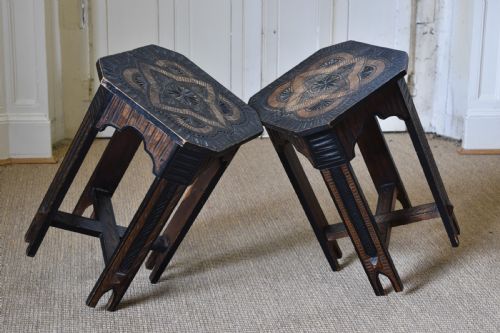
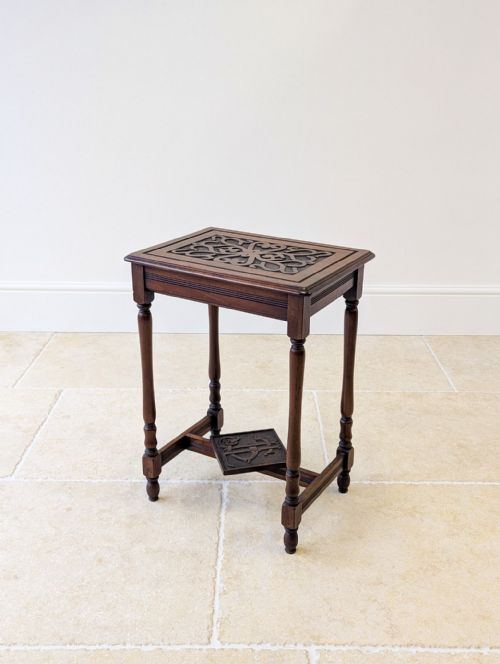
Carpenters utilised timbers such as oak, walnut, mahogany, padauk, teak, and various hardwoods to build these supports. Surfaces frequently display chip carving, hand carving, and turned legs, while specific regional pieces incorporate brass inlay, bone inlay, or mother-of-pearl.
Stands designed for holding plants sometimes integrate marble tops or metal linings to handle moisture from pots safely. Construction techniques range from traditional joinery in English oak tables to complex pierced carving found in Anglo-Indian and Burmese examples.
Distinguishing craftsmanship and material depth
Quality separates standard production items from pieces displaying superior hand-carved detail and dense hardwoods. The crispness of the relief work on the timber and the integration of decorative inlays indicate the level of skill invested by the maker.
The choice of primary material also dictates the standard of the piece, with solid walnut, padauk, and heavily figured oak sitting above basic softwood structures. Original surface patination and intact structural joinery maintain the integrity of the object over decades of use.
Primary materials recorded across the inventory include oak, walnut, mahogany, teak, brass, marble, and padauk.
Shapland and Petter·Liberty and Co·Liberty of London
The Vintage Carved Plant Table Glossary
- Jardiniere
- A decorative pot or stand designed specifically to hold plants or flowers. These vessels often feature waterproof liners or marble inserts.
- Chip carving
- A method of removing small triangles of wood from a flat surface to create geometric patterns. This technique appears frequently on Edwardian and Victorian occasional tables.
- Etagere
- A piece of furniture consisting of a set of open shelves for displaying small objects. French examples often utilise turned legs and walnut timber.
- Anglo-Indian
- Furniture made in India during the British period, typically featuring dense carved foliage and inlaid materials. Padauk and teak are common woods in this category.
- Pie crust table
- A small round table with a raised, carved edge shaped to resemble pastry. These typically rest on tripod bases.
Vintage Carved Plant Table: Frequently Asked Questions
What is a vintage carved plant table used for?
These tables provide an elevated surface specifically intended to display potted plants, ferns, or decorative items within living spaces. Their compact footprints allow them to fit into corners or beside seating.
Beyond horticulture, many function simply as occasional side tables for lamps or small ornaments, adding carved wooden texture to a room.
How do I care for a wood plant stand?
Protect the timber surface from moisture by using saucers under plant pots to prevent water rings and wood rot. Regular dusting with a dry cloth keeps the carved details clear.
Periodically applying appropriate wax preserves the finish of hardwoods like oak, walnut, and mahogany without damaging the antique surface.
How can I tell the period of a plant table?
Dating relies on observing the combination of wood species, carving styles, and construction methods characteristic of specific eras. Edwardian pieces often show lighter oak framing and Arts & Crafts influences.
Victorian and 19th-century versions frequently employ denser walnut or mahogany with heavier turned supports and deep relief carving.