

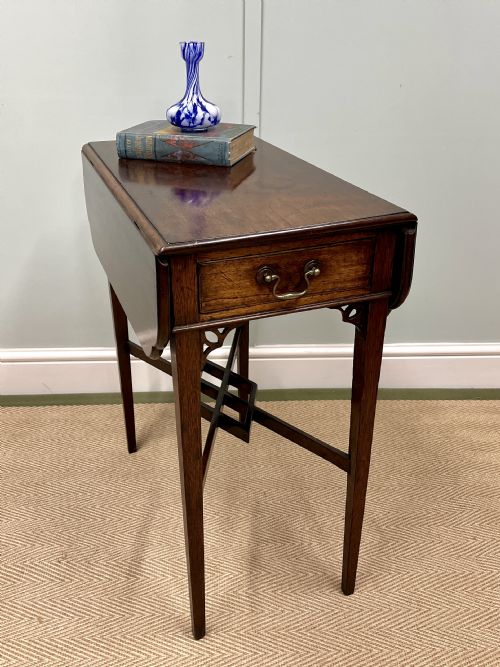


Fretwork Wood Side Table
A fretwork wood side table brings intricate open-cut detailing and warm timber tones to a room, offering a functional surface shaped by historical craft traditions.
Fretwork Wood Side Table
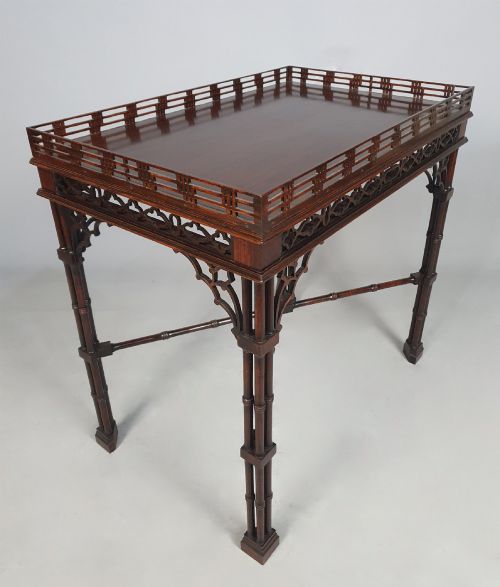
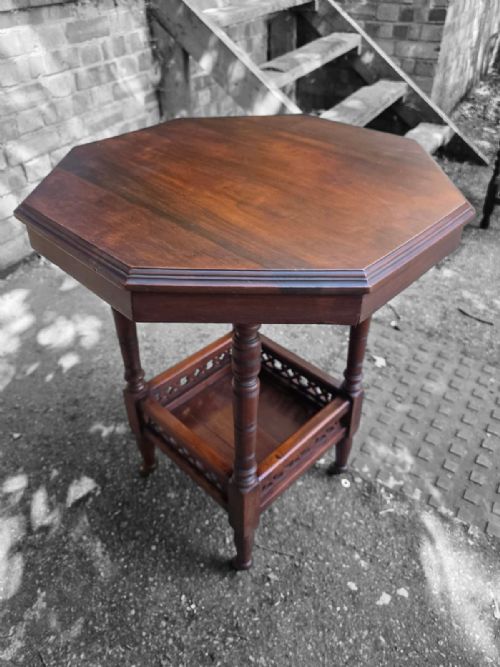
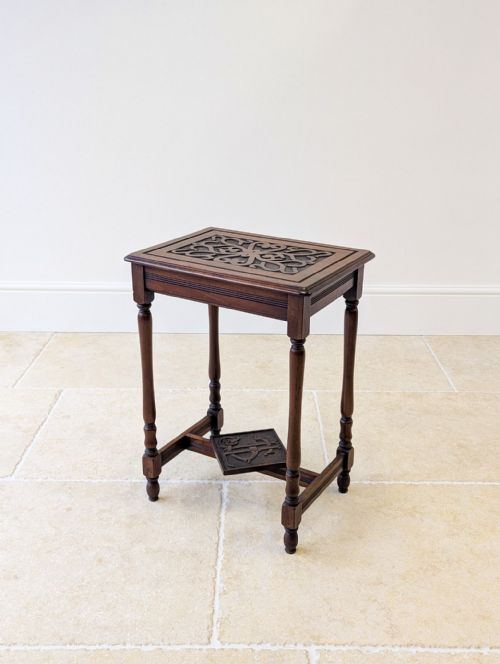
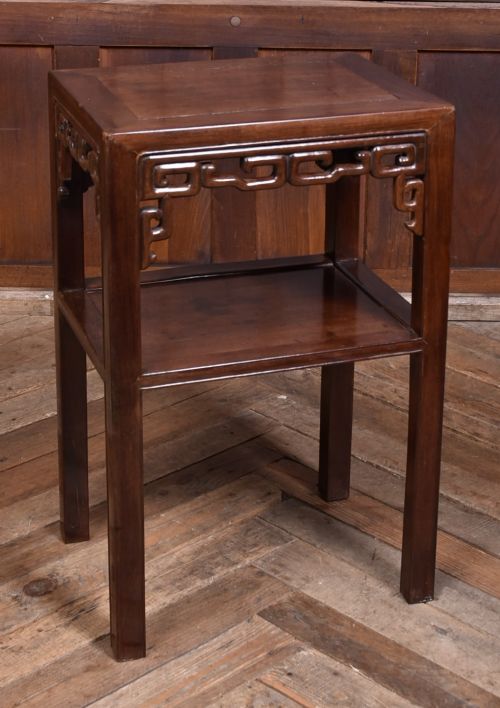
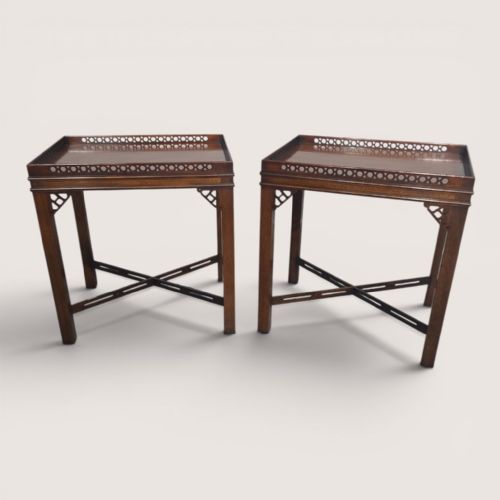
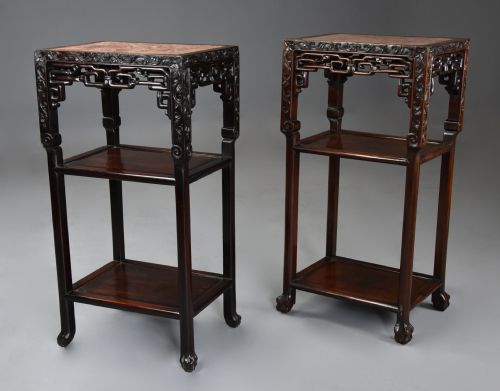
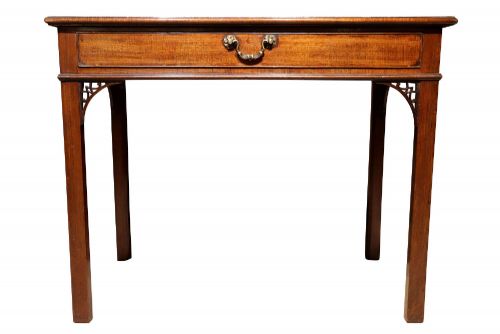
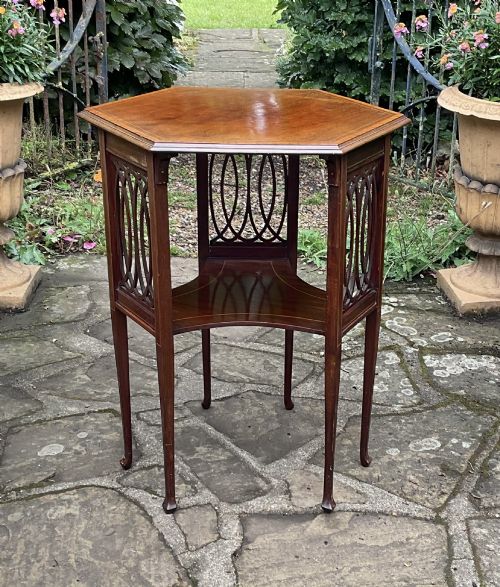
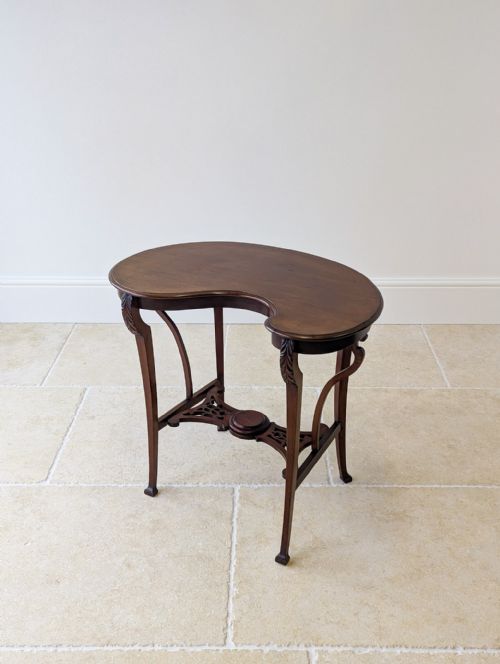
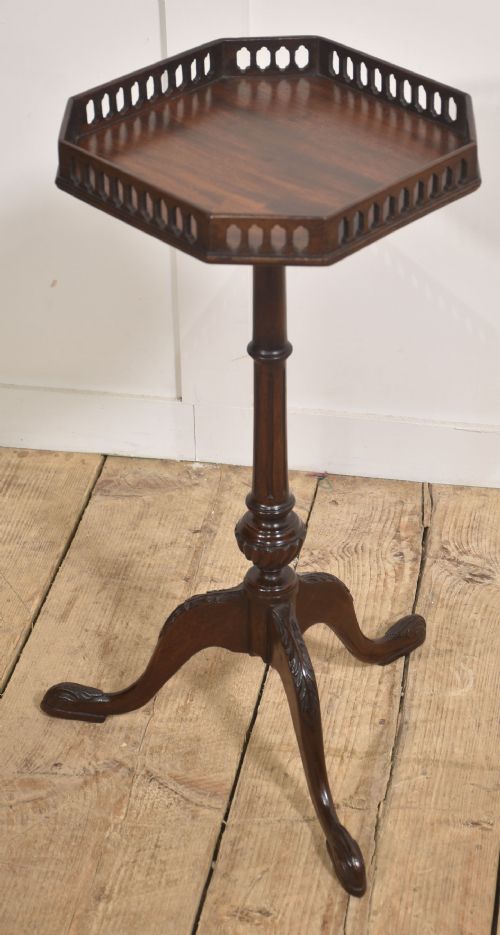
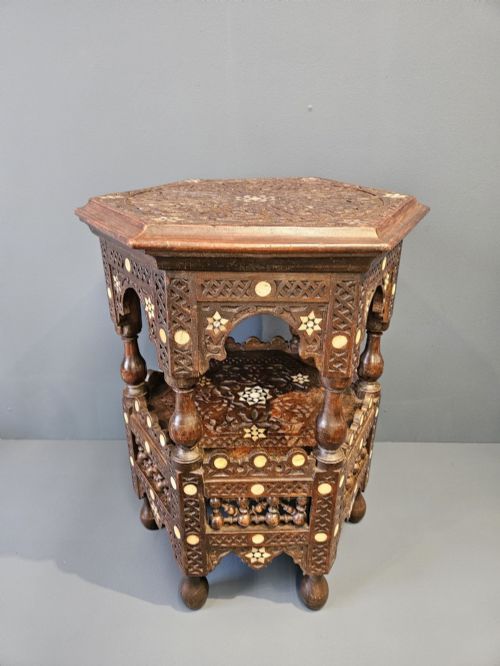
When you search for a fretwork wood side table, you encounter compact occasional furniture spanning the eighteenth century through the early twentieth century. These pieces appear in styles such as Chippendale, Anglo-Indian, and Arts and Crafts, often taking the form of octagonal lamp tables, silver tables, or square occasional stands.
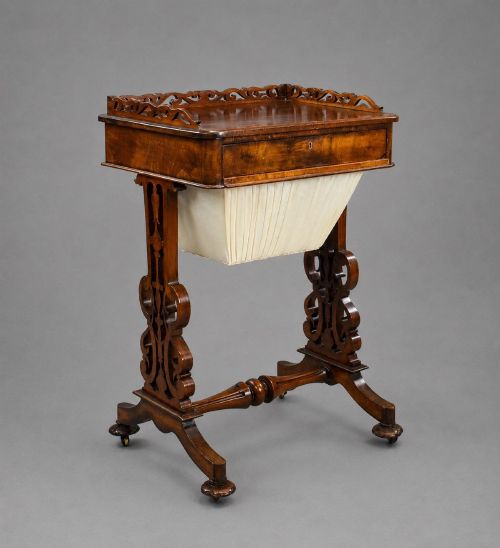
The versions most common on this page date from the Victorian and Edwardian periods, alongside revival pieces that imitate earlier Georgian craftsmanship. They serve practical uses as bedside stands, lamp surfaces, or display ledges while introducing pierced geometric and floral woodwork into domestic interiors.
How they were made
Carpenters constructed these tables using dense timbers such as mahogany, rosewood, teak, padauk, and walnut, sometimes pairing them with brass inlays. Artisans achieved the characteristic pierced patterns by hand-cutting delicate openings through the wood panel or framework.
Joinery methods varied from traditional mortise and tenon frames to intricate pegged construction found in Anglo-Indian and oriental workshops. Surfaces received careful finishing with wax or polish to highlight the natural grain of the hardwood.
Listings feature woods including mahogany, rosewood, teak, padauk, and oak across periods spanning the eighteenth to the early twentieth century.
What varies in quality
Quality rests upon the crispness and depth of the pierced carving, separating sharply executed openwork from shallow or softened cutting. The choice of timber also dictates standard, with dense figured mahogany or richly grained rosewood marking superior execution.
Structural integrity and the retention of original finish determine the standing of an individual piece. Tables that retain their crisp joinery and untouched surface patina demonstrate greater fidelity to their period of origin.
The Fretwork Wood Side Table Glossary
- Fretwork
- Openwork ornamentation carved or pierced through wood, creating intricate geometric or floral patterns. This technique defines the visual lightness of many side and occasional tables.
- Silver table
- A high-sided display table originally designed for holding silver tea services. These pieces often feature raised galleries and delicate leg supports.
- Octagonal table
- A furniture top possessing eight distinct sides, frequently seen in Anglo-Indian and Victorian occasional tables. This shape accommodates complex carved panel designs.
- Chippendale
- A furniture style originating in the eighteenth century and revived later, characterised by carved cabriole legs, claw-and-ball feet, and elaborate pierced splats. The Chinese Chippendale variant heavily incorporates fretwork.
- Whatnot
- A multi-tiered shelving unit used for displaying ornaments or books, sometimes incorporating a lower drawer or work surface. These pieces utilise slender upright supports.
Fretwork Wood Side Table: Frequently Asked Questions
What is a fretwork wood side table used for?
These tables provide a compact surface for lamps, decorative objects, or tea service within a living space or hallway. Their decorative pierced frames allow them to function as sculptural interior accents.
Historically, specific variants like silver tables or octagonal occasional stands served distinct domestic duties in Victorian and Edwardian drawing rooms.
How do I identify the period of a carved wood table?
Dating relies on examining the timber species, construction joinery, and stylistic revival markers present in the piece. Eighteenth-century examples display different patination and structural assembly compared to Victorian or Edwardian reproductions.
Stylistic cues such as Arts and Crafts influences or Qing Dynasty motifs help narrow down the decade of manufacture.
Are Anglo-Indian tables different from English Chippendale tables?
Anglo-Indian tables typically feature dense, all-over carved foliage and intricate folding or octagonal forms executed in teak or rosewood. English Chippendale and revival pieces focus more on structured mahogany frames with geometric pierced galleries and straight or cabriole legs.
Both styles utilise fretwork, but the regional carving traditions and timber choices create distinct visual results.
How should I care for an antique wood table?
Maintain the timber by keeping the piece away from direct heat sources and sudden humidity changes to prevent wood movement. Apply natural beeswax sparingly to nourish the grain without buildup.
Avoid chemical cleaning sprays that can strip the historic polish and dull the patina of the carved surfaces.