
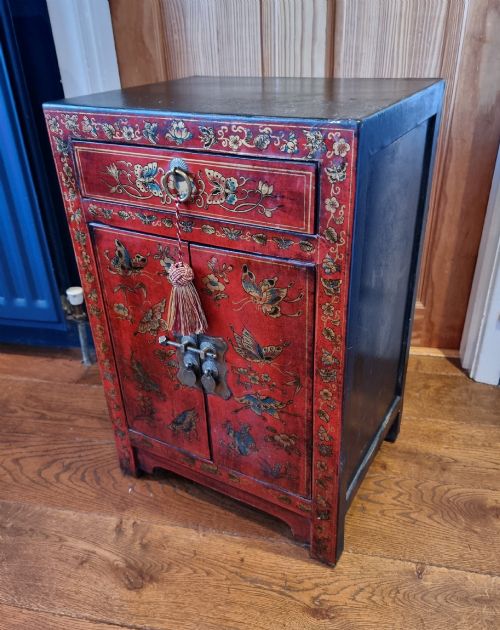
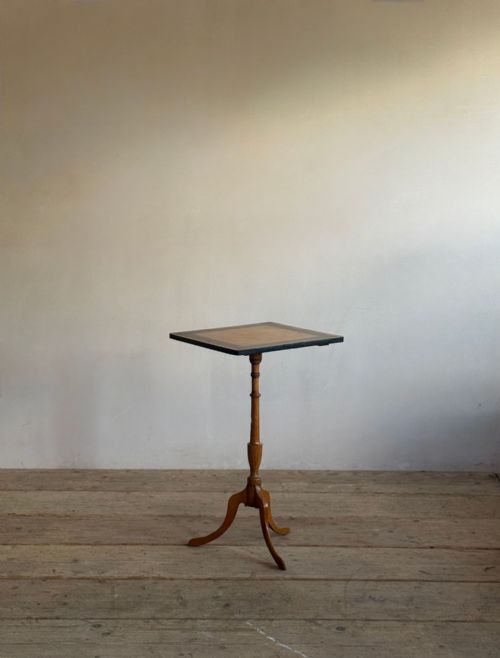


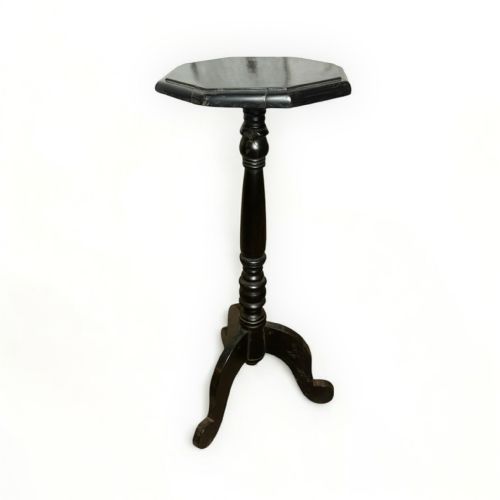


Small Black Accent Table
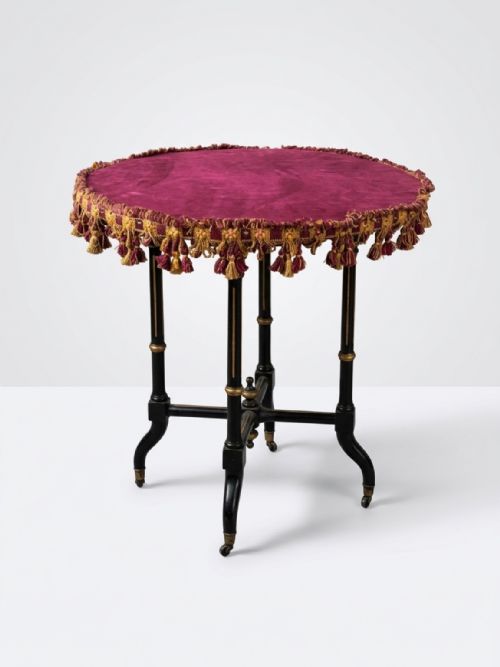
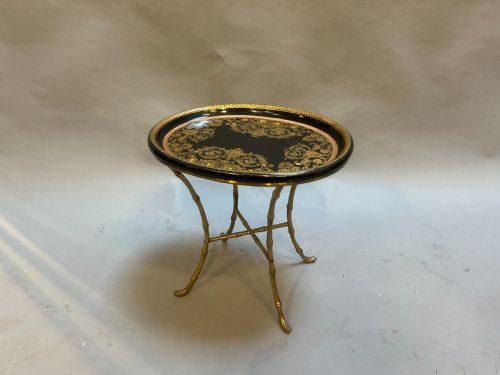
These small black accent table examples bring dark surfaces and compact forms into a room, offering functional ledges with distinct period character.
Small Black Accent Table
A small black accent table provides a compact surface for lamps, drinks, or decorative objects while introducing dark wood and painted finishes to a scheme. These pieces span Georgian, Victorian, and early twentieth-century periods, capturing styles from Chinoiserie and Regency to the Arts and Crafts movement.
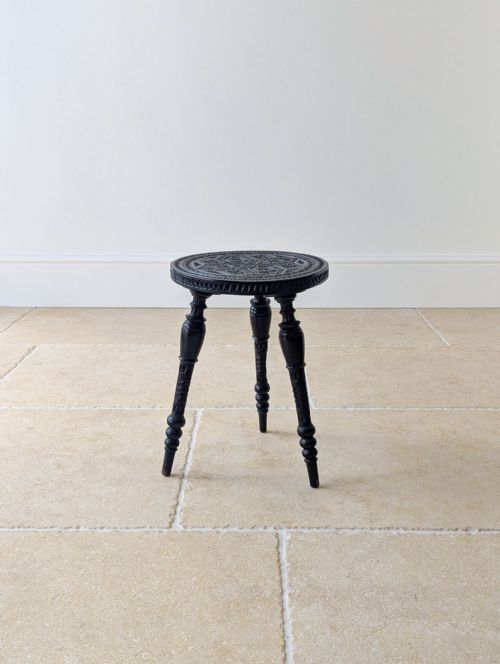
The versions most commonly found here are ebonised occasional and side tables, alongside tripod and wine table forms. They utilise dark stains, black lacquer, and ebonised hardwoods to achieve a deep, light-absorbing surface.
Makers and designers of the nineteenth and twentieth centuries adapted these small tables for varied domestic settings, incorporating brass details, gold leaf accents, and intricate carved decoration. The selection reflects diverse origins, including English workshops and Japanese Meiji craftsmanship.
How they were made
Makers relied on ebonised wood, ebonised hardwood, solid ebony, and oak to construct the core structures of these tables. Surfaces were frequently treated with lacquer, gold leaf, and penwork decoration to create rich, contrasting visual effects.
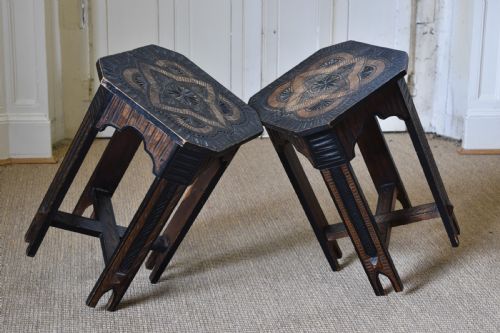
Techniques such as chip-carving and surface painting defined the decorative output of Victorian and later periods. Structural elements like tripartite bases and tripod supports ensured stability despite compact proportions.
Listings feature ebonised wood, oak, and brass across Victorian, Georgian, and twentieth-century periods.
What varies in quality
The distinction between standard workshop production and finer pieces rests in the handling of the ebonised finish and the precision of the carving. Superior examples display crisp chip-carving, well-preserved gold leaf, and integrated brass or marble components that sit harmoniously within the overall design.
Materials also dictate the character of the piece, as solid ebony and carefully prepared ebonised hardwoods yield a deeper, more enduring lustre than simpler stained surfaces. The integrity of the underlying construction ensures that tripod and tripartite bases remain steady and true.
Jenks & Woods
The Small Black Accent Table Glossary
- Ebonised
- Wood treated with stain, dye, or polish to imitate expensive ebony. This finish became particularly popular during the Victorian era for accent furniture.
- Tripod table
- A small freestanding table supported by a pillar above three legs. This form gained popularity in the Georgian period for flexibility in domestic spaces.
- Sutherland table
- A narrow drop-leaf table with hinged flaps that fold down sharply. The design allows the piece to be stored flat against a wall when not in use.
- Papier mache
- A composite material made from paper pulp or layers of paper bound with glue. It was moulded and lacquered to create lightweight occasional tables.
Small Black Accent Table: Frequently Asked Questions
Where should I place a small black accent table?
These compact pieces fit easily beside seating, next to a bed, or in narrower hallways where larger furniture would overwhelm the floor plan.
Their dark surfaces provide a strong visual anchor against lighter walls or neutral upholstery.
How do I care for ebonised wood surfaces?
Dust regularly with a soft, dry cloth and avoid placing them in direct sunlight to protect the dark finish from fading.
Keep moisture away from the surface and use coasters beneath glasses or damp objects.
What is the difference between occasional and side tables?
Occasional tables are typically light, easily moved items designed to serve a temporary function in a room.
Side tables often remain stationary against walls or beside seating to hold lamps and books.
How can I tell a Victorian ebonised table from a later reproduction?
Examine the timber species beneath the finish, the method of joint construction, and signs of honest wear on the feet and edges.
Period pieces display hand-tooling marks and traditional joinery consistent with nineteenth-century workshop practices.