

Vintage Carved Centre Table
A vintage carved centre table brings architectural timber and solid marble into a room, anchoring the space with nineteenth-century craftsmanship.
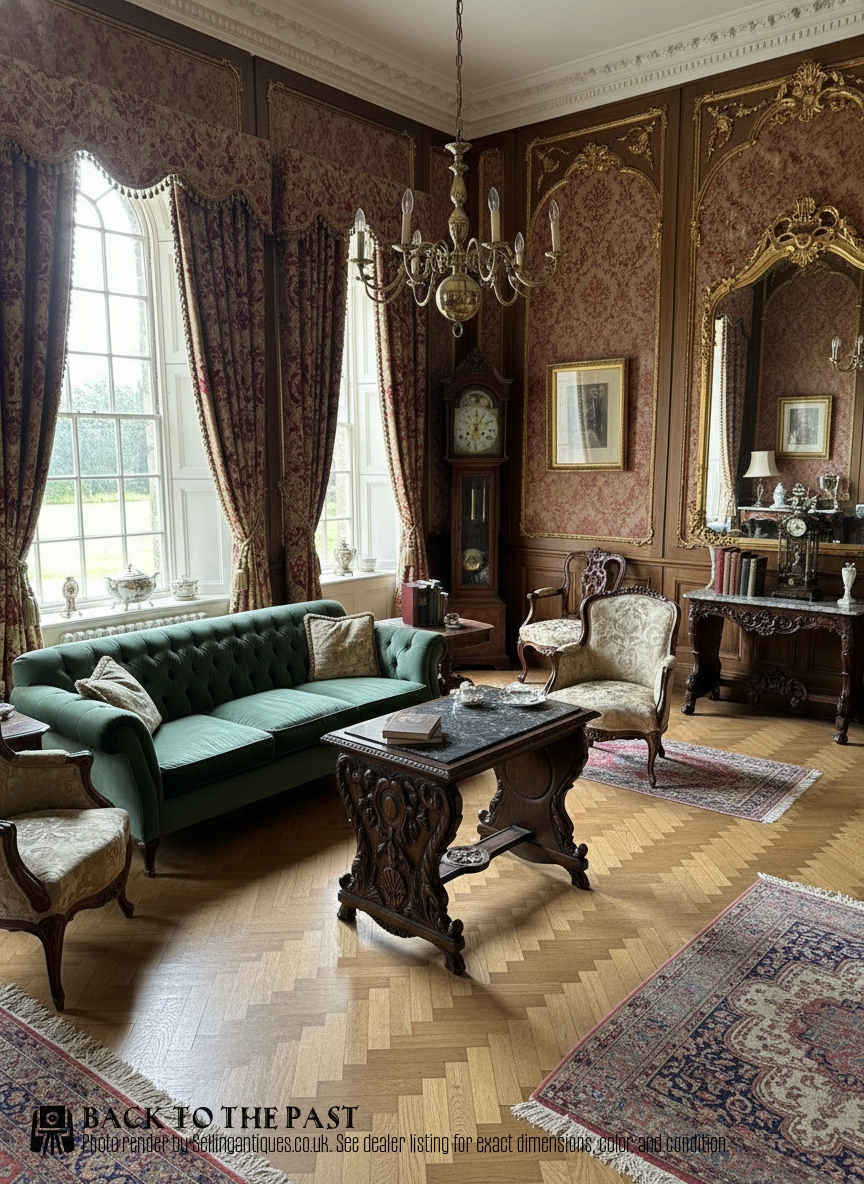
Vintage Carved Centre Table
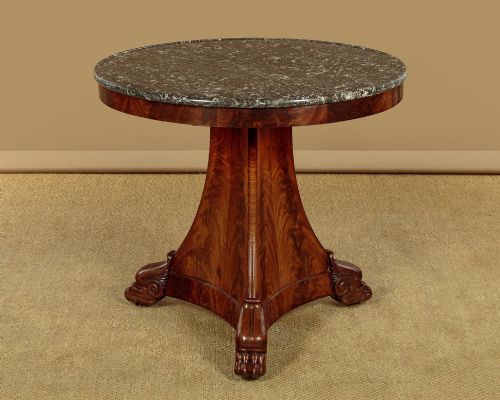
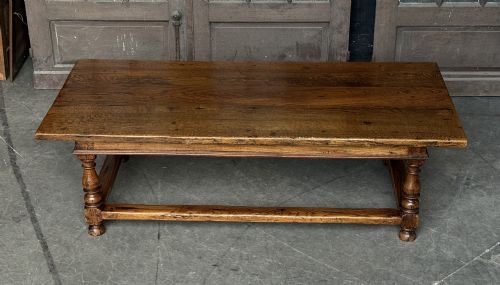
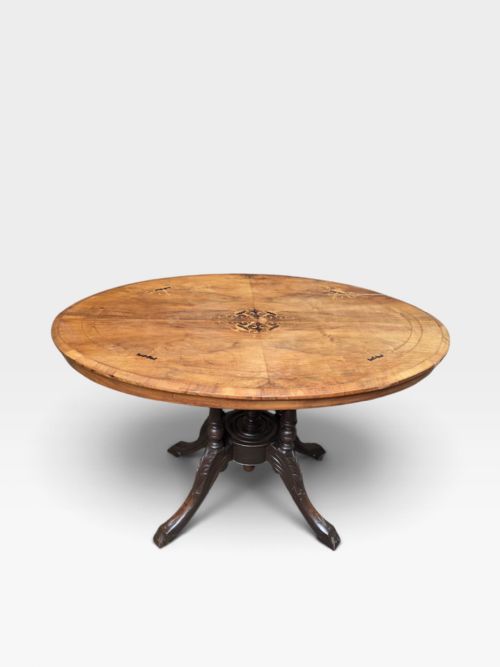
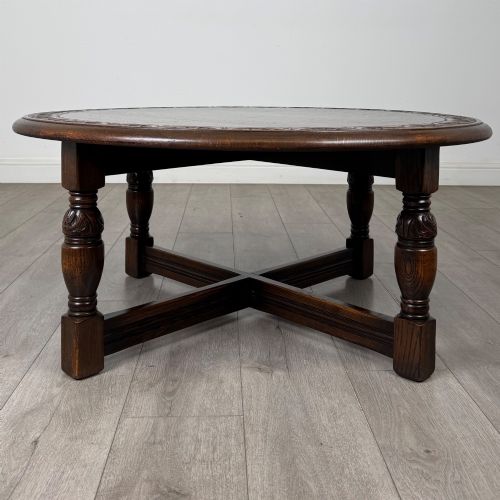
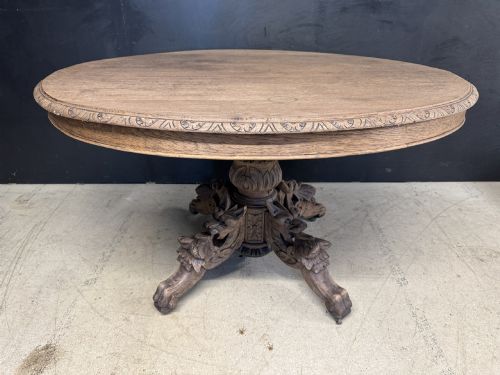
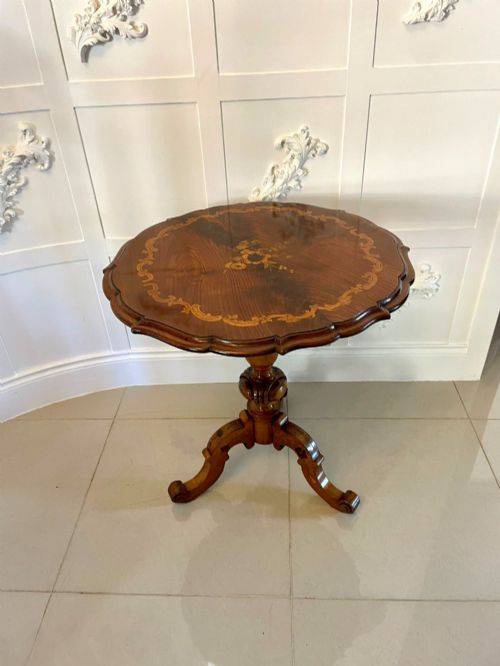
A vintage carved centre table serves as a freestanding focal point designed to be viewed from all sides rather than pushed against a wall. The pieces collected under this phrase span the nineteenth and twentieth centuries, taking the form of circular breakfast tables, library drums, and occasional tables with decorative pedestals.
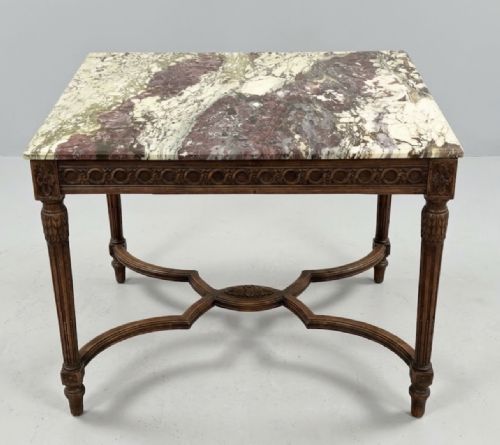
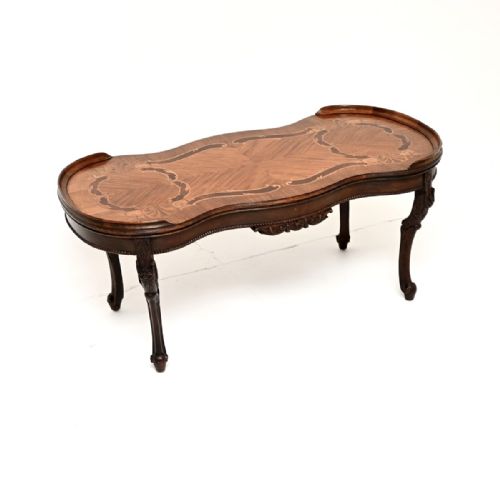
Buyers meet walnut, mahogany, and burr walnut most frequently on this page, often paired with marble tops or intricate marquetry. Proportions range from heavy Victorian pedestal bases to lighter French provincial and Italian baroque designs, reflecting diverse regional tastes across Europe.
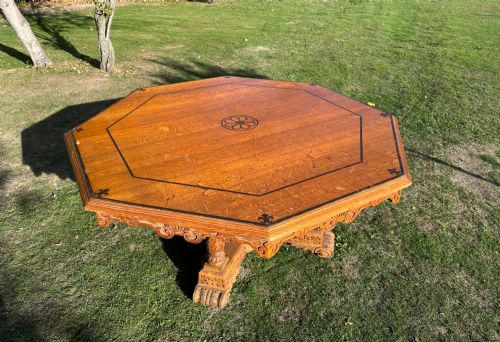
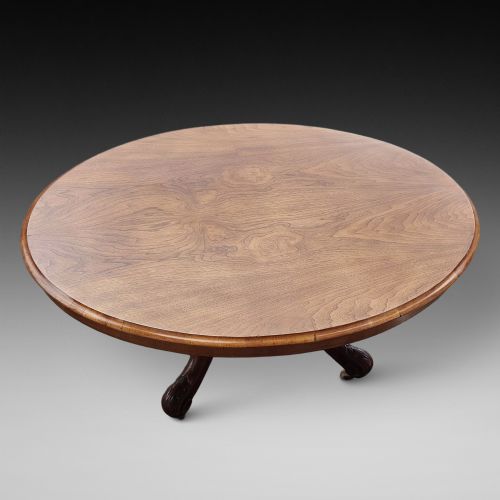
The physical presence of these tables relies on substantial timber framing, whether shaped into an octagonal form, supported by a triform base, or finished with carved giltwood details. Each variant reveals distinct period influences, from William IV rosewood to Edwardian refinement.
Materials and construction methods
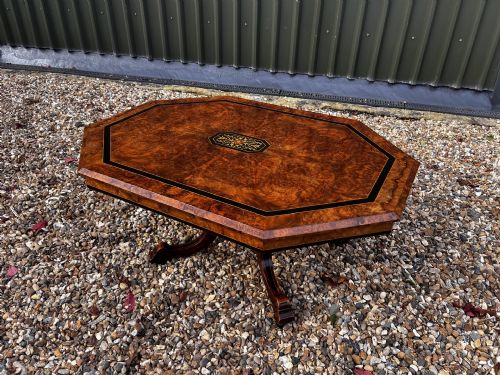
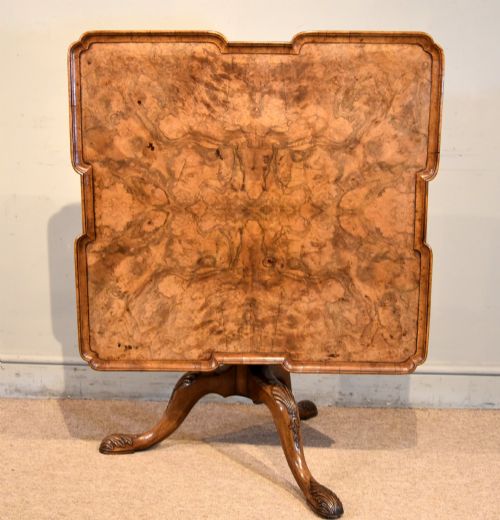
Cabinetmakers utilised dense hardwoods such as mahogany, walnut, and rosewood for structural integrity, often applying burr walnut veneers to display intricate natural grain patterns. Tops frequently incorporate polished marble, onyx, or malachite, fitted securely into wooden frames.
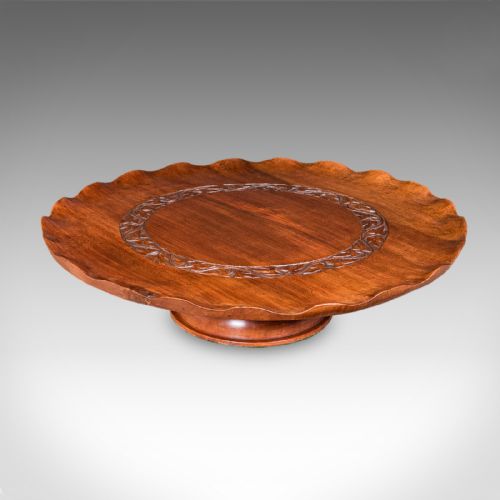
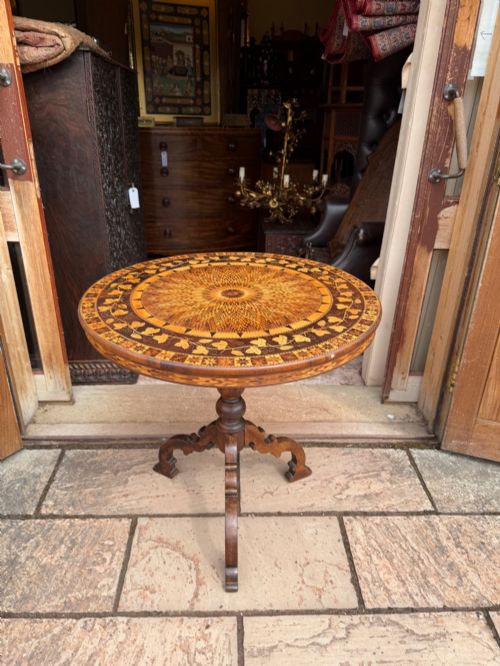
Decorative embellishments involve hand carving, ormolu mounts, and mother-of-pearl inlay embedded directly into the timber surface. Polychrome paint finishes and ebonised details appear on specific Italian and French regional pieces from the later periods.
Vintage Carved Centre Table Retail Price Guide 2026
Typical asking prices for vintage carved centre table among the pieces listed under this phrase on Sellingantiques today, from the lower quarter to the upper quarter. They describe what is for sale here now, not the wider market.
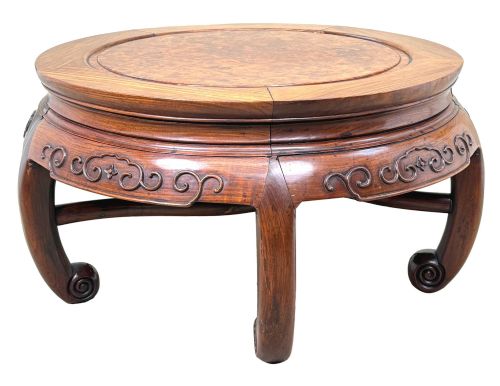
Vietnamese hardwood meets mother-of-pearl in an unexpected late nineteenth-century meeting of distant workshop traditions.
Distinctions in construction and design
The upper tier of pieces demonstrates superior timber selection, where figured veneers and solid marble slabs align precisely with the supporting frame. Hand-carved elements show depth and crispness, avoiding the softer edges found in simpler production methods.
Structural stability dictates lasting utility, separating heavy pedestal tables with robust internal bracing from lighter occasional variants. The integration of bronze mounts, marquetry panels, and original tilt-top mechanisms reveals the original maker's investment of time and skill.
Amleto Bertoni·Harrods
The Vintage Carved Centre Table Glossary
- Marquetry
- Inlaid wood pieces arranged to form decorative patterns on a furniture surface. This technique creates pictorial or geometric designs using contrasting timbers.
- Gueridon
- A small French table, often circular, supported by a central pillar or columns. The form originated in the seventeenth century and remained popular through the Victorian era.
- Ormolu
- Gilded bronze mounts applied to furniture for decoration. Artisans cast and chased these metal elements to accent corners, legs, and aprons.
- Triform base
- A three-sided pedestal support that distributes the weight of a heavy tabletop. This configuration appears frequently on nineteenth-century breakfast and centre tables.
- Tilt-top mechanism
- A hinge system allowing the tabletop to fold vertically when not in use. This design saved space in period interiors.
Vintage Carved Centre Table: Frequently Asked Questions
Where should I place a centre table?
A centre table belongs in the middle of a room where it can function as a freestanding focal point rather than sitting flush against a wall.
Because these pieces feature finished detail on all sides, they work well in large hallways, libraries, or spacious reception rooms.
How do I care for a marble top?
Polished stone surfaces require gentle cleaning with warm water and a soft cloth to protect the original finish from acidic liquids.
Using coasters and mats prevents marking on antique marble, onyx, and malachite tabletops.
What is a tilt-top table used for?
The tipping mechanism allowed nineteenth-century households to store large breakfast and dining tables against the wall when floor space was needed.
Today, the feature remains an indicator of period mechanical design.
How do I distinguish Victorian from Edwardian styles?
Victorian pieces tend to employ heavier proportions, dark figured woods, and dense carving, reflecting a taste for substantial presence.
Edwardian designs often introduce lighter satinwood, simpler lines, and more restrained decorative accents.