


Vintage Canine Artwork
Vintage canine artwork brings together centuries of portraiture and sporting studies, celebrating hounds, terriers, and gundogs in oils, watercolours, and etchings.
Vintage Canine Artwork
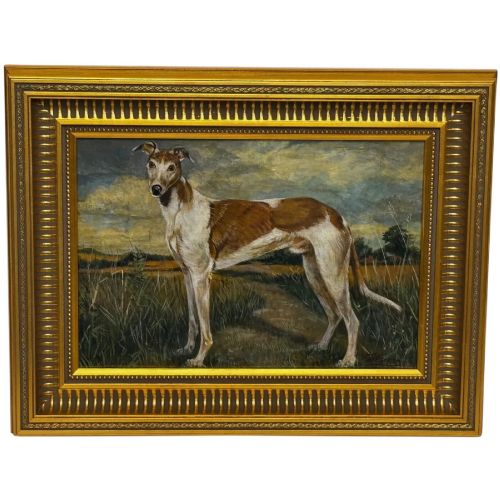
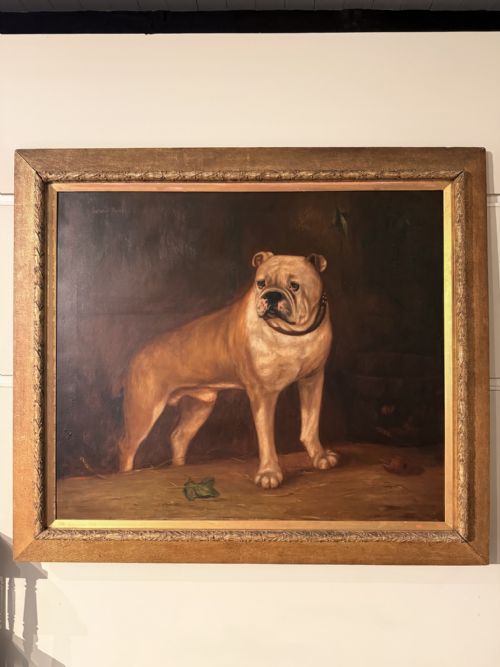
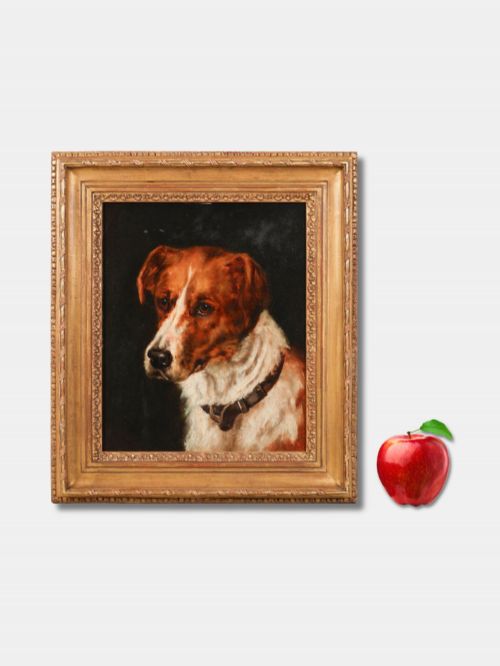
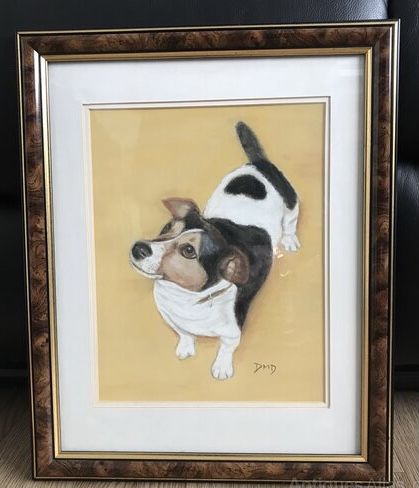
Vintage canine artwork encompasses oil paintings, watercolours, pastels, and original etchings depicting dogs across the nineteenth and twentieth centuries. These works range from formal animal portraits in pastoral landscapes to lively studies of terriers, spaniels, and hounds.
The selections on this page feature Victorian and Edwardian sporting art alongside later mid-century Realism and Art Deco depictions. Pieces include framed prints and hand-drawn works on paper, reflecting both British and continental European traditions.
How they were made
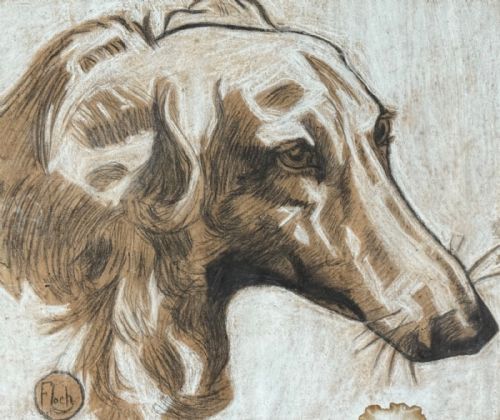
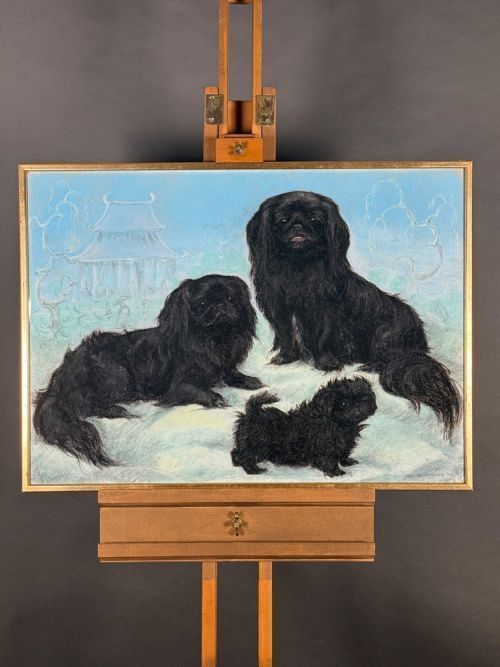
Artists employed traditional media including oil on canvas and board, watercolour, pastel, gouache, pencil, and ink. Many works utilise rich layers of oil paint to capture the texture of a dog's coat, while works on paper rely on delicate pencil lines and washes.
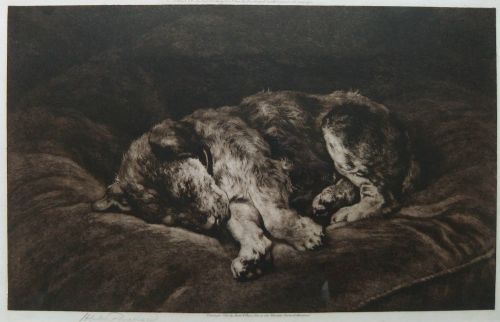
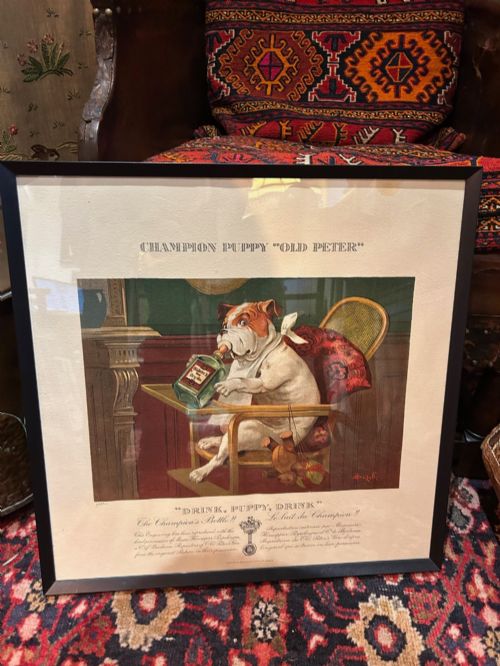
Printmakers utilised etching and engraving techniques on paper, sometimes hand-colouring the impressions or publishing them as framed prints. Canvases and boards are typically housed within period wooden and gilt frames under glass.
Several terriers on this page appear caught mid-mission, keeping strict guard over trapped rats and anxious farmyard visitors.
What varies in quality
Quality rests upon the artist's ability to render the anatomy, expression, and distinct personality of the subject rather than merely recording a breed. Master hands capture the intelligence in a collie's eye or the muscular tension of a hunting hound with confident brushwork or precise etching lines.
The preservation of the medium also dictates standing, with stable oil pigments and clean, un-foxed paper supporting higher regard. Original framing and attribution to a recognised painter or etcher elevate the piece further.
Herbert Dicksee·John Emms·Arthur Wardle·William Barraud·Sir Edwin Landseer·George Earl·Florence Mabel Hollams
The Vintage Canine Artwork Glossary
- Etching
- A printmaking process where lines are bitten into a metal plate with acid before being inked and pressed onto paper. Herbert Dicksee utilised this technique for his detailed dog portraits.
- Sporting Art
- Depictions of rural pursuits, horses, and hounds associated with the countryside. This genre flourished in the Victorian and Edwardian eras.
- Gouache
- An opaque water-based paint that dries to a matte finish. It allows artists to build bright, solid highlights on tinted paper.
- Drypoint
- A printmaking method where an artist scratches directly into a metal plate with a sharp needle. This creates a distinctive velvety burr along the printed lines.
Vintage Canine Artwork: Frequently Asked Questions
How do I date a dog painting?
Dating relies on stylistic clues, framing methods, and the materials used by the artist. Canvas types, stretcher construction, and signatures often point toward specific decades between the nineteenth and mid-twentieth centuries.
Subject matter and breed popularity also offer context. Certain types of clothing, hairstyles in human companions, or specific sporting attire depicted in the background help narrow down the exact period.
What is the difference between an etching and a painting?
An oil painting or watercolour is a unique, hand-painted creation applied directly to canvas, board, or paper by the artist. Each brushstroke is singular and physical.
An etching is a printed work created from an engraved metal plate. While artists often signed these prints in pencil, multiple impressions could be pulled from a single plate.
How were these artworks displayed historically?
Canine portraits were traditionally hung in country houses, libraries, and smoking rooms alongside sporting trophies and hunting memorabilia. They celebrated valued working dogs, family pets, or prized show champions.
Smaller watercolours and framed prints were often displayed in private parlours and bedrooms. They served as intimate tributes to beloved companions rather than grand estate commissions.
Are these works signed by the artists?
Many pieces bear signatures, monograms, or inscriptions left by the painter or etcher. However, a significant portion of nineteenth-century animal art remains attributed to schools or followers rather than signed by a master.
Unsigned works often still reveal the hand of a skilled regional artist through technique and subject matter. Documentation on the reverse of the frame sometimes provides provenance.