




Vintage Cane Side Chairs
Vintage cane side chairs offer woven seating spanning Regency elegance to Edwardian refinement, bringing texture and historical craft into modern dining and living spaces.
Vintage Cane Side Chairs
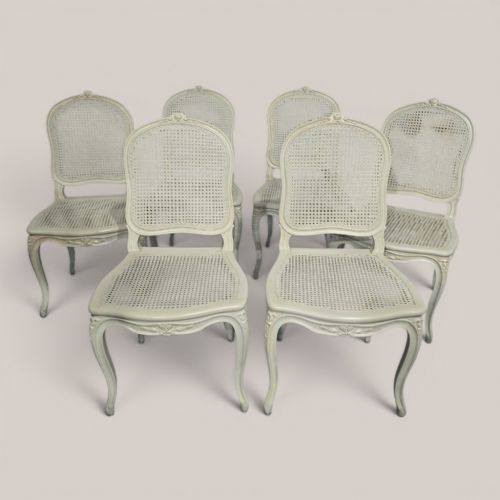
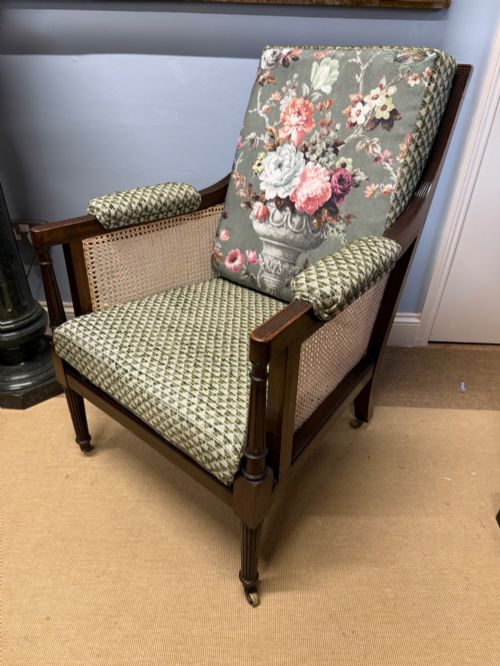
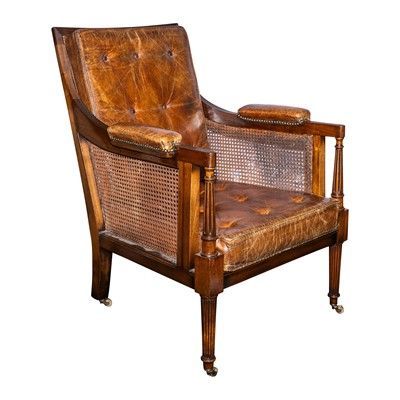
Vintage cane side chairs encompass seating solutions built across the nineteenth and twentieth centuries, featuring woven cane inserts within timber frames. These pieces include specific side and dining forms, alongside occasional and bedroom variants designed for lighter domestic use.
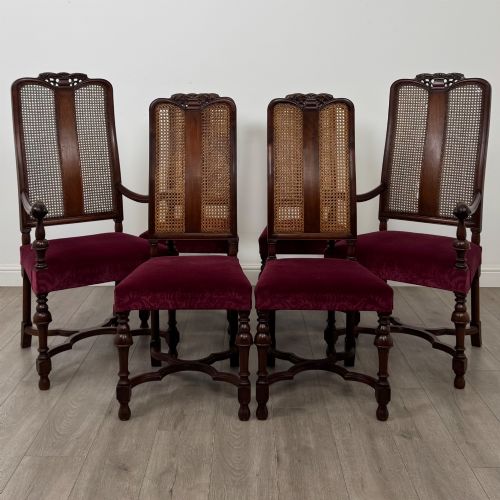
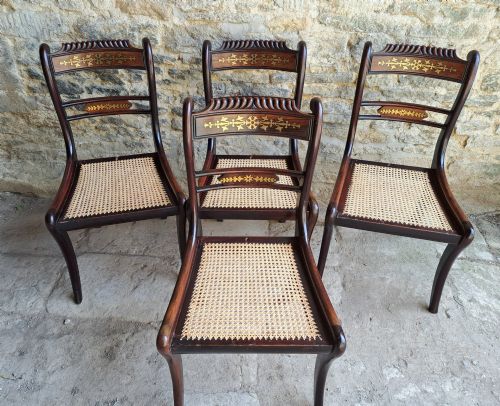
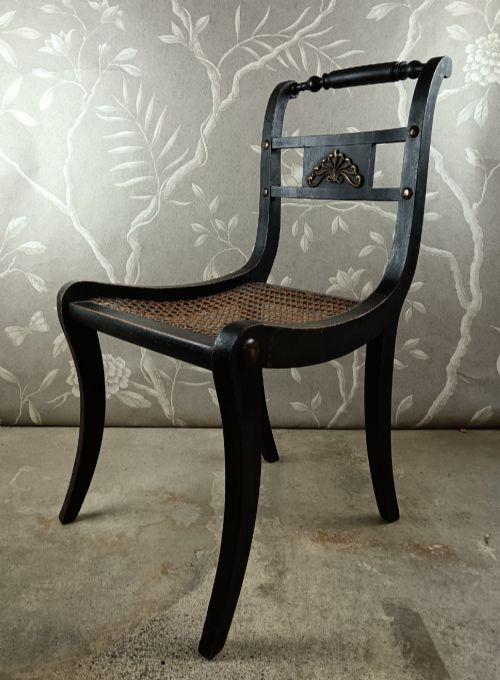
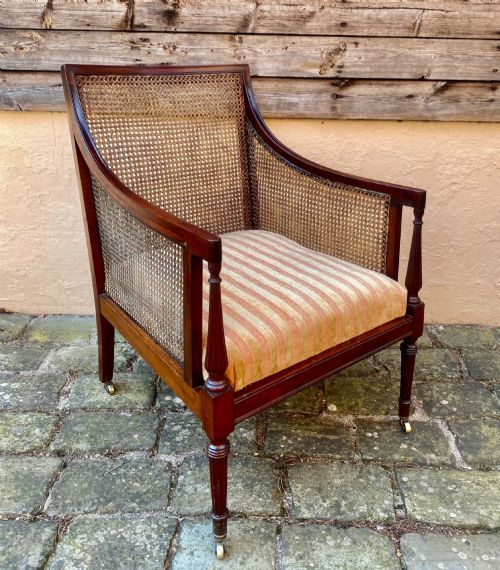
The selection ranges from crisp Regency ebonised models with sabre legs to Edwardian inlaid mahogany designs and robust oak pieces with barley twist supports. Buyers frequently encounter sets of dining chairs or matched pairs alongside individual library and salon armchairs.
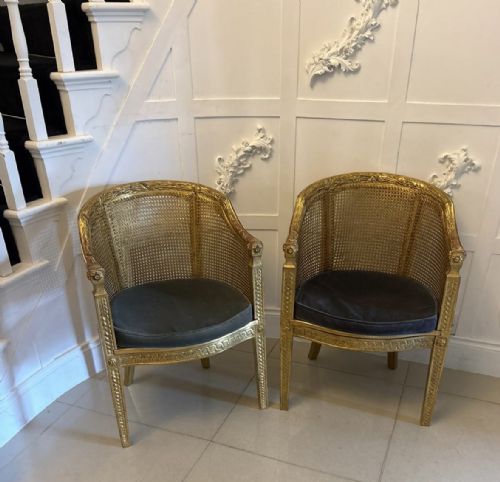
Origins span British workshops of the Georgian and Victorian eras, alongside French bergere formats and occasional continental influences. The primary function remains straightforward seating, elevated by the lightness and resilience of the woven panels.
Materials and construction methods
Timber selection forms the structural backbone of these pieces, utilising dense hardwoods such as mahogany, walnut, oak, satinwood and rosewood. Craftsmen often paired these sturdy frames with contrasting ebonised finishes, giltwood flourishes or brass inlay.
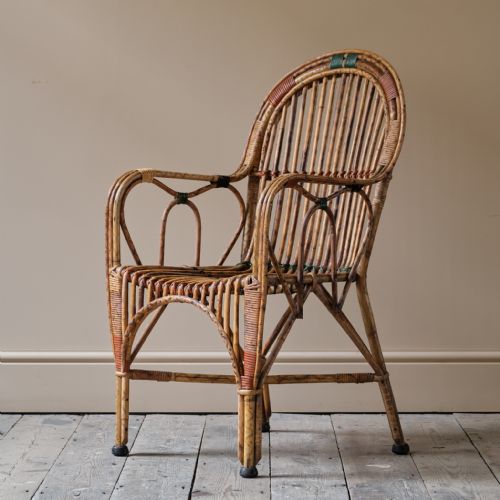
Seating panels rely on natural cane and rattan materials, hand-woven through drilled frame apertures to create supportive, breathable mesh surfaces. Additional comfort sometimes arrives via upholstered leather, fabric pads or loose cushions placed over the woven base.
Current listings feature timber frames executed in mahogany, oak, walnut, and satinwood alongside woven cane and rattan.
Factors determining quality
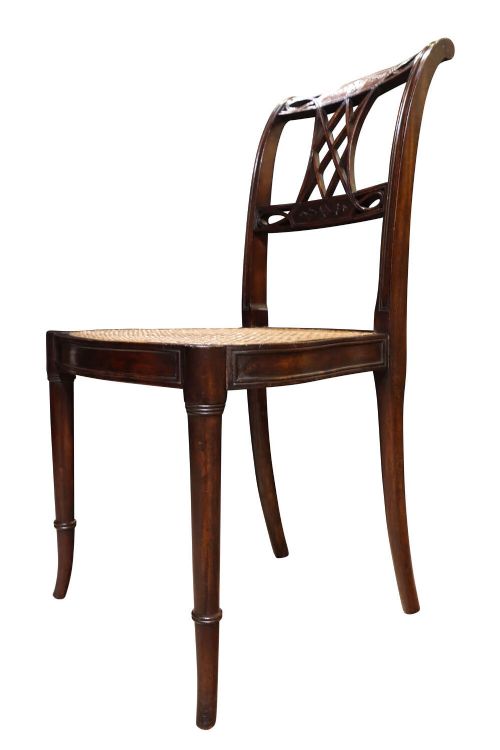
Quality rests significantly on the integrity of the timber frame and the precision of the joinery, distinguishing robust cabinet-maker output from lighter commercial production. Finer examples display crisply carved back rails, balanced proportions and high-grade primary timbers.
The condition and execution of the cane work dictate longevity and aesthetic success, with tight, uniform hand-weaving representing superior craftsmanship over loose or mechanically patched repairs.
Heals of London·Waring and Gillow·Gillows
The Vintage Cane Side Chairs Glossary
- Cane
- A material derived from the peeled outer bark of rattan palms, pliable enough to be woven into intricate seating meshes. It provides both structural support and visual lightness.
- Bergere
- An enclosed upholstered armchair featuring cane or solid wooden sides and back panels, typically housing a loose seat cushion. These forms originated in France during the eighteenth century and persisted through later revival periods.
- Sabre leg
- A concave, outwardly curving furniture leg tapering toward the foot, commonly found on neoclassical and Regency seat furniture. This design imparts a sense of dynamic movement.
- Barley twist
- A carved wooden furniture leg or stretcher resembling a rope twisted in a spiral helix. This decorative turning technique appears frequently on seventeenth-century revival furniture.
- Scumble paint
- A decorative surface finish applied to imitate the natural grain of more expensive timber or tortoiseshell. Artisans manipulate translucent glazes over a lighter base coat.
Vintage Cane Side Chairs: Frequently Asked Questions
How do I care for vintage cane seats?
Keep cane seats clean using a damp cloth to wipe away dust from the woven strands, and apply occasional moisture to prevent the natural fibres from becoming brittle.
Avoid placing these chairs near direct heat sources or in overly dry environments, which accelerates the shrinkage and cracking of the rattan material.
Are these chairs suitable for daily dining?
Most vintage cane side chairs function well for everyday dining provided the woven mesh retains proper tension and the timber joints remain solid.
Heavier users should exercise caution with older or finer cane work, opting for reinforced models or adding custom seat pads for extra protection.
Can damaged cane seating be repaired?
Skilled restorers can re-weave broken cane panels by threading new rattan strands through the existing frame holes using traditional hand methods.
Professional re-caning restores both the structural integrity and the authentic appearance of the piece without altering the historical frame.