


Vintage Cane Back Chairs
Vintage cane back chairs bring tactile texture and rich wood tones to a room, offering enduring support and lightweight elegance.
Vintage Cane Back Chairs
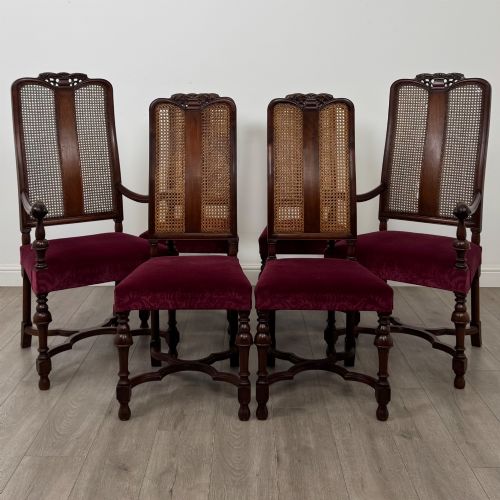
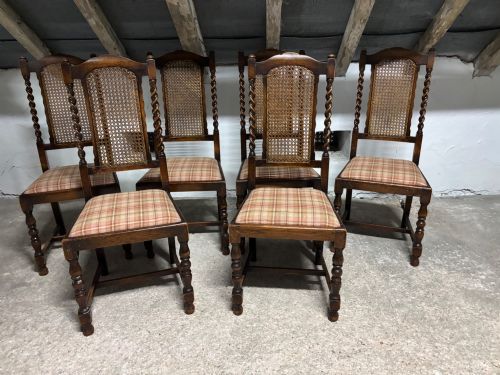
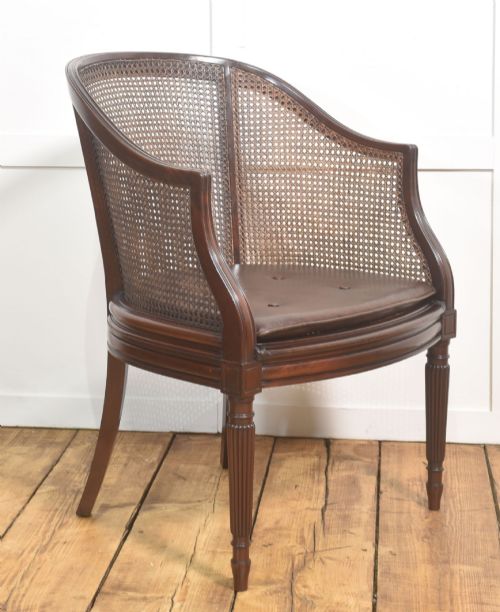
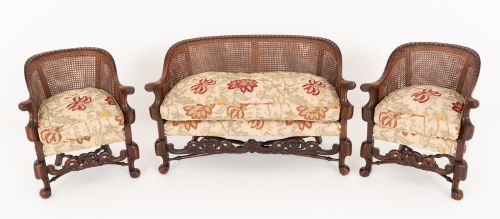
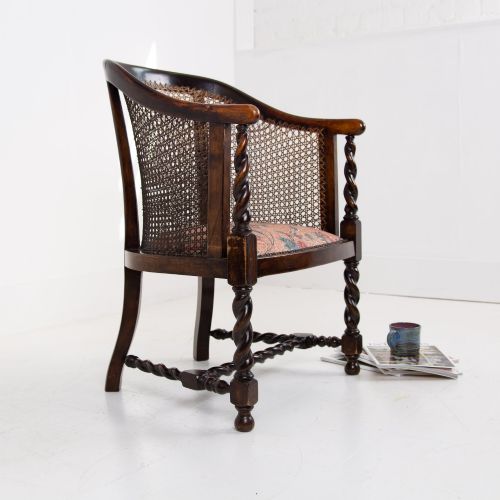
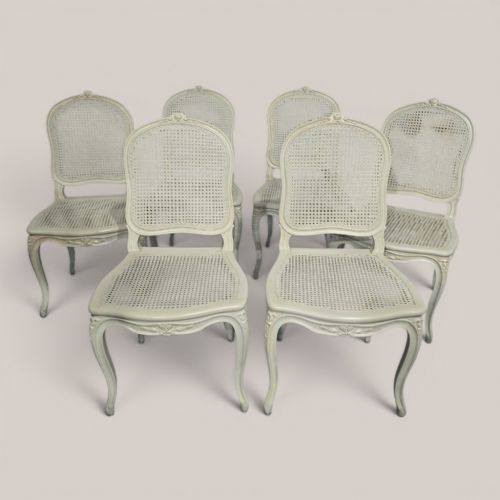
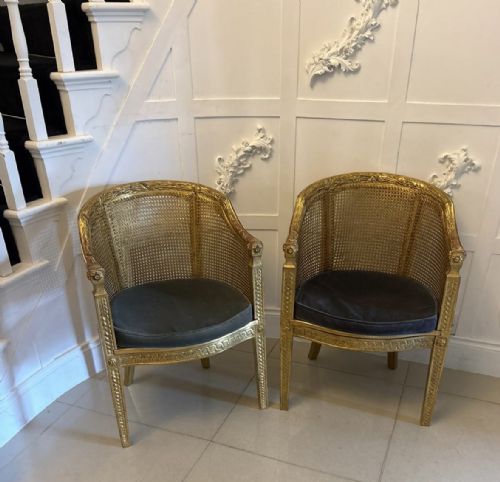
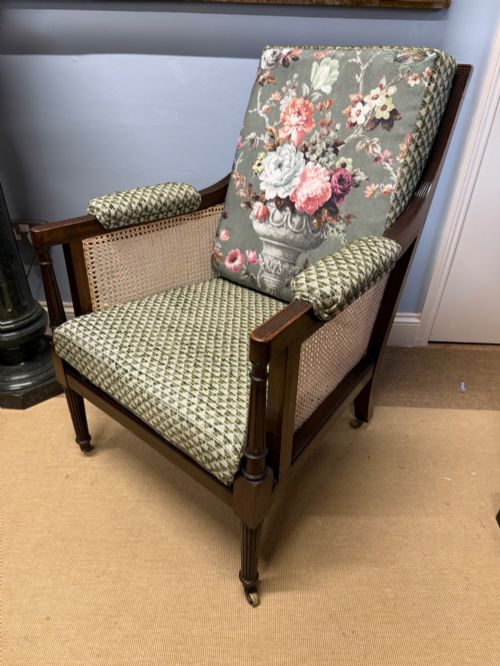
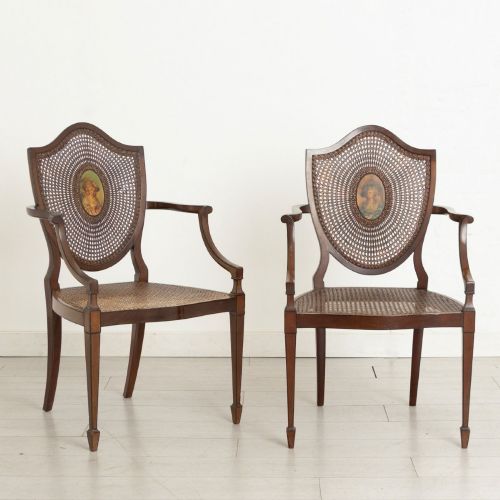
Vintage cane back chairs encompass a wide variety of seating forms designed for dining, library, and occasional use across several centuries. You will frequently encounter dining sets, library armchairs, and tub chairs shaped by Revival styles such as Regency, Louis XVI, and Carolean. These pieces combine wooden frames with woven plant material to create resilient, breathable seating.
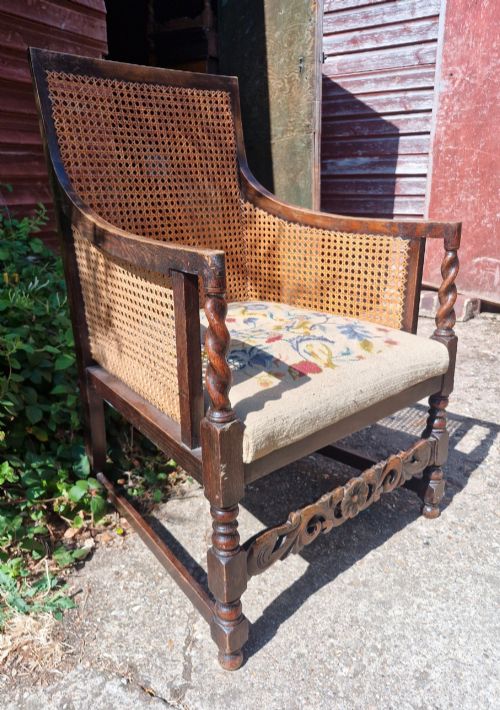
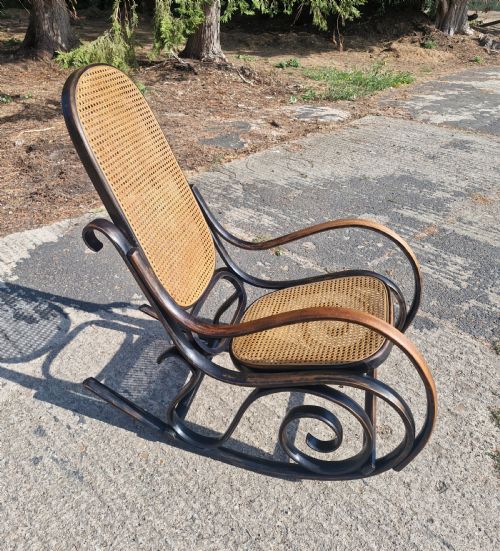
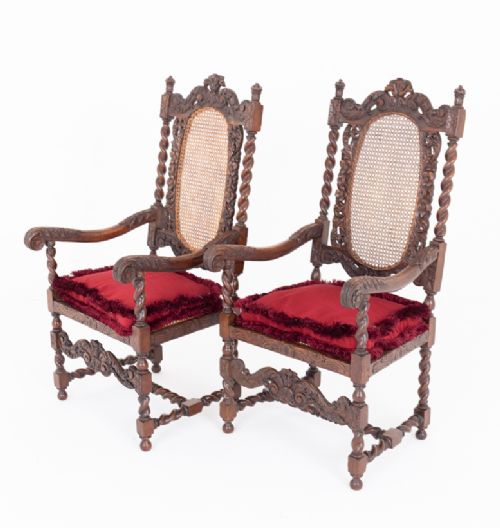
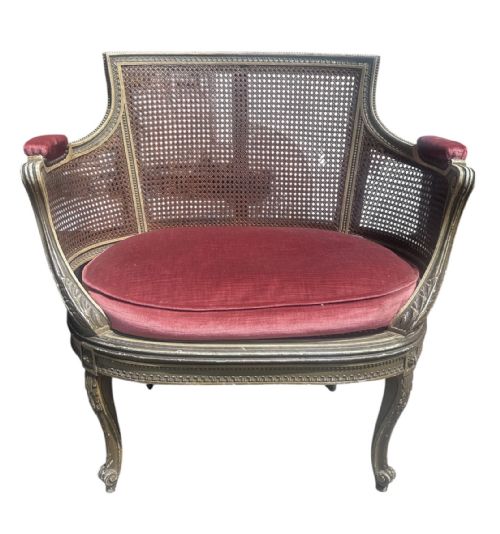
The selection ranges from robust oak armchairs dating to the early twentieth century to slender mahogany and walnut dining chairs from the Victorian and Edwardian periods. Many items draw inspiration from French bergere designs or seventeenth-century styles, featuring carved woodwork alongside woven panels. Dining sets and pairs of armchairs appear alongside occasional rocking chairs and settees.
Origins span English cabinetmaking traditions as well as French workshops and Anglo-Indian production. Buyers often select them to introduce architectural interest and historical character into modern interiors without heavy upholstery dominating the space. Each piece reflects the prevailing revivalism of its era, reinterpreting older forms for contemporary homes.
How they were made
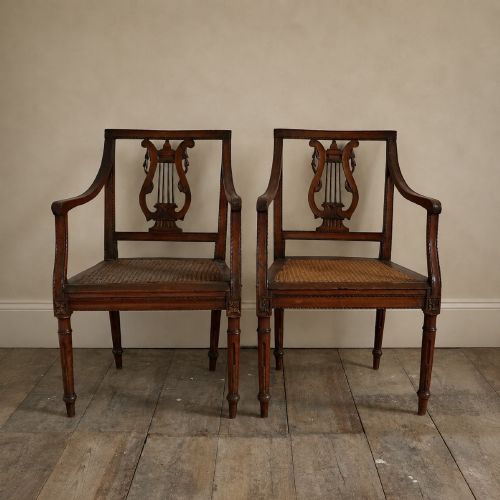
Makers constructed the supportive frames of vintage cane back chairs using solid timbers such as mahogany, oak, walnut, satinwood, and teak. Carvers shaped these woods into intricate scrollwork, cabriole legs, lyre backs, and moulded frames, frequently utilising traditional joinery methods. Giltwood and lacquered finishes also appear on select French and English seating.
The characteristic backrests and seats feature handwoven cane, rattan, or split bamboo secured through drilled holes along the frame rails. Artisans threaded natural strands to create tight geometric mesh patterns that provide flexible yet sturdy support. Additional upholstery elements, including fabric cushions, leather pads, and velvet padding, frequently accompany the woven panels.
The listings feature cane back chairs spanning the Regency, Victorian, and Edwardian periods, constructed in oak, mahogany, and walnut.
What varies in quality
The standard of a piece depends heavily on the precision of the woodwork and the tightness of the woven mesh. Finer examples display crisp, deep carving on the timber frame and uniform, evenly tensioned cane work that shows careful hand craftsmanship. Heavy, solid woods and balanced proportions separate superior cabinetwork from simpler commercial production.
Design integrity and stylistic cohesion also define the upper tier of these chairs. Pieces that successfully integrate period revival details, such as accurate Regency curves or well-executed French bergere proportions, command greater attention. The integration of high-grade secondary materials, like supple leather or substantial brass fittings, further elevates the overall execution.
Dryad of Leicester·Heals of London·Waring and Gillow
The Vintage Cane Back Chairs Glossary
- Bergere
- An enclosed upholstered armchair with wooden framing and cane sides or back panels, originating in France. These seats often include loose seat cushions for added comfort.
- Cane
- Strips of peeled rattan or bamboo woven into open mesh patterns for chair backs and seats. This material offers lightweight strength and natural ventilation.
- Carolean
- A seventeenth-century English design style characterised by rich walnut framing, ornate scrollwork, and deep carving. Revival versions appeared frequently in the Victorian and Edwardian eras.
- Lyre back
- A chair back featuring an open splat shaped in the form of an ancient Greek lyre instrument. This motif is particularly prevalent in Regency furniture design.
- Tub chair
- An armchair featuring a continuous curved back and arms forming a rounded enclosure. These chairs provide a deep, enveloping seat.
Vintage Cane Back Chairs: Frequently Asked Questions
How do I care for vintage cane?
Keep woven cane panels hydrated by wiping them occasionally with a damp cloth and a little linseed oil to prevent brittleness. Avoid placing the chairs near direct heat sources or strong sunlight that can dry out the natural fibres.
Ensure that weight is distributed evenly across the seat and backrest to protect the woven mesh from sudden punctures. Using custom seat cushions can also reduce direct strain on older cane work during daily use.
Are these chairs comfortable for daily use?
Many of these chairs offer surprising ergonomic support because woven cane flexes naturally under pressure. Bergere armchairs and library chairs with upholstered cushions provide particularly relaxed seating for reading or lounging.
Dining chairs and hall chairs are generally built with a more upright posture in mind, intended for formal seating rather than extended lounging. Adding loose squabs or cushions can enhance comfort where original padding is minimal.
How can I tell the period?
Examine the timber species, joinery techniques, and stylistic revival cues to estimate the manufacturing era. For instance, heavy turned oak often points to early twentieth-century Jacobean revivals, while refined mahogany and satinwood frequently indicate nineteenth-century cabinetmaking.
Hardware details, tool marks on the frame, and the tightness of the cane weave also provide clues regarding age. Comparing the decorative motifs against documented historical styles helps narrow down the decade of production.
Can damaged cane be repaired?
Traditional hand-woven cane panels can be successfully repaired or entirely re-caned by skilled craftspeople. Restorers thread new rattan strands through the existing holes in the wooden frame to match the original pattern.
While minor breaks in the mesh can sometimes be stabilized, full re-weaving restores both the structural integrity and the aesthetic appearance of the chair.