



Vintage Camphorwood Box
A vintage camphorwood box brings aromatic timber and robust brass fittings into a room, offering practical storage with a distinct maritime history.
Vintage Camphorwood Box
When you search for a vintage camphorwood box, you encounter sturdy storage pieces designed for travel and domestic utility across distant ports and colonial outposts. These trunks and chests serve as both functional blanket boxes and decorative furniture within a modern interior.
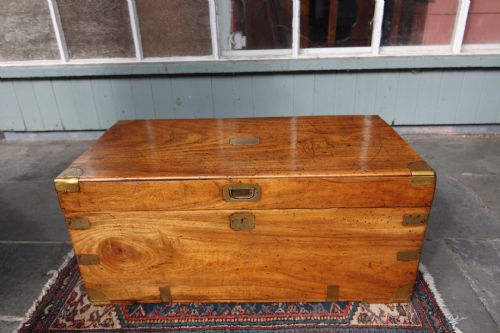
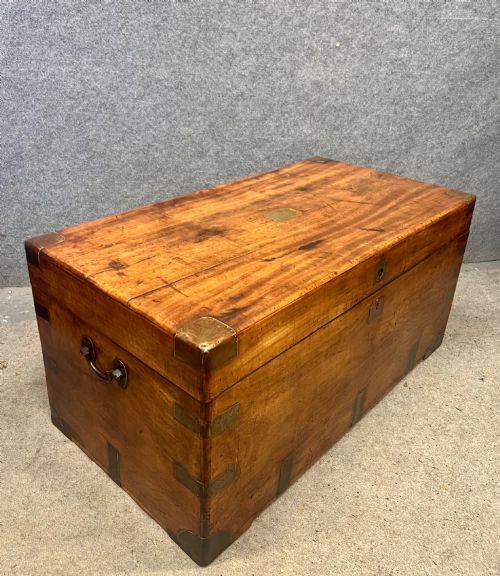
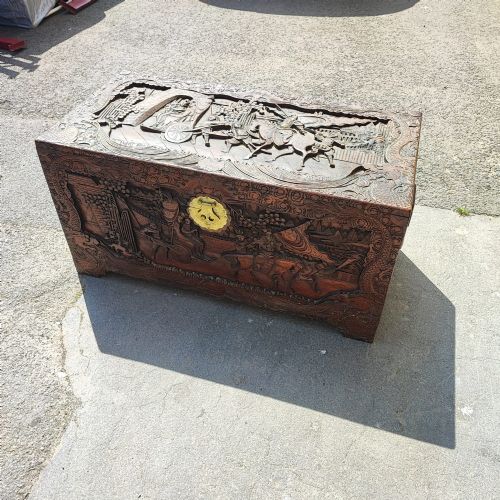
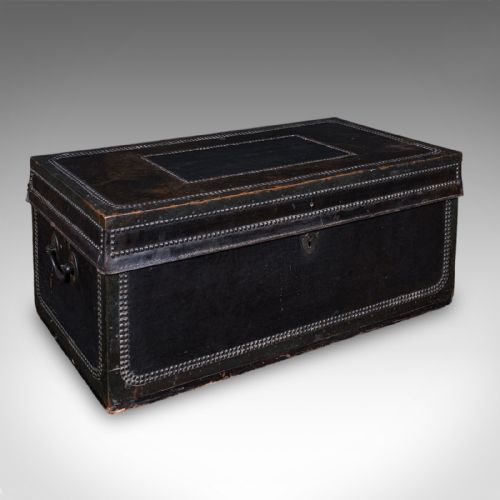
The versions most common on this page hail primarily from the nineteenth century, including Victorian campaign pieces and Chinese export chests. They span from plain military trunks with recessed brass handles to richly carved Oriental storage boxes.
How they were made
Carpenters constructed these trunks using solid camphor wood, valued for its natural insect-repellent properties and distinct aroma. Many examples incorporate contrasting timber details such as teak or ebony alongside the primary wood.
Metalwork played a structural role, with brass corners, straps, and bound edges protecting the timber from the rigours of transit. Recessed brass handles allowed sailors and soldiers to stack and pack these chests securely during voyages.
Many a nineteenth-century sailor relied on these aromatic chests to keep his Sunday best safe from sea spray and shipboard pests.
What varies in quality
The distinction between standard examples and finer pieces often lies in the crispness of the brass fittings and the depth of the carving. Superior nineteenth-century trunks feature heavy, hand-cast brass hardware securely fastened with original screws.
Carved variations display differing levels of artisan skill, ranging from simple incised geometric motifs to deep, elaborate relief work depicting traditional scenes. The selection of timber grain and the neatness of the dovetail joints also mark the standard of manufacture.
The Vintage Camphorwood Box Glossary
- Campaign chest
- A piece of furniture made in sections to be easily dismantled and transported by military officers on campaign. These chests typically feature brass corners and inset drawer pulls.
- Chinese export
- Goods manufactured in China specifically for Western markets, often combining traditional Eastern motifs with European furniture forms. These items arrived via maritime trade routes during the nineteenth century.
- Camphor wood
- An aromatic timber harvested from the camphor tree, known for its resilience against pests and its characteristic scent. It forms the essential body of these storage chests.
- Brass bound
- A method of reinforcing wooden trunk edges and corners with metal plates and strips to withstand heavy travel. This detailing adds structural strength and visual contrast.
Vintage Camphorwood Box: Frequently Asked Questions
Why do these chests smell of camphor?
The distinct aroma comes from the natural essential oils present within the camphor wood timber itself. This scent has protected stored textiles from moths and insects for centuries.
Over time, the fragrance mellows but often remains inherent to the wood. You can refresh the interior gently if needed, though the natural scent is part of the character.
Were these boxes used by sailors?
Many of these trunks served sailors, merchants, and military personnel travelling on long sea voyages. Their robust construction and secure brass fittings suited life aboard ship.
Sloped sailors' chests and military campaign boxes were built to withstand harsh conditions while keeping personal belongings and uniforms organised during transit.
How can I care for camphor wood?
Maintain the timber by keeping the box away from direct heat sources and sudden humidity changes. Regular dusting and occasional light conditioning help preserve the natural finish.
Avoid harsh chemical polishes that might damage the wood or alter the characteristic aroma. Allowing the timber to breathe keeps the interior fresh for textile storage.