





Vintage Cameo Glass Vase
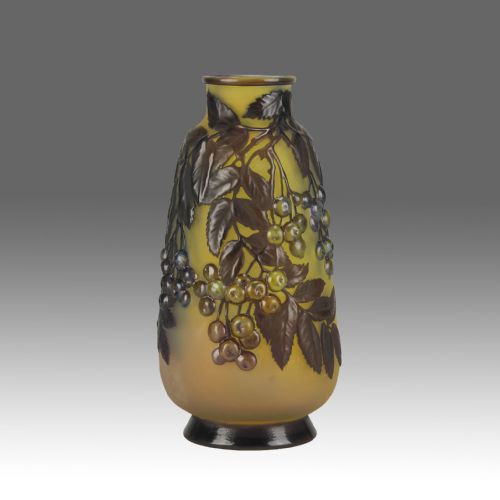
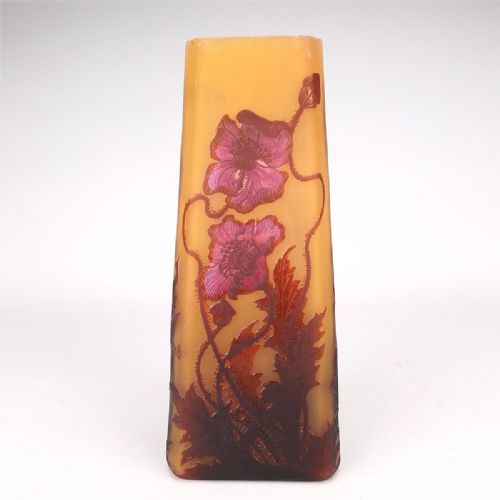
A vintage cameo glass vase brings layered colour and carved botanical or landscape motifs into a room, capturing the artistic ambition of the early twentieth century.
Vintage Cameo Glass Vase
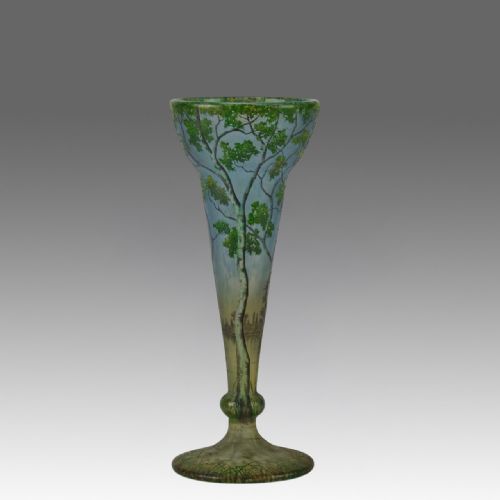
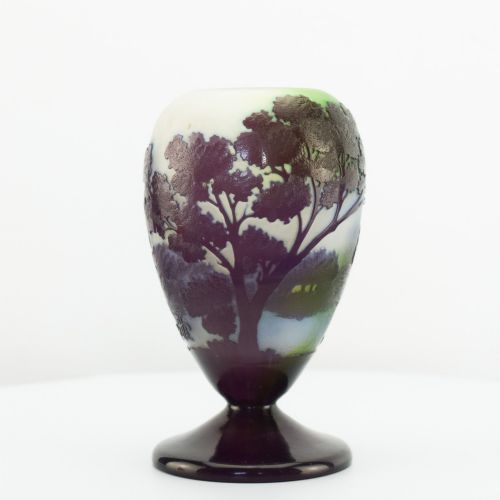
A vintage cameo glass vase is a decorative vessel fashioned from multiple fused layers of coloured glass, carved down to reveal a contrasting design. These pieces span the Victorian era through the Art Nouveau and Art Deco periods, showcasing botanical studies and naturalistic landscapes.
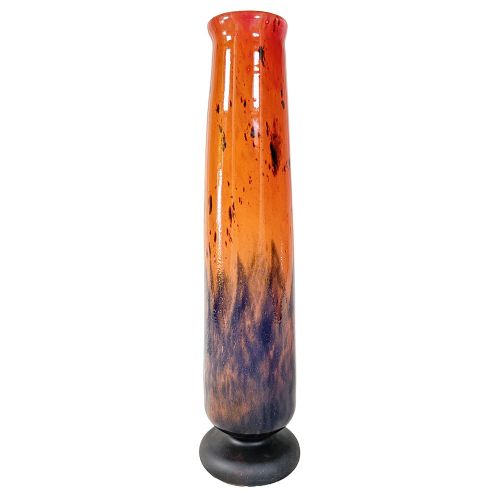
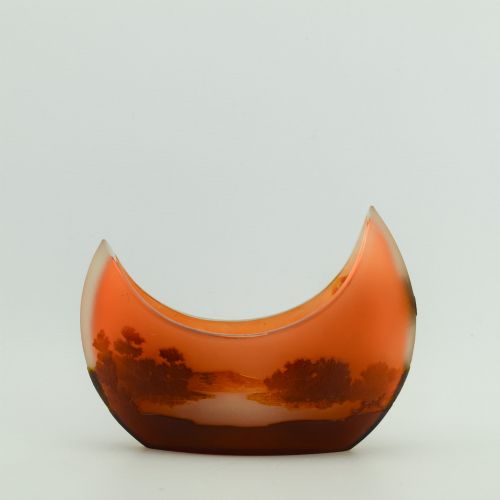
Collectors frequently encounter works produced by major French and English glasshouses, with forms ranging from crescent shapes to large footed cylinders. The examples available on this page reflect the distinct aesthetic shifts from sinuous floral motifs to geometric stylisation.
How they were made
Makers built these vessels using blown glass cased in two or more contrasting coloured layers, occasionally incorporating powdered glass or enamel highlights. Artisans then utilised acid-etching and hand-carving techniques to cut away the outer strata, leaving raised opaque designs against a translucent or frosted ground.
The precision of the wheel-carving or acid immersion determined the depth and relief of the final decoration. Craftsmen balanced chemical etching with meticulous manual grinding to achieve subtle tonal gradients across the surface.
Vintage Cameo Glass Vase Retail Price Guide 2026
Typical asking prices for vintage cameo glass vase among the pieces listed under this phrase on Sellingantiques today, from the lower quarter to the upper quarter. They describe what is for sale here now, not the wider market.
Listings feature works from the Victorian era through the Art Nouveau and Art Deco movements, created using blown and acid-etched glass techniques.
What varies in quality
Quality rests in the complexity of the glass layering and the depth of the carving. Superior vessels display multiple distinct colour strata that allow the light to pass through the glass in varied intensities, creating a luminous pictorial effect.
The finesse of the hand-finishing distinguishes exceptional output from standard production. Artisans who refined the etched details by hand achieved crisp contours and naturalistic shading that lesser pieces lack.
Gallé·Daum·Daum Frères·Thomas Webb and Sons·Legras·Le Verre Francais·Schneider
The Vintage Cameo Glass Vase Glossary
- Cameo Glass
- A vessel formed from multiple fused layers of coloured glass and carved or acid-etched to create a raised design in relief. This technique requires considerable skill to avoid cutting through the thin exterior layer into the background.
- Acid-Etched Glass
- Glass treated with hydrofluoric acid to eat away exposed surfaces and create matte patterns or to reduce the thickness of cameo layers. It serves as either the primary decorative method or a preliminary step before hand-carving.
- Art Nouveau
- A decorative style popular around nineteen hundred characterised by flowing, organic lines inspired by natural forms such as plants and flowers. Pieces from this movement often feature botanical subjects like cornflowers, honeysuckle, and oak leaves.
- Art Deco
- A design movement emerging in the nineteen twenties favouring stylised geometries, bold contrasts, and simplified forms. Objects from this era often pair vibrant orange glass against deep purple backgrounds.
- Frosted Glass
- Glass rendered translucent and non-shiny through acid treatment, sandblasting, or grinding. This finish provides a muted background that makes the brighter carved cameo decoration stand out.
Vintage Cameo Glass Vase: Frequently Asked Questions
How do I date a cameo glass vase?
Dating relies on the stylistic markers of the design, the glasshouse signature, and the manufacturing technique. Art Nouveau pieces from around nineteen hundred typically feature organic floral motifs, whereas nineteen twenties examples often display geometric Art Deco influences or bolder colour contrasts.
Signatures also evolve over time, shifting from detailed cameo signatures carved into the glass to enamelled or acid-etched marks. Comparing the specific motif and lettering style with documented works from known houses helps narrow the period.
Where should I display a cameo glass vase?
These vessels require placement near a natural light source, such as a windowsill or a lighted cabinet, to illuminate the layered colours. Translucent glass benefits from backlighting, which reveals the subtle gradients and varying thickness of the carved cameo design.
Positioning the vase away from high-traffic areas protects the delicate raised surfaces from accidental impact. Pairing the piece with neutral surroundings allows the complex orange, purple, or monochromatic tones to stand out properly.
How do I clean a vintage glass vase?
Cleaning requires simple dusting with a soft, dry microfibre cloth to prevent the accumulation of particles in the carved recesses. Moisture should be kept to a minimum, and immersion in water must be avoided if the piece contains enamel or metallic details.
Harsh chemical cleaners and abrasive sponges will permanently damage the delicate acid-etched or frosted surfaces. If washing the interior is necessary, use lukewarm water and a gentle soap, drying the vessel immediately with a lint-free cloth.
What is the difference between Galle and Daum vases?
While both houses operated in Nancy, France, and produced exceptional multi-layered cameo glass during the early twentieth century, their stylistic emphasis varied. Gallé focused heavily on naturalistic flora and landscapes with subtle, painterly colour transitions.
Daum frequently incorporated internal powdered glass, hammered textures, and extensive acid-etching combined with wheel-carving. Daum pieces from the later period also transitioned smoothly into bold Art Deco forms.