
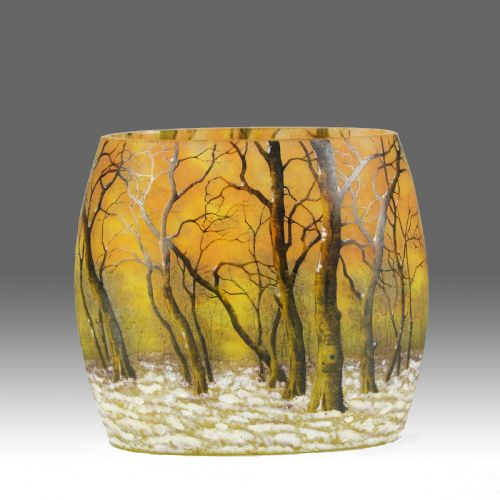
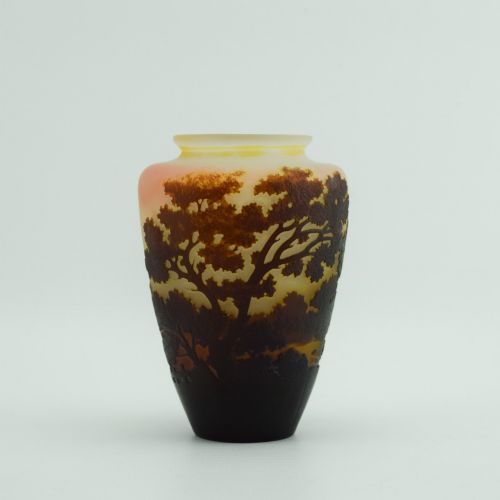
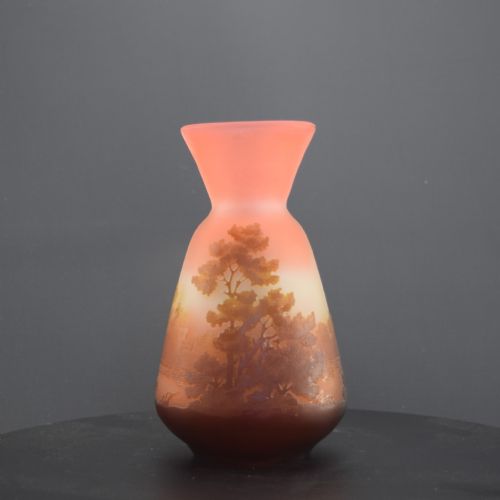


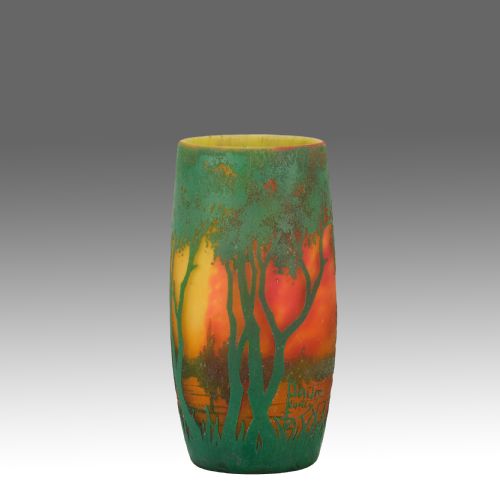


Landscape Cameo Glass Vase
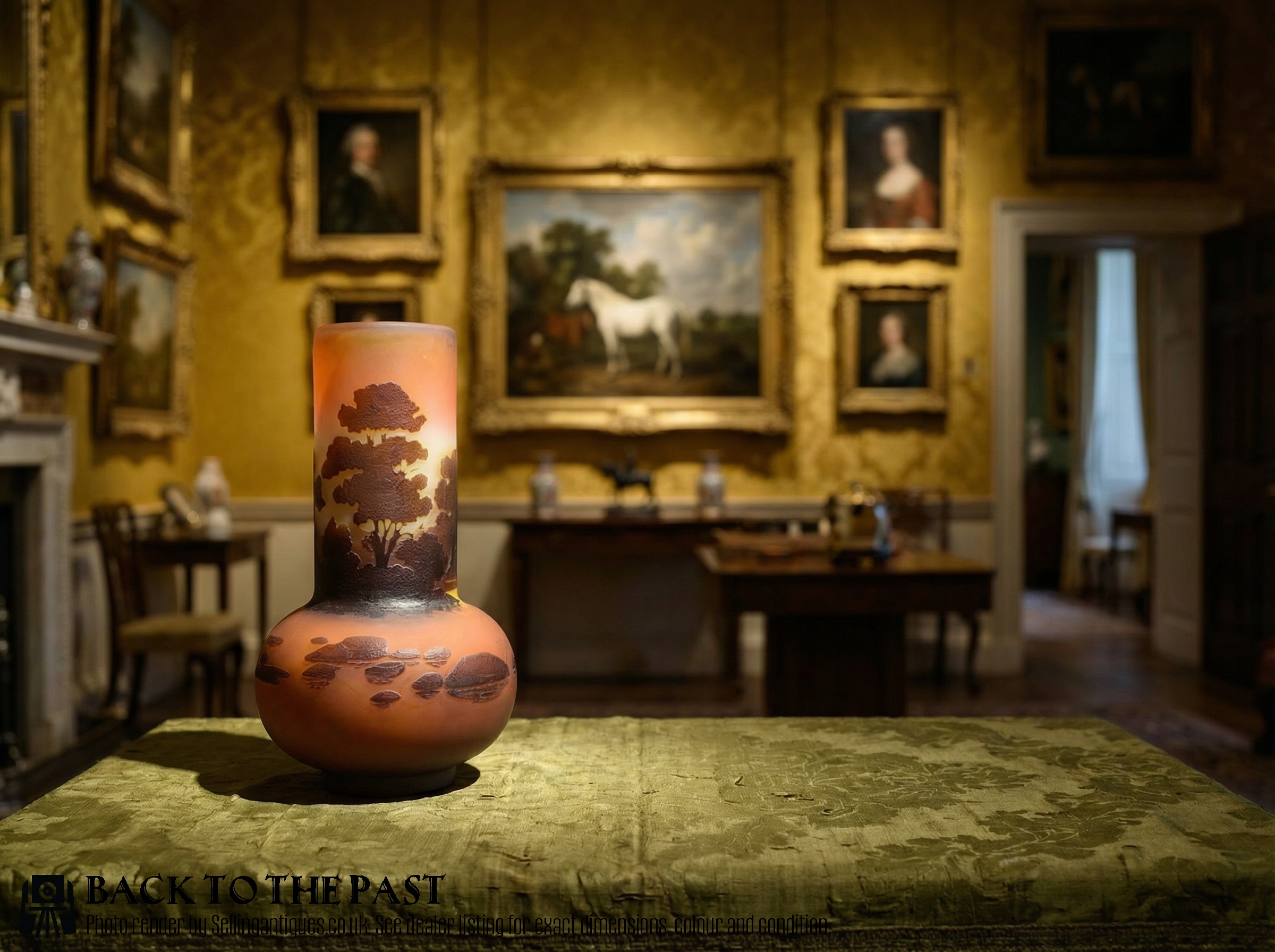
A landscape cameo glass vase brings the quiet depth of early twentieth-century forests and lakes directly onto your shelf through layered, acid-etched colour.
Landscape Cameo Glass Vase
A landscape cameo glass vase is a vessel formed from multiple layers of coloured glass, carved or acid-etched to reveal a scenic design. These pieces belong to the Art Nouveau period, capturing natural motifs with fluid lines and atmospheric depth.
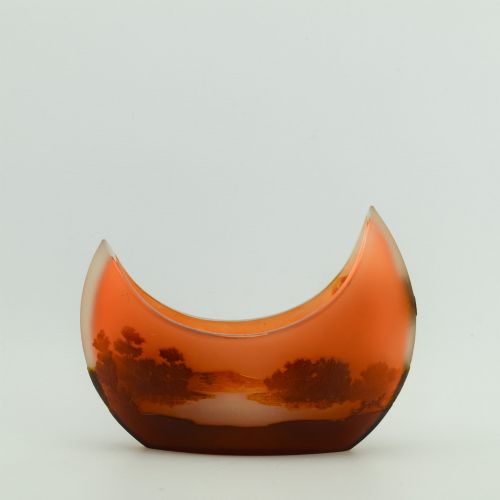
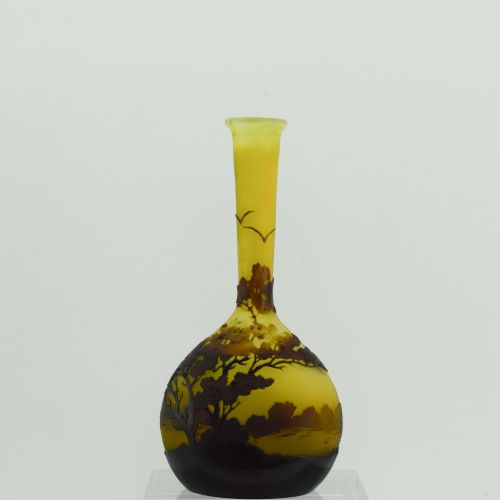
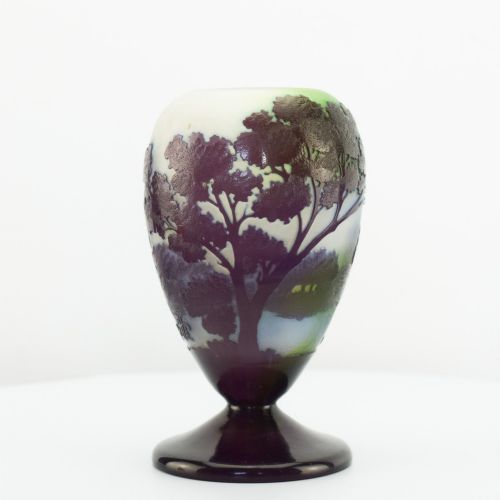
The versions you are most likely to meet on this page date from nineteen hundred to nineteen twenty. They take distinct forms including crescent shapes, banjo profiles, and large oviform bodies.
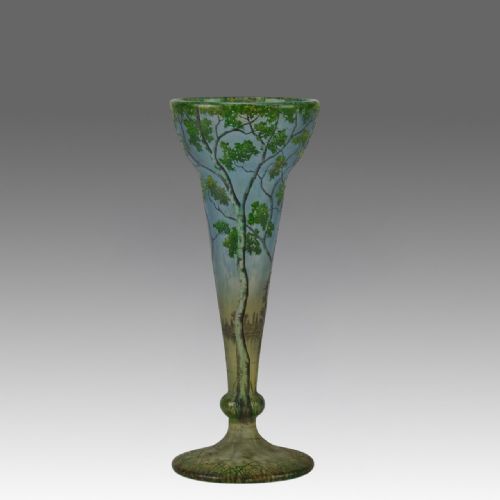
The scenes depicted draw on specific regional views, notably the Vosges landscape, alongside winter settings, summer vistas, aquatic themes, and sailing boat compositions. Makers utilise contrasting tones, such as brown and peach or red sunset palettes, to render trees, water, and horizon lines.
How they were made
Makers built these pieces using cameo glass and enamel techniques, fusing distinct layers of coloured glass together while molten. Artisans then applied acid-etching methods to eat away the outer layers selectively, leaving raised silhouettes of trees and terrain against a lighter background.
Further surface details were sometimes refined by hand-carving or finished with enamel accents to enhance the depth of the landscape. The resulting vessels combine the smooth translucency of glass with deeply textured pictorial reliefs.
Several pieces depict serene sailing boats navigating quiet waters inside the glass.
What varies in quality
Quality rests in the precision of the acid-etching and the subtlety of the colour transitions between glass layers. Finer vessels display crisp definition along the horizon lines and a harmonious balance of tone that gives the landscape genuine perspective.
The weight and balance of the glass body, alongside the complexity of the scenery, separate standard production pieces from those of exceptional artistic execution. Signed works by prominent makers demonstrate a superior command of proportion and depth.
Daum Frères·Emile Galle·Legras
The Landscape Cameo Glass Vase Glossary
- Cameo glass
- A form of glassware created by fusing layers of different coloured glass together and carving or etching away parts of the exterior layer to create a design in relief. This technique requires immense control to avoid cutting through the background.
- Acid-etched
- A decoration method where hydrofluoric acid is applied to eat away unprotected areas of glass. It allows for controlled, gradual depth in multi-layered landscape scenes.
- Art Nouveau
- An international style of art and architecture that peaked in popularity around nineteen hundred. It is characterised by organic motifs, flowing asymmetrical lines, and natural forms.
- Oviform
- Egg-shaped in profile, providing a curved canvas for continuous landscape scenes. This form was frequently utilised for larger cabinet vessels.
- Enamel
- Opaque glass paints fused to the surface of the vessel by firing. This technique adds fine details such as foliage or twilight hues to the etched glass.
Landscape Cameo Glass Vase: Frequently Asked Questions
What periods do these vases come from?
The pieces seen here originate from the early twentieth century, specifically spanning the decades around nineteen hundred, nineteen ten, and nineteen twenty.
Nearly all examples belong to the Art Nouveau movement, reflecting the design priorities of that era.
How were the landscape scenes created?
Artisans used multi-layered glass and applied acid-etching to wear away the outer colours and reveal the background.
Some vessels received additional hand-carving or enamel work to heighten the atmospheric effect of trees and water.
Where should I display a landscape vase?
Place your vase in a position where natural light can pass through the layered glass, illuminating the colours of the landscape.
Displaying them away from direct physical traffic protects the delicate raised surfaces of the cameo carving.
How do I identify different makers?
Makers incorporated signatures directly into the cameo design of the glass, often worked into the lower edge of the landscape.
Studying the specific rendering of trees and the choice of colour palettes helps distinguish the output of different glasshouses.