
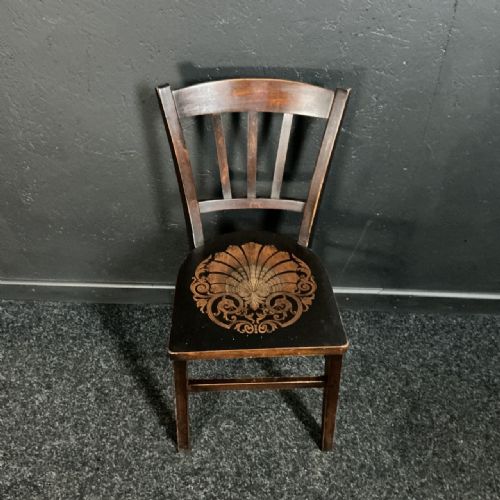
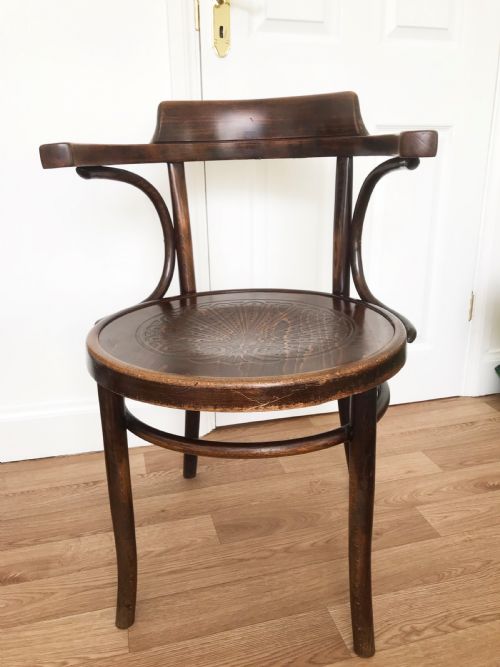

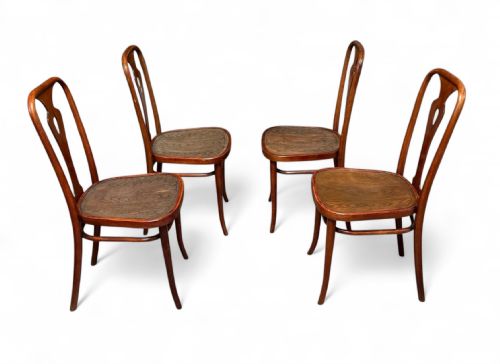


Vintage Cafe Dining Chair
A vintage cafe dining chair brings the utilitarian charm of European coffee houses straight to the home.
Vintage Cafe Dining Chair
A vintage cafe dining chair is primarily represented here by bentwood and bistro seating sourced from European cafes, dining rooms, and gardens. These pieces span the nineteenth century through the mid-twentieth century, capturing designs from Edwardian and Art Nouveau periods to Mid-Century styles.
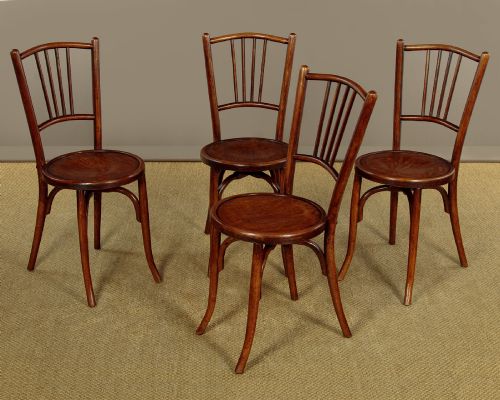
Buyers will most frequently encounter beech bentwood chairs and sets originating from renowned makers, alongside iron and wood combinations suitable for both interior dining and garden use. Forms range from single carvers and pairs to matched sets of four, six, seven, ten, and twelve.
The enduring appeal of these chairs lies in their robust construction and straightforward utility, making them as functional around a modern kitchen table as they were in the Cafe Royal in London.
How they were made
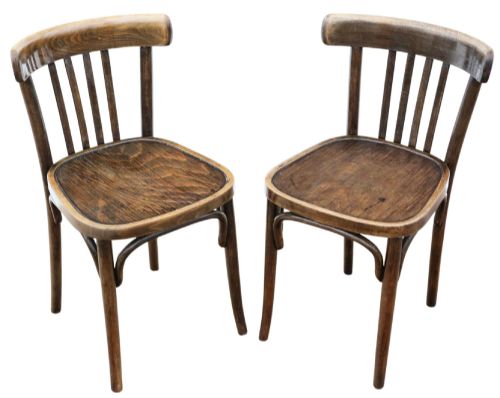
The construction of these chairs relies heavily on the steam-bending of solid timber, principally beech, allowing makers to curve wood into continuous, flowing structural frames without sacrificing strength. Plywood is also utilised for seats, often shaped with pressed patterns or perforations.
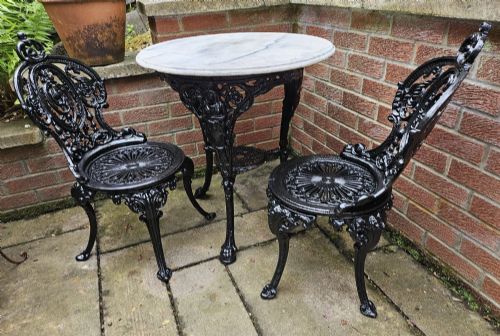
Metal elements, including cast iron and plain iron, form the structural bases and frames for bistro sets and garden furniture, paired with wooden slats or marble tabletops for durability in public and domestic spaces.
Many of these sturdy cafe survivors still bear the quiet scuffs and ink stamps of long-forgotten waiters and bustling dining rooms.
What varies in quality
Quality in these chairs is defined by the integrity of the original construction, such as the tightness of the steam-bent wooden joints and the presence of makers' brandings or paper labels under the seat. Chairs retaining their original patinated stained wood and uncompromised beech frames command greater interest than heavily altered examples.
The uniformity of a matched set and the complexity of the wood shaping, particularly in pieces associated with major workshops like Thonet, Mundus Kohn, or Codina, separate standard utility seating from finer examples of period manufacturing.
Thonet·Codina·J & J Kohn·Mundus Kohn
The Vintage Cafe Dining Chair Glossary
- Bentwood
- Wood that has been heated with steam to make it pliable, allowing craftsmen to bend it into curved shapes. This technique defines the construction of classic cafe seating.
- Bistro set
- A small table accompanied by matching chairs, designed for use in cafes or gardens. These sets often combine iron frames with wooden or marble surfaces.
- Carver
- An armchair with side supports, traditionally designed for the head of a dining table. In cafe seating, these offer a more substantial seat than standard side chairs.
- Beech
- A dense, hard timber commonly used in European furniture production. It accepts steam-bending exceptionally well, making it the primary material for bentwood chairs.
- Plywood
- Manufactured wood made from thin sheets of wood veneer glued together. It is frequently found utilised for the shaped seats of vintage chairs.
Vintage Cafe Dining Chair: Frequently Asked Questions
How do I identify a genuine bentwood cafe chair?
Look for stamped manufacturer marks, paper labels, or branded signatures usually located underneath the wooden seat. The presence of continuous steam-bent beech framing without heavy modern fixings also points to period authenticity.
Examine the construction methods, as nineteenth and early twentieth-century examples typically employ screws and bolts specific to the period of manufacture rather than modern adhesives or fixings.
Are these chairs suitable for daily dining use?
These pieces were originally built for commercial cafe environments, meaning they were engineered to endure heavy, daily use. Their sturdy beech and iron construction makes them well-suited for modern dining rooms.
Matching sets can easily accommodate daily family meals, though vintage wooden seats benefit from sensible care and occasional maintenance of their polished or stained surfaces.
How should I mix mismatched vintage chairs?
Mixing different chairs works best when you maintain a common thread, such as a shared material like bentwood beech or a similar Edwardian or 1920s era. Matching seat heights ensures comfort around a dining table.
Allowing slight variations in the patina and staining of the wood creates an authentic cafe aesthetic rather than an overly uniform dining suite.
Can iron bistro sets stay outside year-round?
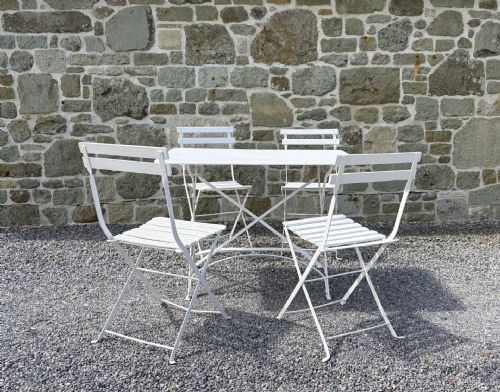
Iron and wood garden furniture from the early twentieth century benefits from winter storage or protective covering to prevent weathering. While durable, the combination of iron framing and wooden slats responds best to shelter from persistent moisture.
Regularly checking the condition of the painted or untreated metal helps preserve the structural integrity of outdoor bistro sets through changing seasons.