

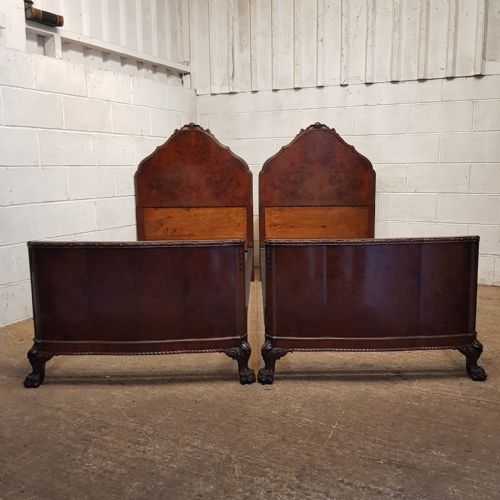


Vintage Burr Walnut Bedsteads
These vintage burr walnut bedsteads bring warmth and intricate grain patterns to the bedroom, offering a striking centrepiece for traditional and modern interiors alike.
Vintage Burr Walnut Bedsteads
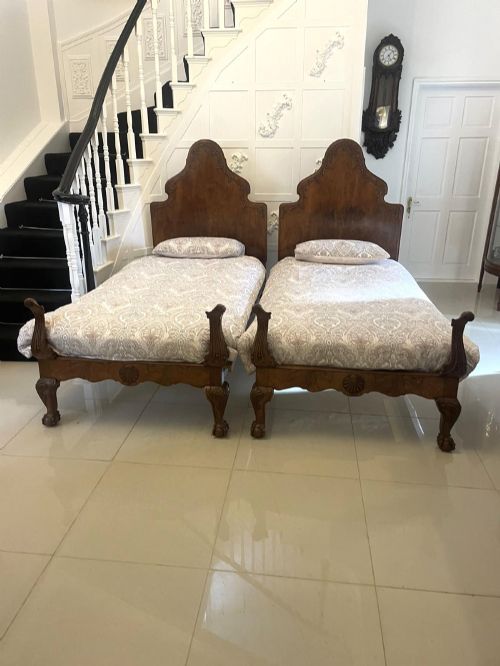
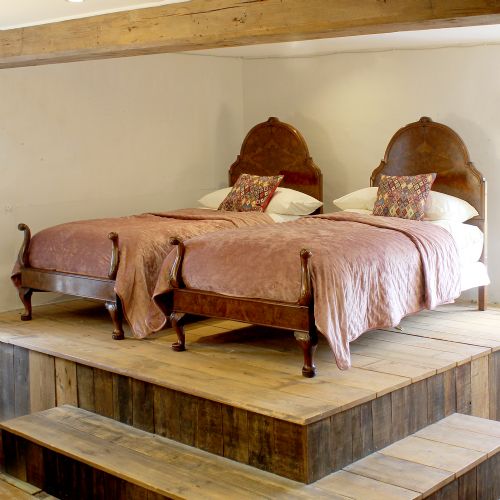
Vintage burr walnut bedsteads encompass a variety of sleeping furniture ranging from single frames and pairs to grand double and king sizes. You will encounter pieces spanning the nineteenth century through to the Art Deco period of the 1930s, reflecting diverse historical revivals.
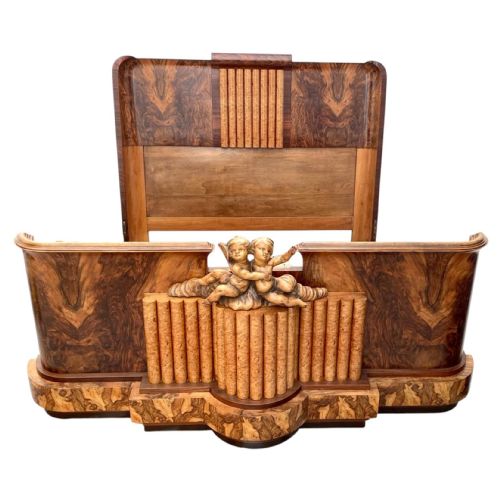
Art Deco examples dominate the chronological spread, showcasing geometric figures alongside older Victorian half tester beds and Queen Anne style revivals. These frames utilise timber and iron structures to support the decorative wooden veneers.
Materials and construction
Cabinetmakers constructed these frames using solid timber carcases overlaid with burr walnut and walnut veneer. The distinctive swirling grain patterns are achieved by slicing growth nodes from walnut trees, creating decorative surfaces across headboards and footboards.
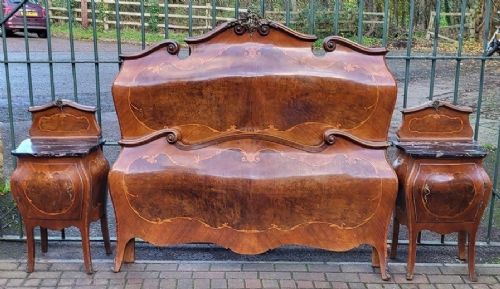
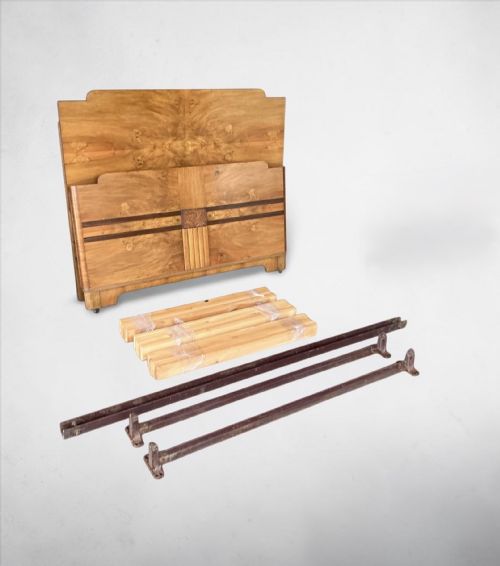
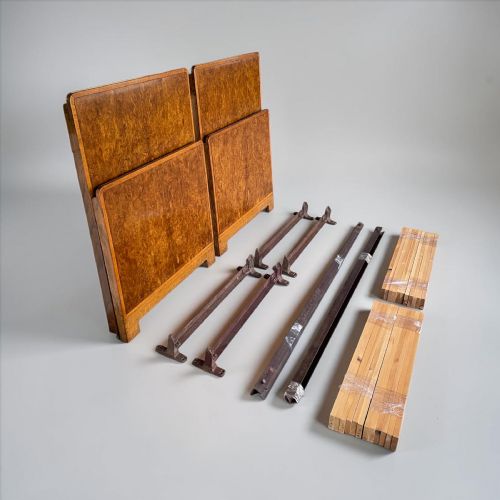
Many frames incorporate structural iron and steel supports alongside traditional timber joinery to ensure stability. Certain iterations integrate contrasting materials such as marble for associated bedside cabinets and satinwood for lighter tonal highlights.
Vintage Burr Walnut Bedsteads Retail Price Guide 2026
Typical asking prices for vintage burr walnut bedsteads among the pieces listed under this phrase on Sellingantiques today, from the lower quarter to the upper quarter. They describe what is for sale here now, not the wider market.
Materials recorded include walnut, burr walnut veneer, marble, iron, and steel.
Assessing quality
Quality rests primarily in the visual impact of the burr walnut veneer and the symmetry of its grain patterns across the panels. Heavily figured surfaces that match seamlessly across large headboards indicate superior craftsmanship compared to disjointed grain matching.
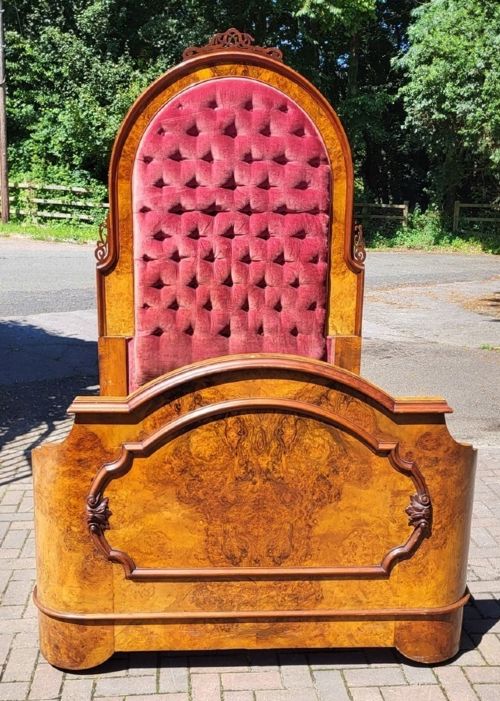
Carved detailing, such as that found on Queen Anne style examples or Victorian upholstered frames, demonstrates the artisan's skill. The integration of auxiliary pieces, like matching marble top nightstands, elevates the distinction of the bedstead.
Waring and Gillow England
The Vintage Burr Walnut Bedsteads Glossary
- Burr walnut
- A veneer taken from the knotted growth of a walnut tree. It produces highly figured, swirling grain patterns prized in cabinetmaking.
- Bedstead
- A framework of a bed supporting the mattress and springs. These structures often feature decorative headboards and footboards in period styles.
- Half tester
- A bed with a partial canopy projecting from the wall or headboard. This Victorian form traditionally supported fabric curtains.
- Bombe
- A swollen or convex shape characteristic of continental furniture design. This curvaceous profile appears on select Italian bed frames.
- Art Deco
- A design style emerging in the early twentieth century characterised by sleek geometric shapes. Pieces from this era often showcase highly polished figured veneers.
Vintage Burr Walnut Bedsteads: Frequently Asked Questions
How do I identify an Art Deco bedstead?
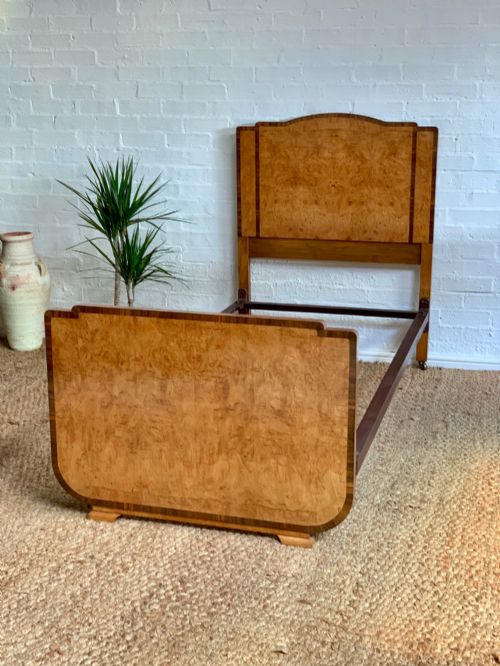
Art Deco bedsteads typically date from the 1930s and display streamlined forms with heavily figured walnut veneers. They often eschew heavy carving in favour of clean, sweeping lines that highlight the natural grain of the timber.
These pieces reflect the modernist design shifts of the interwar period, diverging sharply from earlier Victorian and revivalist aesthetics.
What is burr walnut?
Burr walnut is a specialised wood veneer derived from a growth deformity on a walnut tree. This knotty material yields intricate, swirling patterns that decorators use to create ornate surfaces on headboards and furniture panels.
Because no two growth patterns are identical, every veneered bedstead possesses a unique visual texture.
Are these beds standard modern sizes?
Older bedsteads frequently deviate from contemporary metric mattress dimensions. French, Italian, and British frames from the nineteenth and early twentieth centuries often require custom mattresses to fit the historical internal dimensions.
Buyers should verify the exact interior length and width before attempting to fit standard modern bedding.
How do I care for a walnut veneer bed?
Walnut veneer requires protection from direct sunlight and excessive moisture to prevent fading and lifting. Regular dusting with a soft cloth and occasional treatment with appropriate wood waxes helps maintain the polished surface.
Avoiding placement near heat sources preserves the structural integrity of the underlying timber and glue.