
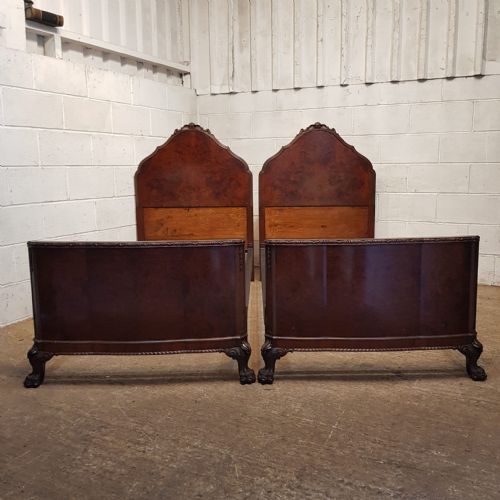


Walnut Single Bed Frames
Walnut single bed frames bring warmth to a bedroom through rich timber figures and historic styling.
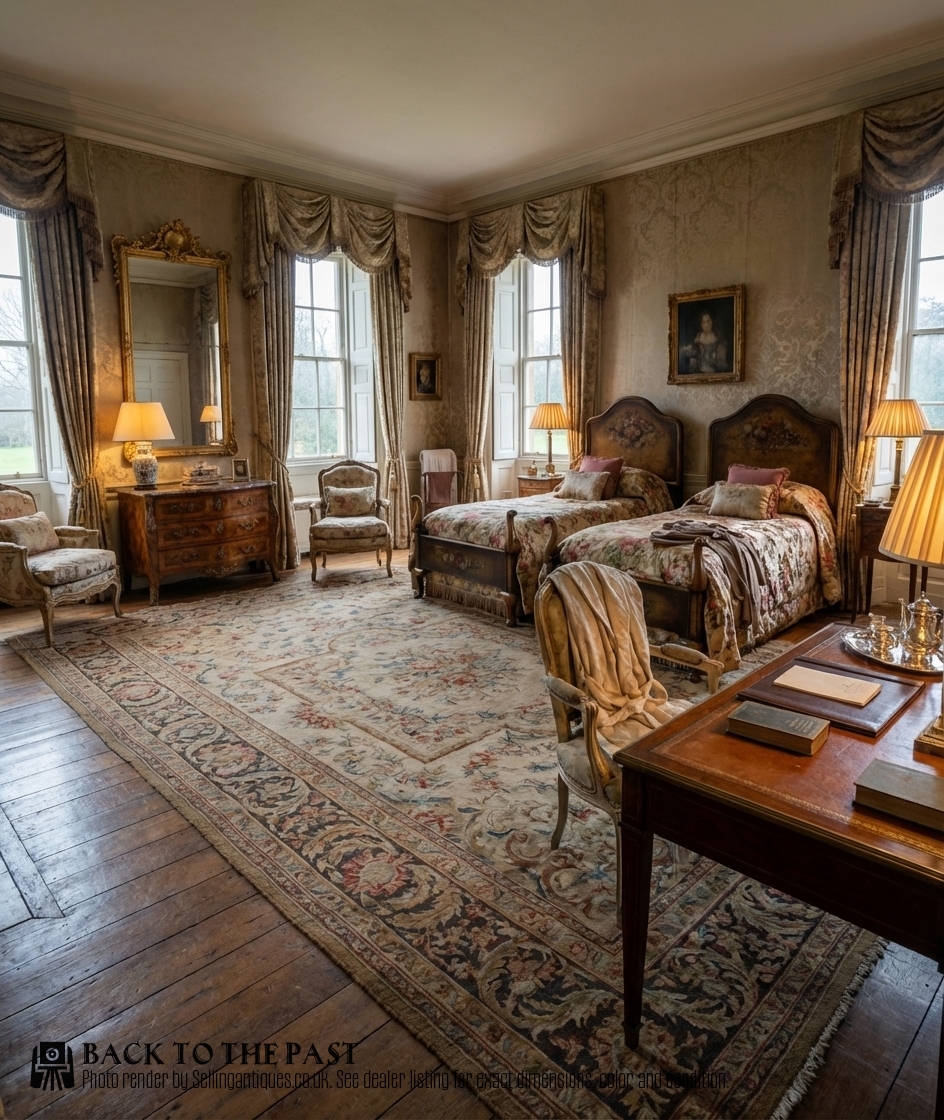
Walnut Single Bed Frames
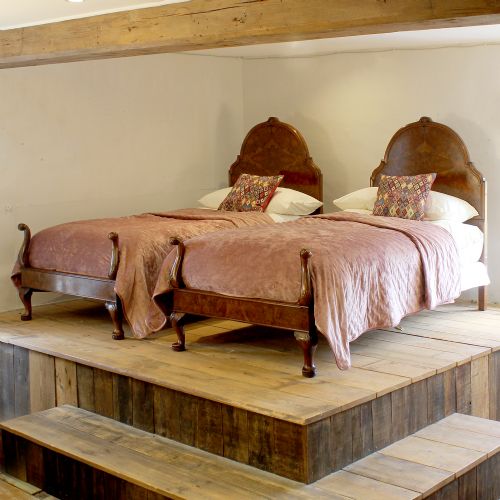
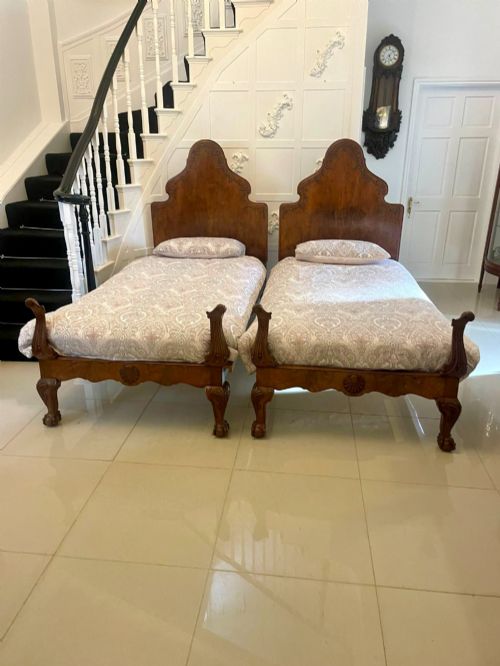
Walnut single bed frames combine practical single sleeping proportions with the rich grain of walnut timber, burr walnut veneer, and contrasting satinwood. These pieces emerge from the nineteenth century, the Edwardian era, and the nineteen-twenties and thirties, spanning styles from Queen Anne revival and French empire to bold Art Deco designs.
Buyers encounter various formats on this page, including standard single bed frames, daybeds, and pairs suited for twin arrangements. Certain examples incorporate integrated bedside tables, painted leather panels, or Chinoiserie decoration, while others feature carved details or giltwood highlights.
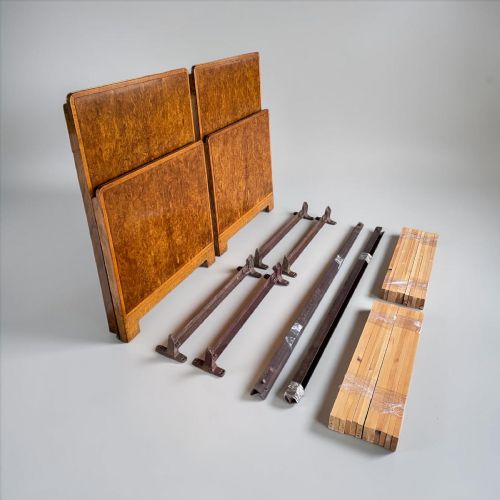
Construction relies upon timber frameworks, sometimes paired with iron or brass elements, representing periods from eighteen-eighty through to nineteen-thirty. The selection ranges from restrained Edwardian panelled bedsteads to elaborate French rococo revival and Italian long single beds.
How they were made
Cabinet makers utilised solid walnut alongside decorative veneers such as burr walnut and timber variations like satinwood to create patterned surfaces on the bed frames. Skilled hands applied carving techniques to shape the wood, while other examples integrated brass and iron components into the structural design.
Surface treatments included polished wood finishes, painted leather panels, and occasional giltwood details that reflect the aesthetic preferences of periods from the late nineteenth century to the nineteen-thirties.
Certain nineteen-thirties single beds come with built-in bedside tables, proving that breakfast in bed convenience has long preoccupied designers.
What varies in quality
The fidelity of historical revival styles, from Queen Anne to French empire and Art Deco, determines how successfully the maker executed the intended period aesthetic. The integration of auxiliary materials like brass, iron, and painted leather further distinguishes individual examples.
Waring and Gillow England·Heals
The Walnut Single Bed Frames Glossary
- Burr walnut
- A figured wood grain obtained from walnut tree growths, prized for its swirling, organic patterns. Cabinet makers applied it as a veneer to highlight prominent surfaces on bed frames.
- Satinwood
- A luminous hardwood with a pale, golden sheen, frequently utilised alongside darker walnut in Art Deco pieces to create striking visual contrast.
- Daybed
- A form combining elements of a chair and a bed, intended for lounging as well as sleeping. These pieces often feature decorative backs or ends akin to French styles.
- Giltwood
- Timber treated with gold leaf or gold paint to produce a gilded surface. This finish appears on revival styles to impart a decorative, ornate appearance.
Walnut Single Bed Frames: Frequently Asked Questions
How do I identify an Art Deco walnut bed?
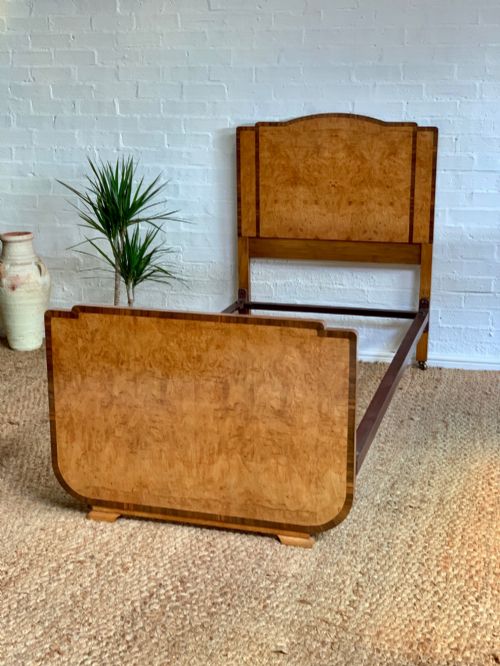
Art Deco walnut beds display streamlined geometric forms, symmetric wood grain arrangements, and frequently combine dark walnut with blonde satinwood. These frames date from around nineteen-thirty and often omit heavy historical carving in favour of clean, architectural lines.
Such pieces may also incorporate functional elements like integral bedside tables or minimalist panelling that reflect the modernist design ethos of the interwar period.
What periods do these single beds cover?
The available beds span from the late nineteenth century through the Edwardian era and into the nineteen-twenties and thirties. This timeline encompasses diverse aesthetics ranging from Victorian walnut and brass combinations to sophisticated Art Deco creations.
Earlier nineteenth-century examples often lean towards French empire or heavy carved walnut styles, whereas Edwardian pieces frequently showcase lighter proportions and panelled construction.
Are matching pairs common for these beds?
Many listings comprise pairs of single beds, reflecting the historical demand for matching twin bedroom furnishings. These pairs often share identical wood veneers, carving details, and structural proportions.
Buyers searching for twin arrangements find examples featuring matching burr walnut veneer, satinwood highlights, or coordinated Edwardian panelling across both frames.
What auxiliary materials appear alongside walnut?
Makers frequently paired walnut timber and burr walnut veneer with contrasting satinwood for decorative inlay or two-tone colour schemes. Iron and brass components also feature structurally and ornamentally on specific nineteenth-century and Edwardian frames.
Additional materials include painted leather panels and giltwood highlights, which appear on French revival daybeds and ornate period pieces to enhance their decorative impact.