



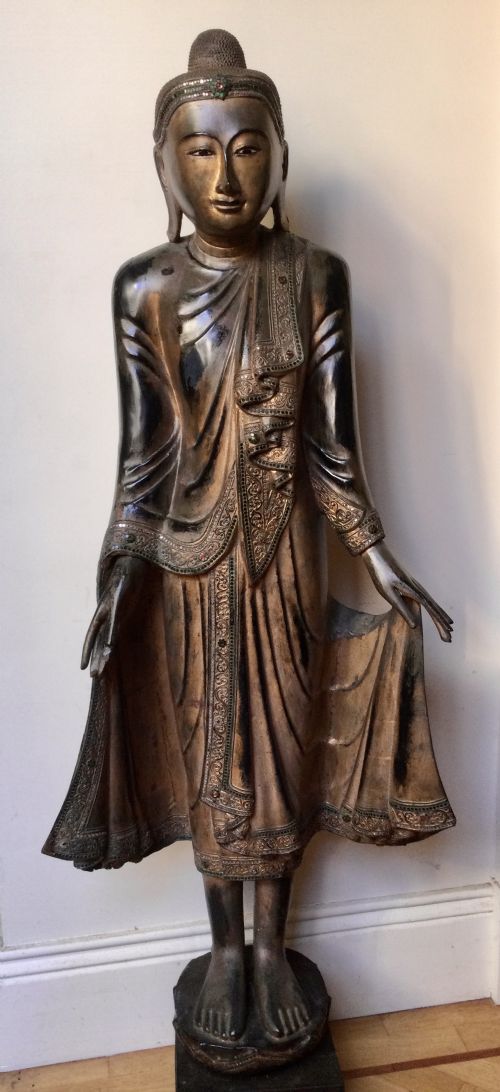


Vintage Buddha Statue
A vintage buddha statue brings meditative calm into a room, spanning centuries of Asian artistry from bronze deities to carved wooden figures.
Vintage Buddha Statue
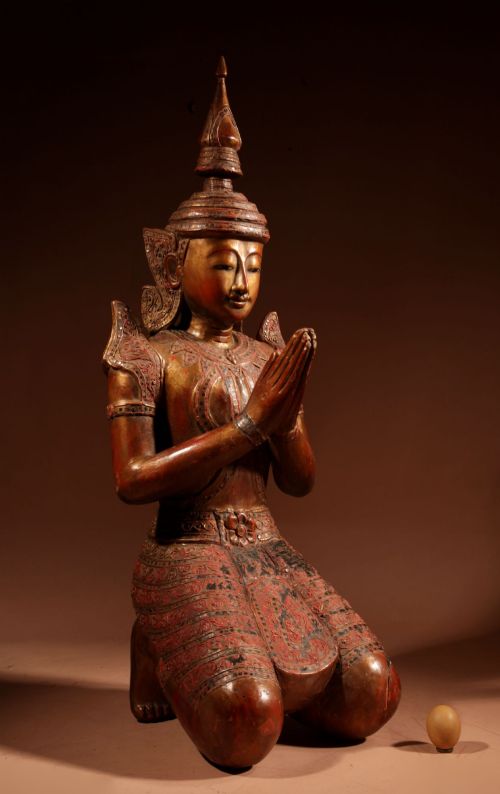
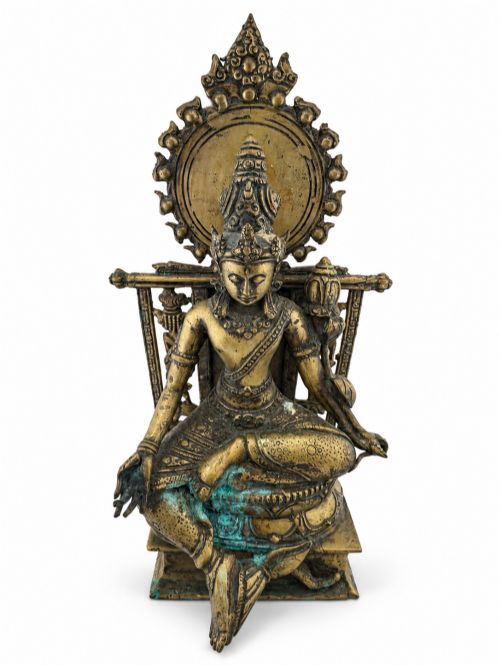
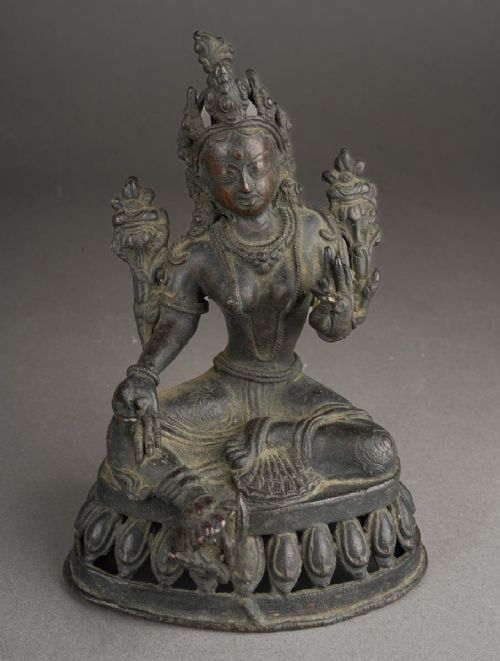
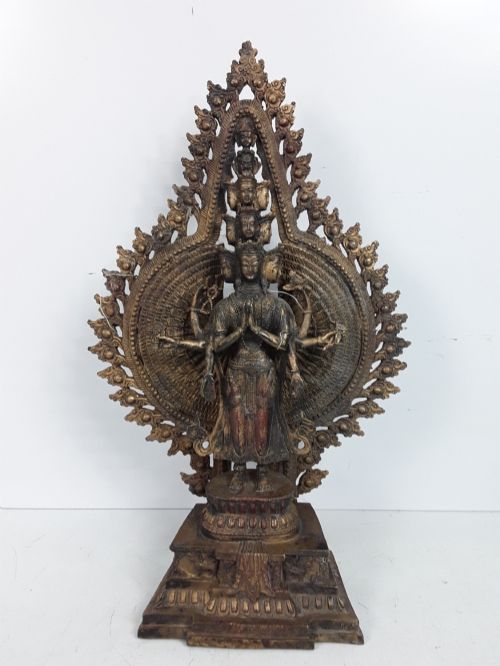
A vintage buddha statue represents sacred figures and religious deities originating from various Asian traditions, including Thai, Tibetan, Himalayan, Chinese, and Burmese cultures. These sculptures serve as objects of devotion, shrines, or meditative focal points created during periods spanning from the eighteenth century through the early twentieth century.
The most common forms encountered on this page are bronze and carved wooden figures, ranging from small shrine statues to large temple guardians and seated deities. These pieces include specific representations such as Green Tara, Avalokiteshvara, Thepphanom guardian figures, and Laughing Buddha statues.
Originating across distinct historical regions, these sculptures reflect regional stylistic traditions such as the Mandalay style of Burma, Qing Dynasty Chinese works, and classical Thai bronze casting. Buyers find both standing and seated postures executed in materials that reflect the specific religious iconography of their origin.
How they were made
Metal statues on this page are typically formed from bronze, copper alloy, or brass using traditional casting techniques, often enhanced with gilding or glass inlay. Artisans cast these religious figures to capture intricate details of robes, facial expressions, and ritual gestures.
Wooden sculptures rely on carving techniques applied to hardwoods, softer timber, or gilt wood, shaping natural materials into devotional forms. These carved pieces demonstrate regional woodworking traditions and surface treatments like lacquer.
Vintage Buddha Statue Retail Price Guide 2026
Typical asking prices for vintage buddha statue among the pieces listed under this phrase on Sellingantiques today, from the lower quarter to the upper quarter. They describe what is for sale here now, not the wider market.
Regional styles represented include Thai, Tibetan, Chinese Qing Dynasty, and Burmese Mandalay traditions.
What varies in quality
The sophistication of the iconography and the integrity of surviving surface treatments, such as original gilding, lacquer, or glass inlay, distinguish exceptional pieces from simpler utilitarian or decorative statues.
The Vintage Buddha Statue Glossary
- Bronze
- A copper alloy traditionally used for casting durable sculptural figures with detailed ornamentation. This metal develops a natural patination over time.
- Gilding
- The application of a thin layer of gold leaf or gold powder to the surface of wood or metal sculptures. This technique enhances the divine luminosity of the sacred figure.
- Lacquer
- A durable resin finish applied to wooden sculptures to protect the material and provide a smooth decorative surface. It often serves as a base for gilding.
- Iconography
- The traditional imagery and symbolic visual elements associated with a religious subject. It dictates the postures, hand gestures, and attributes of the deity.
- Patination
- The surface coloration and ageing developed on metal or wood over decades through handling and environmental exposure. It indicates the natural passage of time.
Vintage Buddha Statue: Frequently Asked Questions
Where should I place a bronze statue at home?
Position the sculpture in a quiet space where its meditative presence can be appreciated without clutter, away from excessive moisture or direct heat sources.
Ensure the surface supporting the piece is stable and sturdy enough to bear the weight of solid bronze or hardwood.
What is the difference between seated and standing figures?
Seated figures generally represent meditative contemplation and teaching postures, designed to inspire stillness and inward reflection in a room.
Standing statues often depict protective guardians, deities granting blessings, or figures in active narrative poses from regional religious traditions.
How do I care for wooden and metal sculptures?
Dust metal and wooden statues gently with a soft, dry cloth to prevent accumulation without disturbing delicate surfaces, gilding, or patination.
Avoid using liquid cleaners, chemical polishes, or abrasive cloths that can strip historical finishes and damage the material beneath.