



Vintage Brown Nesting Tables
Vintage brown nesting tables offer practical tiers that slide neatly away, combining period timber with clever space-saving design.
Vintage Brown Nesting Tables
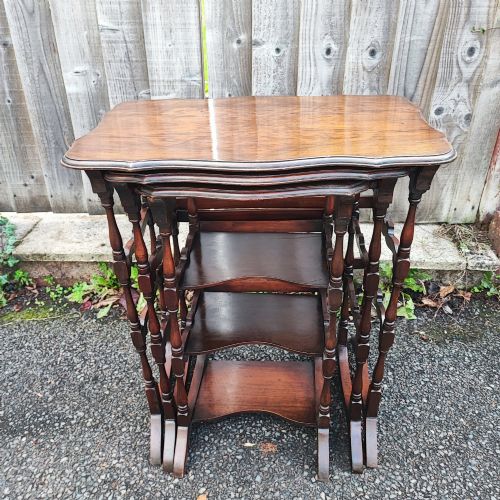
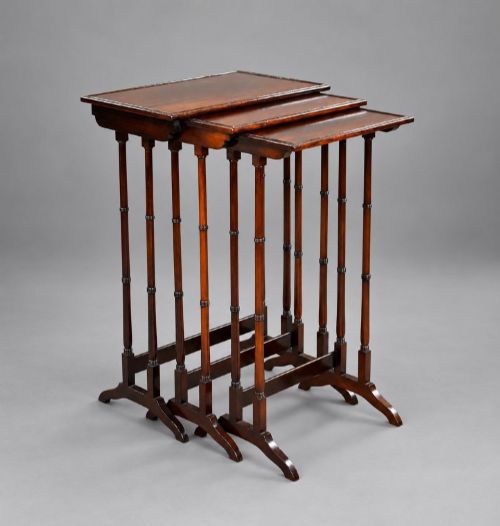
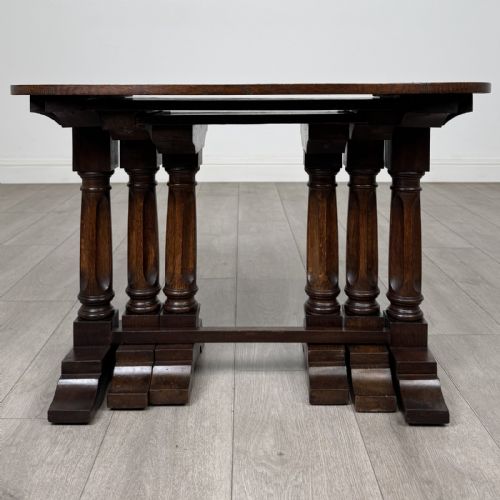
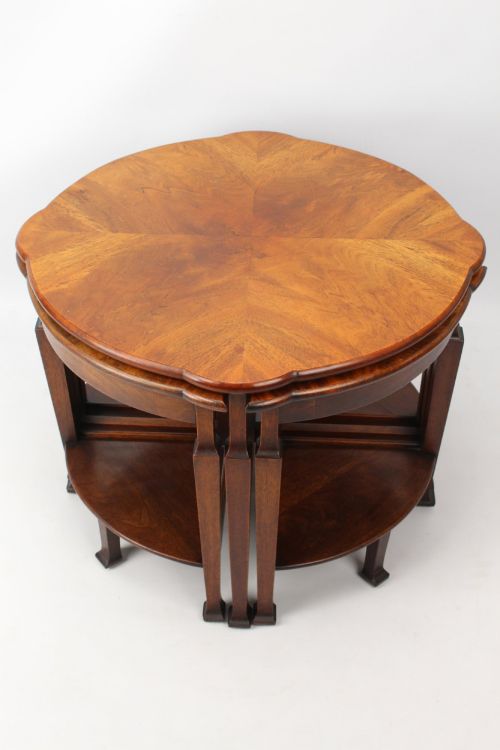
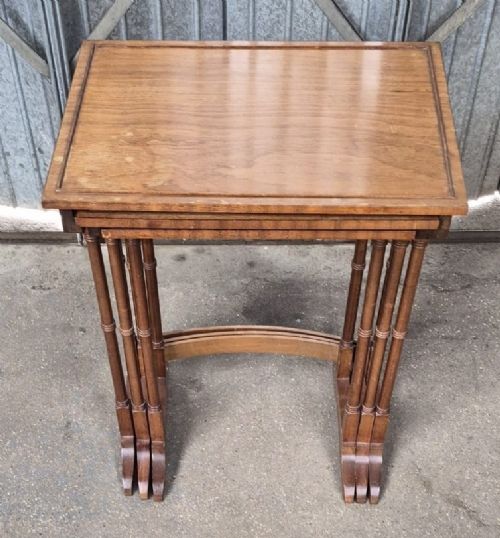
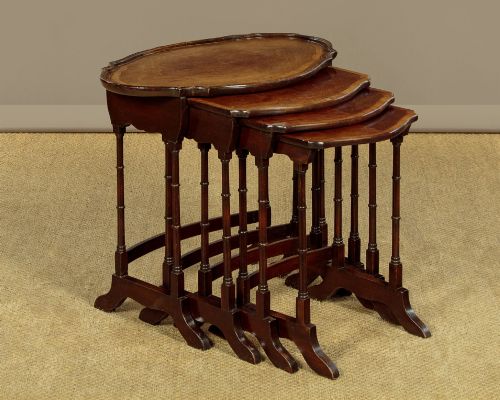
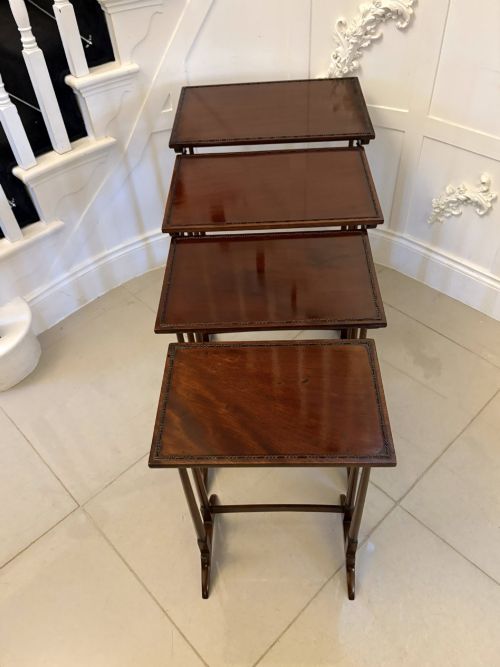
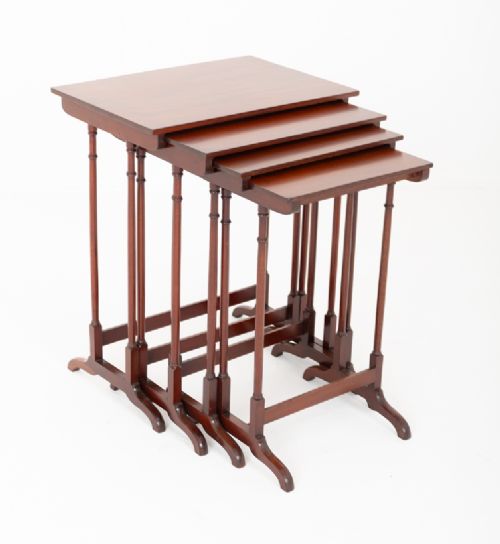
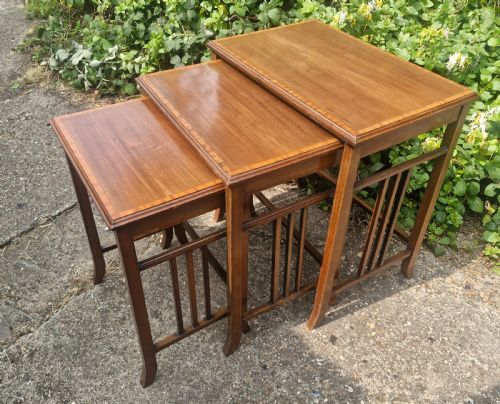
Vintage brown nesting tables serve as functional tiers designed to tuck one beneath another when floor space matters. These sets appear most frequently in Edwardian mahogany or walnut builds, often taking the traditional form of quartetto sets containing four graduating pieces.
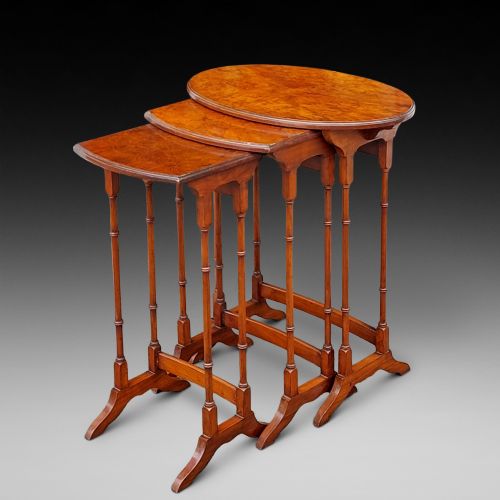
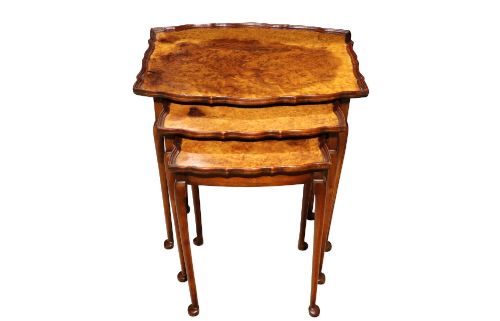
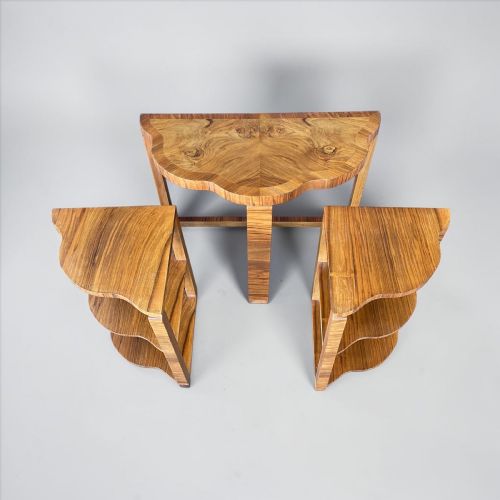
Makers produced these tables across multiple decades, spanning the nineteenth century through the Art Deco era and mid-century years. Buyers encounter various configurations, from simple trios to circular groups of five, constructed in dark warm woods like mahogany and walnut.
Materials and construction methods
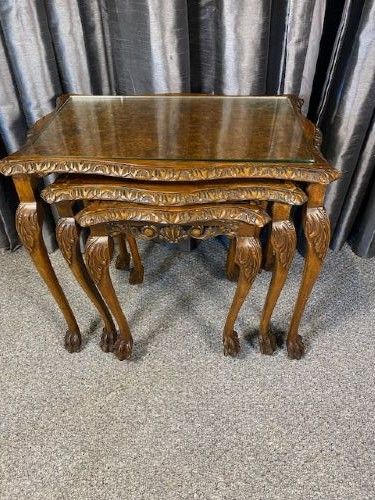
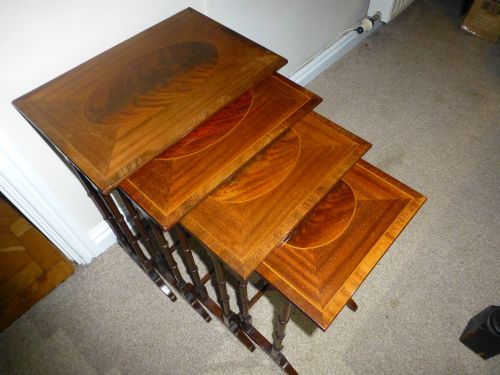
Cabinetmakers relied on solid hardwoods and figured veneers, shaping mahogany, walnut, burr walnut, satinwood, and rosewood into sturdy frames. Many examples incorporate decorative elements such as fine wood inlay, brass stringing, glass panels, or embossed leather top inserts.
Construction techniques balanced lightness with stability so that smaller tables slid smoothly into the tracks or under the skirts of the larger frames. Workshops utilised carved details, shaped tops, and graduated sizing to ensure each tier nested flush with the next.
Vintage Brown Nesting Tables Retail Price Guide 2026
Typical asking prices for vintage brown nesting tables among the pieces listed under this phrase on Sellingantiques today, from the lower quarter to the upper quarter. They describe what is for sale here now, not the wider market.
Listings feature pieces spanning from the nineteenth century through the Edwardian period, 1920s, 1930s, and 1940s Art Deco era.
Judging the quality of the set
Quality reveals itself in the choice of timber and the precision of the veneer work, particularly on burr walnut or satinwood surfaces. Superior sets maintain structural integrity across all tiers without looseness in the joints when the smaller tables slide into place.
The sophistication of decorative additions, such as intricate marquetry inlay, carved borders, or specialist tops like embossed leather, separates standard utility sets from exceptional workshop output.
Émile Gallé·Harry and Lou Epstein·Heal's
The Vintage Brown Nesting Tables Glossary
- Quartetto
- A set of four graduating tables designed to nest together. This term appears frequently in Edwardian and early twentieth-century furniture descriptions.
- Marquetry
- Decorative patterns formed by fitting together small pieces of coloured veneer. Craftsmen applied these wooden mosaics to table tops for ornamental effect.
- Stringing
- Thin inlay lines of contrasting wood or brass used to outline table edges. It provides a crisp geometric border on mahogany and walnut surfaces.
- Burr walnut
- Timber taken from a walnut tree growth, showing intricate swirling grain patterns. Cabinetmakers prized this figured wood for high-end table tops.
- Satinwood
- A durable tropical hardwood with a lustrous yellow sheen. It was utilised for fine inlaid Edwardian and period tables.
Vintage Brown Nesting Tables: Frequently Asked Questions
What is a quartetto nest?
A quartetto nest consists of a set of four tables that scale down in size to fit sequentially beneath the largest frame. This arrangement provides multiple surfaces while occupying the floor space of a single small table.
Craftsmen often built these sets in mahogany or walnut during the Edwardian period for entertaining guests.
How do I date a nesting table?
Dating relies on timber choices, leg styles, and decorative details recorded across periods like the Edwardian era, 1920s, and Art Deco times. Edwardian versions frequently feature inlaid mahogany, whereas 1930s examples lean towards streamlined walnut or teak forms.
Examining the underside and joint construction helps confirm the manufacturing era.
Are nesting tables sturdy?
Well-constructed vintage tables remain stable despite their slender frames and graduated dimensions. Quality sets use solid hardwood legs and tight joints to support everyday items placed upon them.
The smaller tiers are designed to bear weight securely when pulled out for use.
Which woods were used most?
Mahogany and walnut dominate the selection, appearing in both plain timber and figured burr varieties. Makers also utilised rosewood, satinwood, teak, and oak across different stylistic periods.
These dark timbers give the tables their characteristic warm brown tones.