
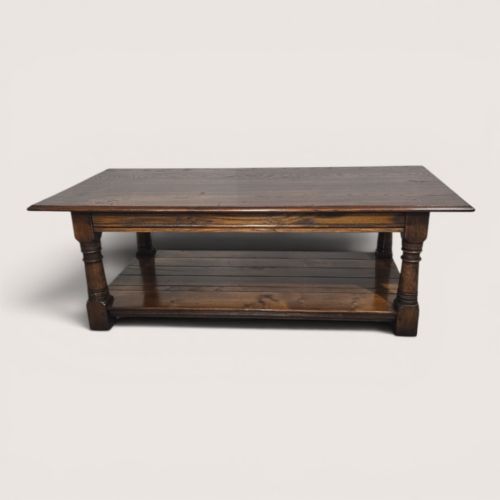


Traditional Living Room Table
These traditional living room table options bring solid timber construction and practical tiered surfaces straight into a sitting room.
Traditional Living Room Table
When you search for a traditional living room table, you encounter practical coffee tables and nests of tables spanning the nineteenth and early twentieth centuries. These forms serve everyday sitting room needs while displaying the proportions and woodwork of earlier eras.
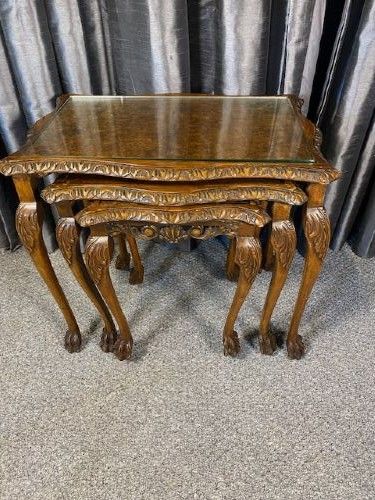
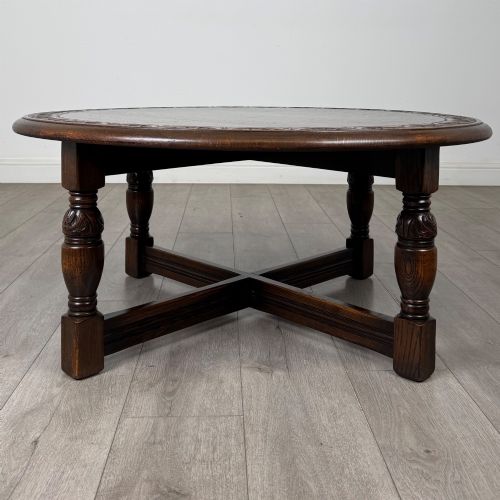
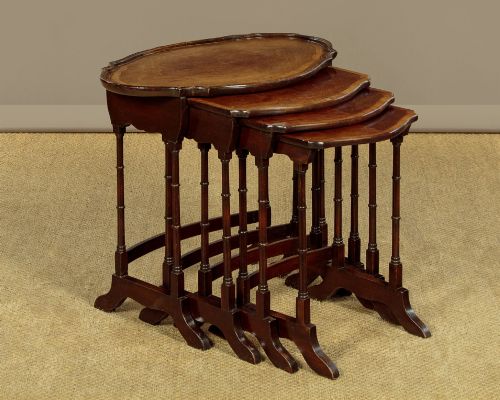
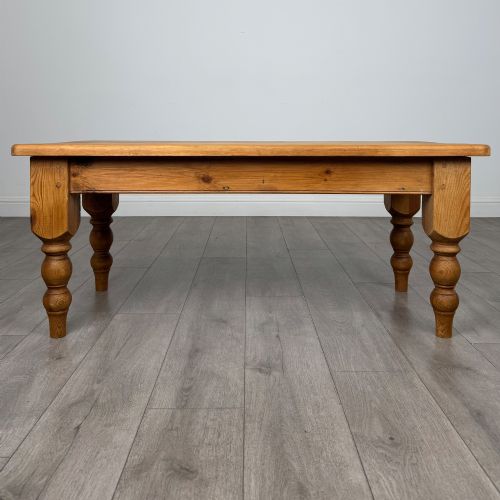
The pieces on this page are most commonly nests of tables in mahogany or oak, alongside substantial coffee tables in pine, walnut, and burr walnut. You meet both multi-tiered nesting sets and single low coffee tables derived from Edwardian, Regency, and rustic farmhouse traditions.
Makers and craftsmen produced these items using hardwoods and softwoods suited to domestic use, creating surfaces for daily living that retain their period character. Each design reflects the prevailing domestic habits of its decade, from large single boards to interlocking sets.
How traditional living room table examples were constructed
Makers utilised solid timbers such as oak, mahogany, and pine alongside decorative veneers like burr walnut to build these tables. Construction methods combined sturdy planking for farmhouse coffee tables with precise framing for nests of tables.
Detailing often included shaped tops and glass inserts, supported by brass hardware where appropriate to the style. Cabinetmakers shaped the timber to suit specific revival aesthetics including Queen Anne and Regency forms.
Listings on this site feature tables spanning from eighteen eighty through the nineteen twenties, constructed in mahogany, oak, walnut, and pine.
What varies in quality across these tables
The grade of timber and the choice of veneer dictate the visual depth of the surface, particularly on walnut and mahogany examples. Superior pieces display carefully selected grain patterns and balanced proportions across all tiers of a nesting set.
Joinery execution separates standard utility items from finer workshop output, showing in the tightness of joints and the clean shaping of table edges.
The Traditional Living Room Table Glossary
- Nest of tables
- A set of graduated tables designed to fit neatly beneath one another when not in use. This space-saving form gained immense popularity during the Edwardian period.
- Burr walnut
- A highly figured wood veneer harvested from the warted growths on walnut trees. It provides a rich, swirling pattern prized for table tops.
- Edwardian
- Pertaining to the reign of King Edward VII, spanning from nineteen hundred and one to nineteen hundred and ten. Furniture from this era often lighter in proportion than Victorian pieces.
- Regency
- A style period spanning the early nineteenth century drawing inspiration from classical Greek and Roman design. It emphasises clean lines and dark timbers.
Traditional Living Room Table: Frequently Asked Questions
What is a traditional living room table?
A traditional living room table encompasses coffee tables and nests of tables produced during the nineteenth and early twentieth centuries. These pieces utilise woods like mahogany, oak, and walnut to serve daily domestic functions.
They offer practical surface area while maintaining historical styles such as Edwardian, Regency, and rustic farmhouse designs. Their enduring appeal lies in their combination of utility and period craftsmanship.
How do I use a nest of tables?
A nest of tables provides flexible surface space that adapts instantly to hosting guests in a sitting room. You can separate the graduated tables around the room for drinks or books.
When the gathering ends, the smaller tables slide neatly back under the largest one to save floor space. This makes them particularly useful in smaller traditional living areas.
What woods were used for these tables?
Cabinetmakers relied heavily on mahogany, oak, and walnut for durable domestic furniture. Softer timbers like pine appear primarily in rustic farmhouse tables.
Finer examples frequently incorporate decorative veneers such as burr walnut to create distinctive patterned surfaces. Brass fittings and glass occasionally supplement the primary timber construction.
How can I tell the period of a table?
Dating relies on observing stylistic markers, timber choices, and construction techniques associated with specific eras like the Edwardian period or nineteenth century. Edwardian pieces often display lighter proportions and simpler revival motifs.
Earlier nineteenth-century examples tend to feature heavier mahogany construction and distinct edge mouldings. Comparing the wood finish and overall form against documented period styles helps clarify the date.