
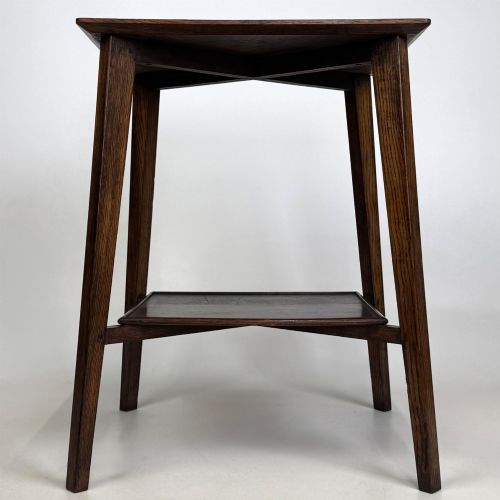
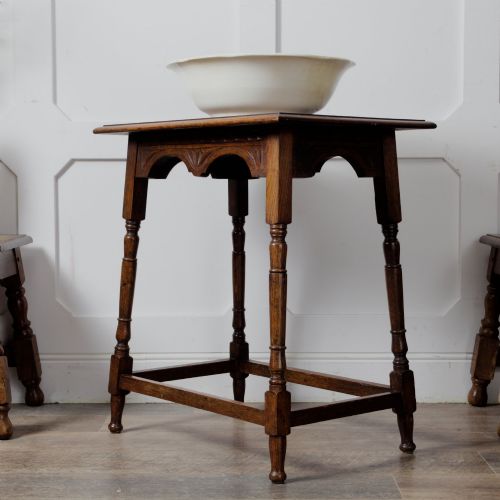
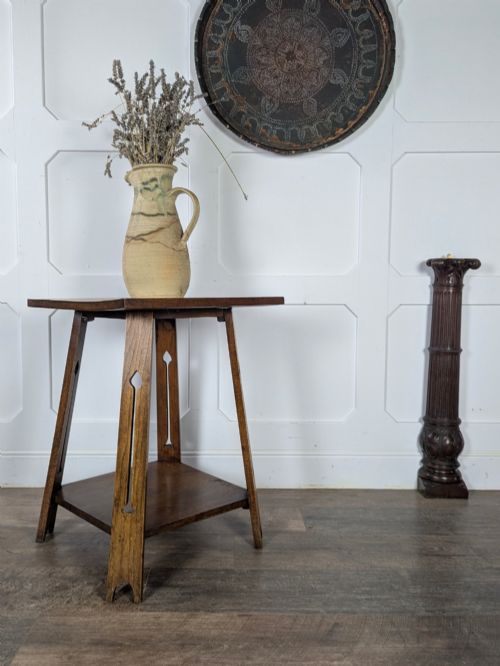
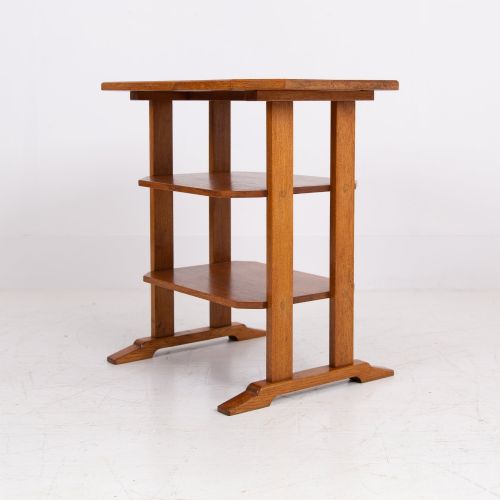
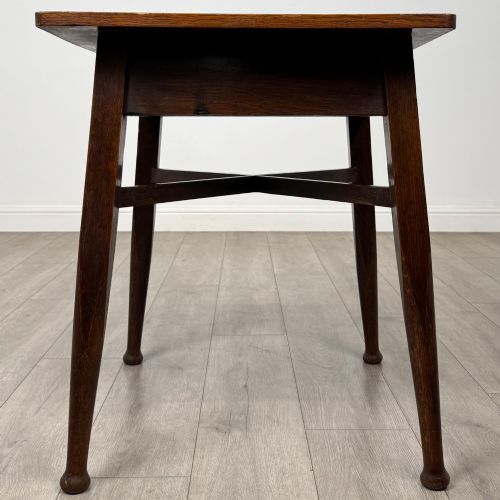
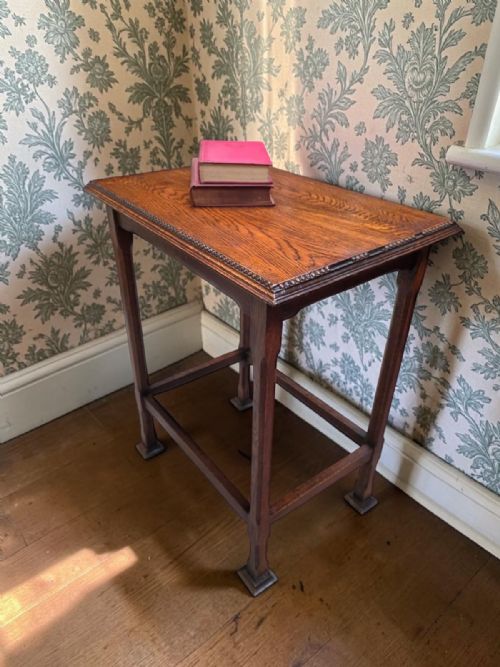
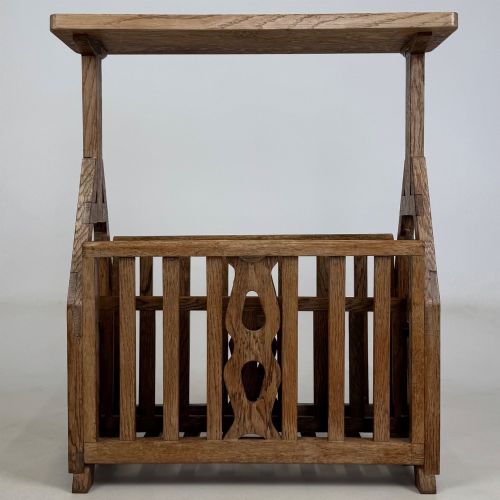
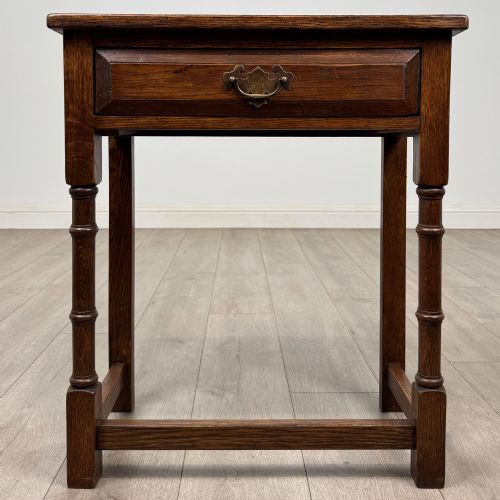
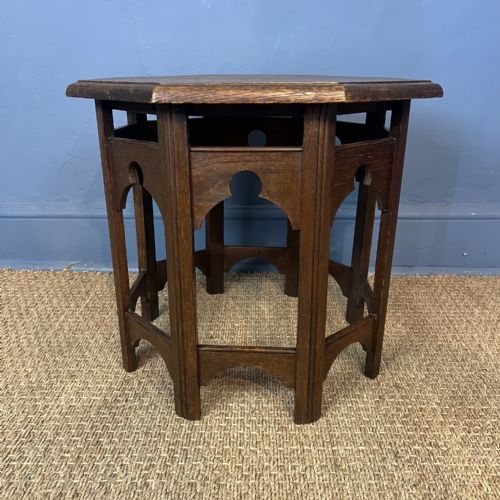


Solid Oak End Table
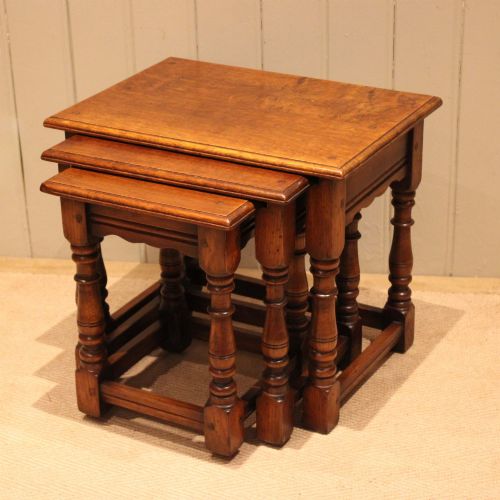
A solid oak end table brings honest timber and sturdy construction into a room, serving as a reliable perch for lamps, books, and daily use.
Solid Oak End Table
A solid oak end table is a practical piece of furniture designed to sit beside seating or beds, offering a flat surface within easy reach. When you search for this phrase, you encounter forms that span side tables, occasional tables, lamp tables, and bedside cabinets.
The examples available here stretch from seventeenth-century provincial pieces and eighteenth-century country furniture through to Edwardian, Arts and Crafts, and Art Deco interpretations. Most pieces you meet on this page date from the Edwardian period or the early twentieth century, reflecting domestic demands of those eras.
Makers working within the Cotswold School and Glasgow School also contributed to this lineage, producing designs that lean into honest construction and simplified geometric forms. Alongside these, you find simpler side and occasional tables scaled for smaller sitting rooms.
How they were made
Makers constructed these pieces primarily from solid oak, sometimes combining golden oak planks with brass hardware or subtle wood inlay to accent the natural grain. Certain twentieth-century pieces incorporate ebonised wood highlights or oak veneer to achieve the contrasting dark tones favoured by Art Deco and Arts and Crafts designers.
Joinery techniques relied on traditional framing and pegging, creating rigid structures capable of bearing heavy weights without reliance on metal fasteners. Surfaces were planed and finished by hand, preserving the dense growth rings and medullary rays characteristic of quality oak timber.
Materials recorded across the inventory include solid oak, brass fittings, wood inlay, oak veneer, and ebonised wood highlights.
What varies in quality
Quality rests in the selection of the timber and the integrity of the joinery rather than surface decoration alone. Superior examples display carefully matched grain patterns across the top and sound structural joints that remain tight after a century or more of use.
Simpler provincial tables rely on straightforward plank construction, whilst pieces associated with the Arts and Crafts movement or Cotswold School show deliberate attention to hand-finished chamfers, pegged tenons, and thoughtful proportions. The balance between utilitarian strength and refined proportion dictates where a piece sits within the wider range.
The Solid Oak End Table Glossary
- Occasional table
- A small, movable table designed for light, intermittent use rather than heavy daily dining. These pieces often took varied forms in Edwardian and Art Deco interiors.
- Arts and Crafts
- A design movement spanning the late nineteenth and early twentieth centuries that prioritised traditional craftsmanship and visible construction. Tables from this movement often feature unadorned surfaces and exposed joinery.
- Ebonised wood
- Timber treated with a chemical stain or pigment to imitate ebony. This dark finish appears alongside solid oak on twentieth-century tables to create sharp visual contrast.
- Medullary rays
- Natural ribbons radiating across oak grain that appear as lighter flecks when quarter-sawn. Cabinet makers prized timber displaying pronounced rays for high-grade surfaces.
Solid Oak End Table: Frequently Asked Questions
What is a solid oak end table used for?
These tables provide a stable surface for holding lamps, books, and everyday items beside a chair or sofa. Their compact proportions allow them to fit into corners and beside seating without dominating the floor plan.
Historically, they served similar domestic functions in parlours and sitting rooms, adapting to the changing scale of twentieth-century homes. Their robust timber construction ensures they handle daily weight comfortably.
How do I date a solid oak table?
Dating relies on observing construction methods, timber preparation, and stylistic cues from the period of origin. Seventeenth and eighteenth-century pieces often show hand-adzed tool marks and pegged joints, whilst Edwardian and later examples exhibit machine-sawn uniformity paired with period-specific revival styles.
Examining the hardware, such as brass pulls or screws, alongside secondary woods provides further clues to a piece's age. Comparing the form against known Arts and Crafts, Jacobean Revival, or Art Deco design traits helps narrow the decade of manufacture.
How do I care for solid oak furniture?
Solid oak benefits from regular dusting with a dry, soft cloth to prevent particulate accumulation on the timber grain. Keeping the table away from direct heat sources and strong sunlight protects the finish from drying out or fading.
Occasional application of natural wax helps nourish the wood and maintain a soft sheen without sealing the pores. Avoid using silicone-based sprays, which can build up on antique finishes and attract dirt over time.
What distinguishes Arts and Crafts tables?
Arts and Crafts tables emphasise visible construction details, such as exposed tenons, pegged joints, and unpretentious surfaces. Makers working in this style rejected industrial mass production in favour of hand-finished integrity and honest materials.
Pieces originating from workshops influenced by the Cotswold School or Glasgow School display these principles through restrained ornament and sturdy, functional proportions. The focus remains squarely on the natural character of the solid oak.