

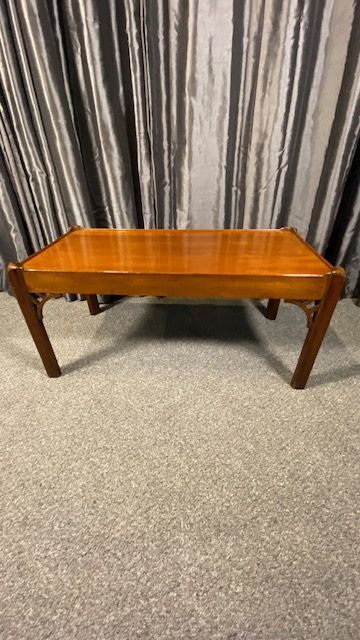
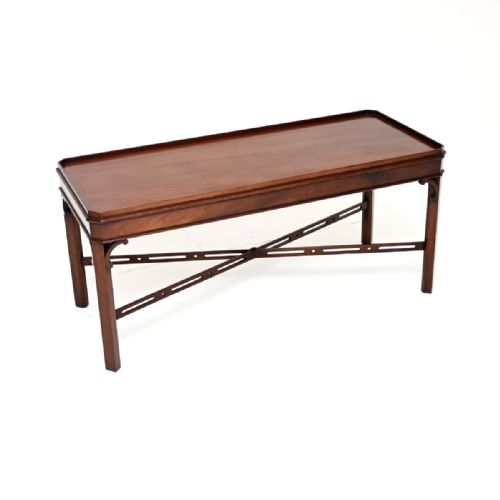
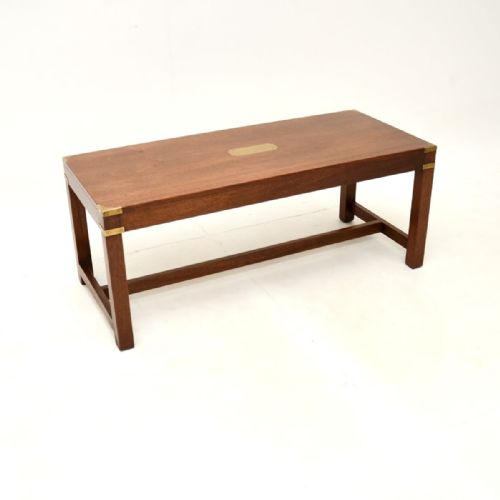
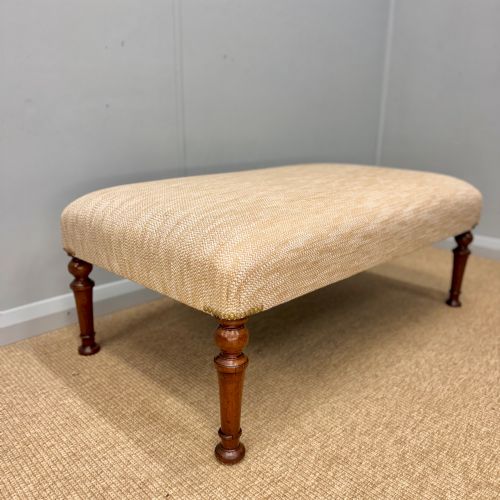


Rectangular Mahogany Coffee Table
A rectangular mahogany coffee table brings solid timber warmth and a dependable low profile to a sitting room.
Rectangular Mahogany Coffee Table
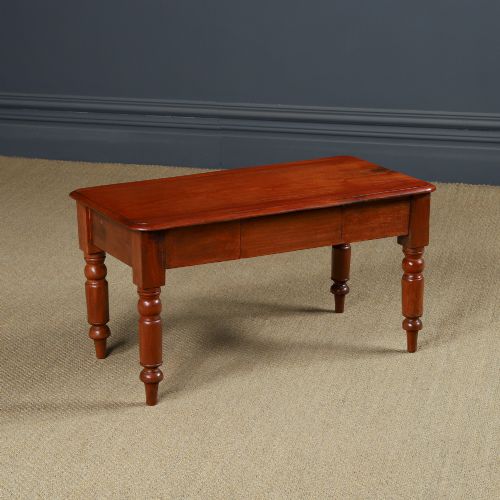
A rectangular mahogany coffee table provides a substantial wooden surface for daily use in a reception room. These pieces appear in forms spanning the Georgian and Regency eras, alongside later Victorian and 1930s interpretations.
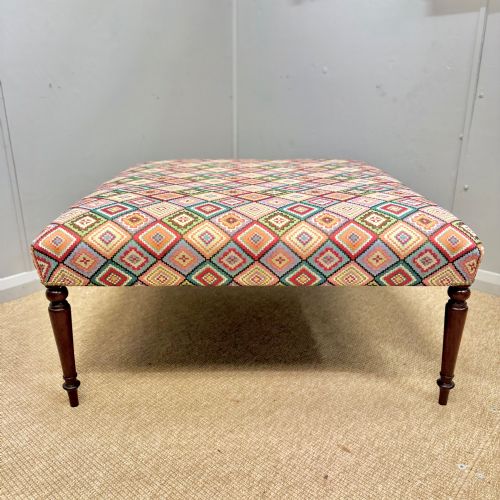
The selection here includes standard low tables alongside converted footstools, ottomans, and benches featuring mahogany frames. Buyers frequently encounter pieces retaining campaign brass details, cane seats, or leather upholstery adapted for coffee table heights.
How they were made
Makers utilised dense mahogany timber for structural stability and rich grain figure, often shaping the wood into clean rectangular forms. Brass hardware, including corner brackets and recessed handles, appears on pieces influenced by military campaign design.
Workshop methods combined traditional joinery with supportive upholstery techniques, integrating leather, cane, and woven fabric panels into the wooden frames.
Rectangular Mahogany Coffee Table Retail Price Guide 2026
Typical asking prices for rectangular mahogany coffee table among the pieces listed under this phrase on Sellingantiques today, from the lower quarter to the upper quarter. They describe what is for sale here now, not the wider market.
Listings feature mahogany combined with brass, leather, cane, and woven fabric across Georgian, Regency, and Victorian periods.
What varies in quality
Quality rests in the selection of the mahogany timber and the crispness of the secondary materials, such as heavy brass fittings or tightly buttoned leather. Better examples display balanced proportions and refined edge moulding rather than heavy, unconsidered timber blocks.
The integrity of the conversion work also dictates value, as period stools and ottomans adapted to coffee table use depend entirely on sympathetic height adjustments that respect the original frame.
The Rectangular Mahogany Coffee Table Glossary
- Mahogany
- A durable tropical hardwood prized for its deep reddish-brown colour and stable grain. It forms the primary structural material for these tables and frames.
- Campaign style
- Portable furniture design characterised by recessed brass handles and corner brackets, originally built for military transport. This aesthetic brings utilitarian metal details to domestic timber tables.
- Regency
- A British design period spanning the early nineteenth century defined by classical restraint and polished timber surfaces. Pieces from this era often feature clean architectural lines.
- Cane
- Woven rattan plant material utilised for seat panels and lower shelves. It offers a lightweight textural contrast against solid mahogany frames.
Rectangular Mahogany Coffee Table: Frequently Asked Questions
Are these original coffee tables?
Many examples began life as nineteenth-century footstools, ottomans, or low benches before being adapted to function as coffee tables. This conversion practice accounts for several low rectangular timber pieces found in this category.
Original low tables share the same timber vocabulary and period construction methods as their converted counterparts. Each piece retains the proportions and materials appropriate for a central sitting room surface.
How do I clean mahogany?
Maintain mahogany surfaces by dusting with a dry, soft cloth to prevent particulate build-up on the polished wood. Avoid silicone polishes, which can build a cloudy film over the traditional timber finish.
Nourish the wood periodically using traditional beeswax to preserve the depth of the grain. Keep tables away from direct heat sources and strong sunlight to prevent timber shrinkage.
What is campaign style?
Military campaign style refers to nineteenth-century furnishings constructed for officers on active service overseas. These items incorporate protective brass corners and recessed hardware to withstand frequent transport.
In domestic settings, these brass elements provide a distinct industrial contrast to the warm mahogany timber. The design prioritises structural durability alongside formal elegance.
How do I date a table?
Dating relies upon examining the timber grain, construction joints, and hardware style characteristic of specific periods such as the Georgian, Regency, or Victorian eras. Secondary materials like cane or buttoned leather also point towards prevailing nineteenth-century workshop trends.
Makers working in the 1930s often revived earlier military aesthetics, blending twentieth-century production methods with historic forms. Compare the structural joinery against known period examples to confirm the date.