


Vintage British Wristwatch
A vintage british wristwatch carries mid-century character on the wrist, offering dependable mechanical timekeeping from British workshops and military service.
Vintage British Wristwatch
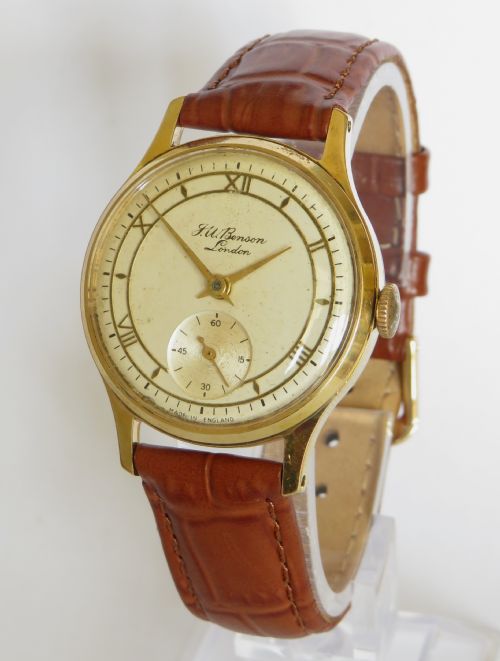
A vintage british wristwatch comprises mechanical timepieces dating primarily from the 1940s, 1950s, and 1960s. These pieces reflect mid-century British horology, encompassing both civilian dress models and service-issued equipment.
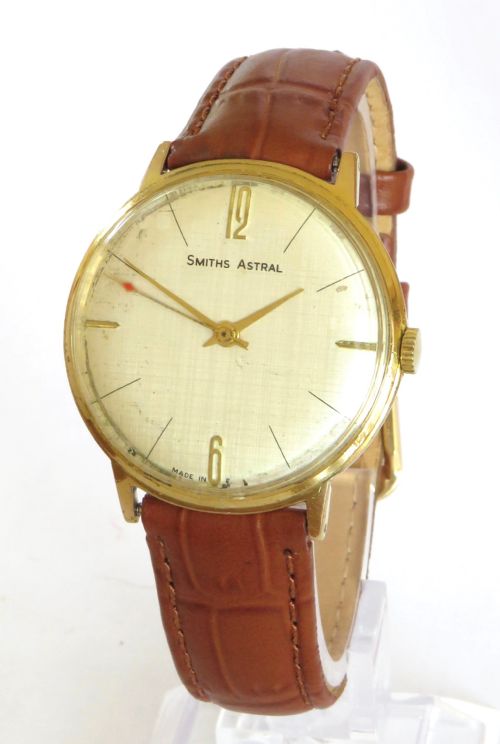
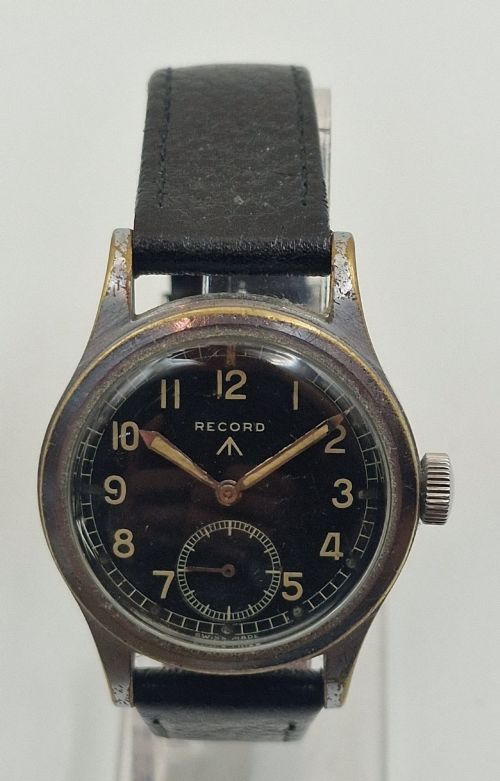
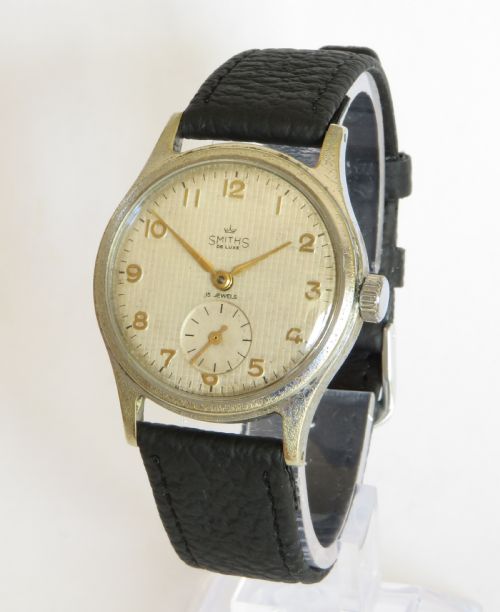
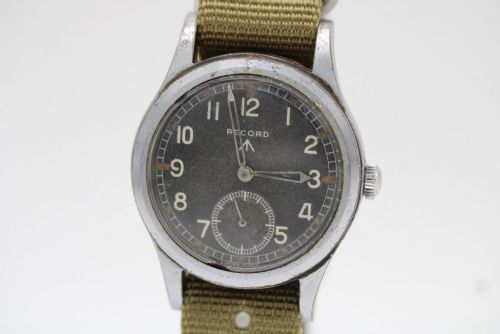
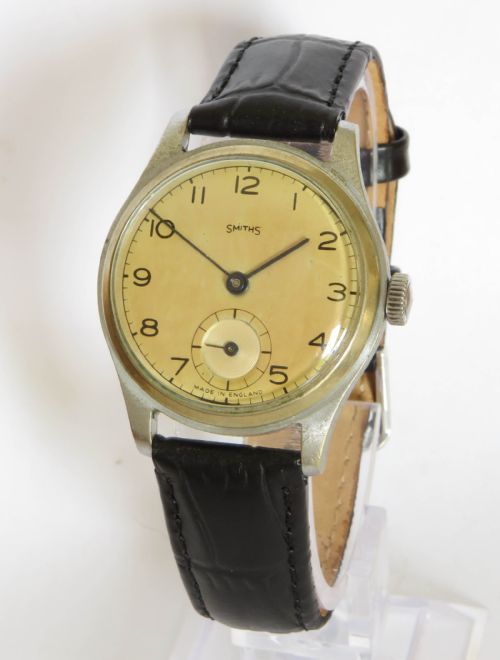
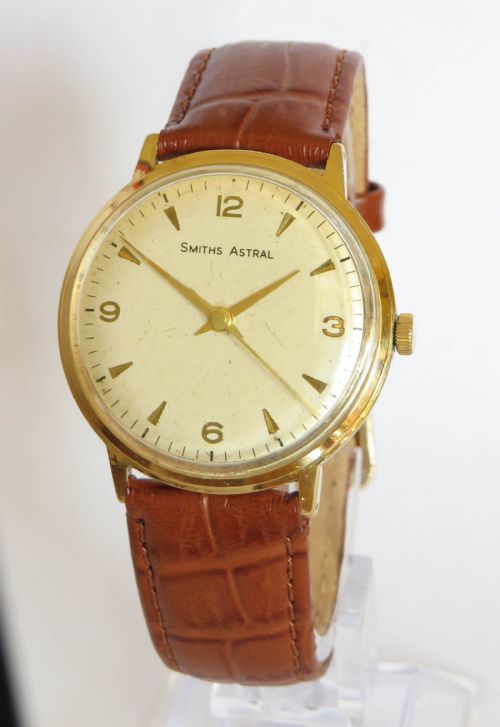
The most common examples encountered on this page are gents' wristwatches by Smiths, including lines like the Deluxe, Astral, and Empire. Buyers also regularly meet military issue pieces from the Second World War.
Military variants span Army Trade Pattern watches and specific Royal Air Force issue pieces. Civilian models showcase standard time-only dials alongside two-tone variations with Arabic numerals.
How they were made
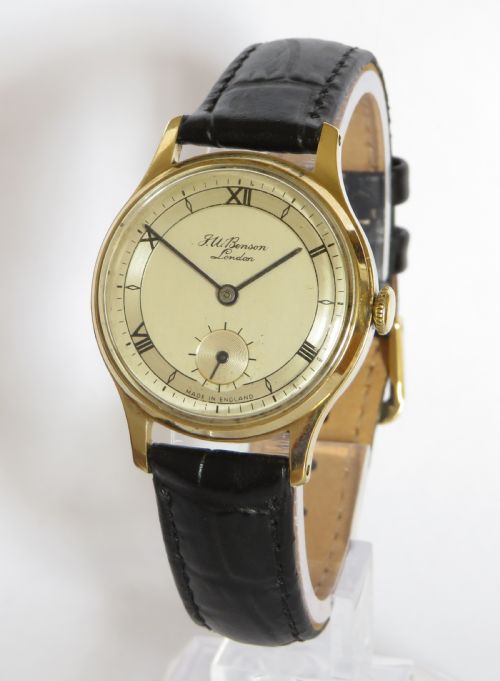
Cases utilise durable materials including stainless steel, chrome, and solid nine-carat gold, paired with protective glass or acrylic crystals. Movements rely on mechanical calibres containing functional jewels, such as fifteen or nineteen jewel configurations.
Military specifications required robust metal construction designed for rigorous service conditions, often featuring fixed wire lugs and distinct caseback markings. Civilian counterparts received refined metal plating or solid gold housings tailored for everyday gentleman's wear.
Listings feature pieces spanning the 1940s, 1950s, and 1960s, constructed in stainless steel, chrome, and nine-carat gold.
What varies in quality
The distinction between standard commercial models and top tier items rests on the casing material and movement specification. Solid nine-carat gold models and higher jewelled movements represent the elevated end of production.
Historical context and specific military provenance further divide the range, with documented service contracts carrying distinct collectable weight. Dials featuring complex two-tone layouts or specific maker signatures distinguish standard pieces from superior examples.
J W Benson·Smiths·Record·Ebel·Revue·Vertex·Timor
The Vintage British Wristwatch Glossary
- Calibre
- The specific internal mechanical movement design created by a watch manufacturer. This identification number helps determine the age and mechanical lineage of the watch.
- Jewels
- Synthetic rubies used as bearings within mechanical watch movements to reduce friction on pivot points. Higher jewel counts generally indicate a more refined movement.
- Military Issue
- Equipment manufactured under official government contract for armed forces personnel. These pieces bear specific service markings and standard specifications on the case.
- Acrylic
- A lightweight transparent plastic material utilised for watch crystals during the mid-century period. It offers flexibility and can be polished if surface scratches occur.
- Arabic Numerals
- Standard numerical digits used on watch dials for hour markers. They provide clear legibility compared to index markers or Roman numerals.
Vintage British Wristwatch: Frequently Asked Questions
How do I wind a vintage british wristwatch?
Turn the crown gently in a clockwise direction until mild resistance indicates the mainspring is fully wound. Avoid over-winding to protect the internal mechanical components.
Most vintage mechanical movements require daily winding to maintain accurate timekeeping throughout use.
Are these watches waterproof?
Mid-century watches lack modern rubber gaskets and contemporary waterproof sealing technology. Exposure to moisture can easily damage the delicate internal movement and dial.
Keep these timepieces away from water, rain, and high humidity environments during daily wear.
What strap goes with a vintage wristwatch?
Traditional leather straps complement the mid-century aesthetic of these watches. Black or brown hides match the historical styling of both civilian and military models.
Ensure the strap width matches the specific lug spacing of the watch case.
How can I tell the decade of production?
Examine the dial typography, case style, and movement branding for stylistic clues. Specific lines like the Smiths Deluxe or military markings often point directly to the 1940s, 1950s, or 1960s.
Internal movement calibres also provide precise chronological reference points for dating.