





Vintage Bridge Landscape Oil
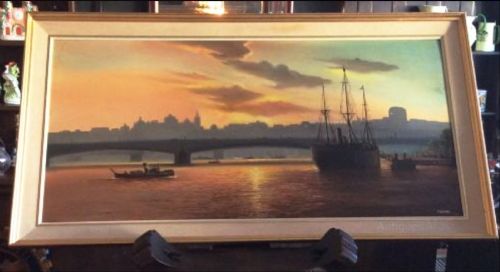
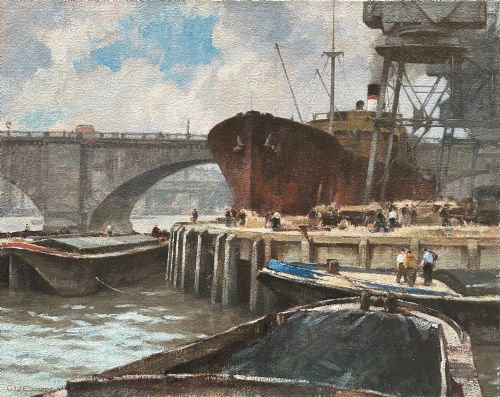
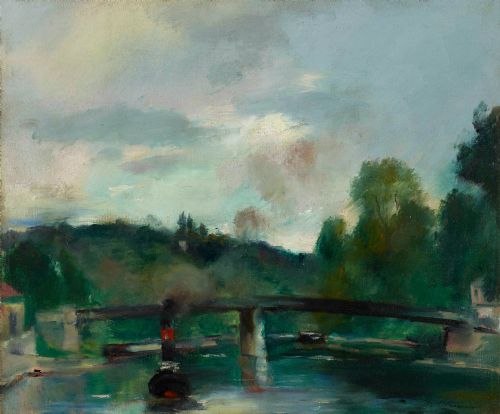
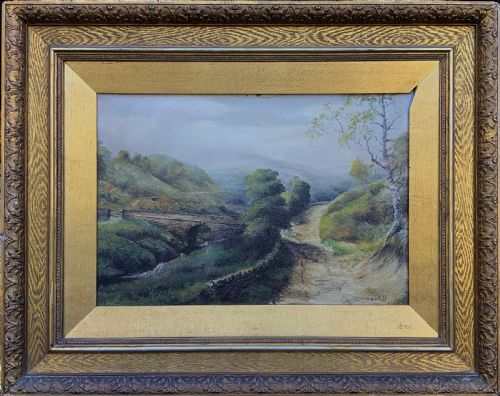
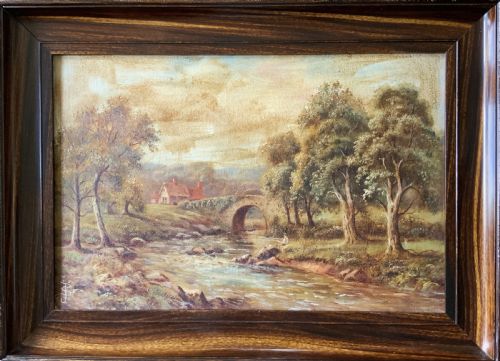
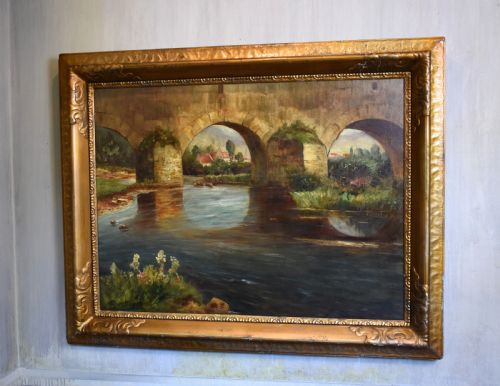
A vintage bridge landscape oil captures rivers, canals and spans through the textured depth of traditional paint.
Vintage Bridge Landscape Oil
A vintage bridge landscape oil presents watercourses and architectural spans recorded across various historical periods. These works capture urban crossings, rural stone arches and industrial riversides rendered in oil paint.
The selections encountered here range from nineteenth-century academic and Victorian visions through to twentieth-century British impressionism and mid-century interpretations. Canvases and panels depict specific locations from London and Wales to continental European waterways.
Compositions frequently balance rigid stone or iron structures against fluid river currents, shipping activity or quiet pastoral banks. The bridge itself serves as a focal point that draws the eye across the broader landscape.
How they were made
Artists utilised oil paint applied to stretched canvas, wood panels or board supports, often building rich textures with brushes or palette knives. This medium allowed creators to manipulate light on water and define the solid mass of masonry arches.
Many works retain their original timber frames, occasionally finished in gilt wood that complements the pigments within the composition. The physical support frequently bears inscriptions, artist signatures or period stretcher labels that record the provenance.
Listings feature works spanning the nineteenth century through the 1960s, executed primarily in oil on canvas or wood.
What varies in quality
Quality rests in the confidence of brushwork and the handling of atmospheric light rather than mere age or subject matter. Superior examples demonstrate a precise control over perspective and colour harmony, capturing the specific reflection of water beneath a span.
The distinction between standard decorative works and finer pieces lies in the artist's ability to integrate architectural elements naturally into the surrounding topography. Strong compositions reveal deliberate tonal contrast and structural integrity within the painted bridge.
Cyril Walduck Edwards·Henri Ottmann·Florence Adelina Hess·Sydney Yates Johnson·E A Minardo·William Grant Murray·William Traies·Franz Reder-Broili·George Willis Pryce·Josephine Haswell Miller·Edward Fletcher·Peter Greenham·F.W. Jackson·Edward Seago·Charles Edmund Rene His·Arthur Netherwood·Walter C Horsnell
The Vintage Bridge Landscape Oil Glossary
- Oil on canvas
- Pigments bound in a drying oil, typically linseed, applied to a woven fabric support stretched across a wooden frame. This combination allows for deep colour saturation and varied surface textures.
- Panel
- A rigid support made of wood used by artists as an alternative to fabric canvases. Wooden panels offer a firm surface that withstands vigorous paint application.
- Stretcher
- The internal wooden frame upon which a canvas is tensioned. Inscriptions and signatures written directly on this wood often provide key historical context.
- Impressionism
- An artistic approach focused on capturing the visual impression of a moment, paying particular attention to shifting light and colour. Works in this style often feature visible, rapid brushstrokes.
- Maritime art
- Depictions of marine environments, including coastal scenes, shipping and tidal rivers. These paintings often incorporate docks, vessels and estuarine bridges.
Vintage Bridge Landscape Oil: Frequently Asked Questions
How do I identify the date of a bridge oil painting?
Dating relies on stylistic evidence, artist biographical records and inscriptions found on the reverse of the canvas or stretcher frame.
Examining the type of canvas preparation, framing methods and materials used can also help narrow down the period of creation.
Where should I hang a landscape oil painting?
These works suit traditional or contemporary interiors when placed away from direct sunlight and excessive humidity.
Ensure the wall space supports the proportions of the frame, allowing the composition to function as a natural focal point.
How do I clean an old oil painting?
Dust accumulation should be gently removed with a very soft, dry brush without applying pressure to the pigment surface.
Professional conservators should handle any deeper cleaning or removal of aged varnish to prevent damage to the delicate paint layers.
What is the difference between canvas and panel supports?
Canvas provides a flexible, textured surface stretched over a wooden frame, which responds to environmental changes by expanding or contracting.
Panel supports offer a completely rigid backing made of wood, which prevents flexing but requires careful seasoning to avoid warping over time.